The Game Where the Wallet Opens First
I went hands-on with 2026's new on-chain titles. The moment tokens move in front of the core loop, the subject of fun transfers from the player to the asset. Where ownership has stripped the designer of the right to refuse, a graveyard is all that remains.
AI Summary
This essay argues that on-chain games fail at a design level, not merely a tokenomics one: token rewards inserted into the core loop replace tactile feedback with balance-watching, turning play into labor. True ownership—Web3's defining promise—structurally prevents designers from imposing the loss and denial that drive engagement, since players resist any mechanic that touches their assets. The handful of surviving projects in 2026 illustrate the only formula that works: build a compelling loop first, then treat tokens as optional seasoning funded by cosmetics and battle-pass revenue.
When Tokens Devour the Core Loop
The moment you boot the game, a wallet-connect prompt appears. That is the first signal. A well-made game makes your hands move first; a poorly made one makes you register your assets first. I played a handful of new on-chain games releasing in 2026, and every one of them collapsed at exactly the same point: the friction of the core loop was being papered over with token rewards.
Let's define friction. In a well-made action game, the moment you slash an enemy, the resistance of the blade sinking into flesh, the hit-stop, the camera shake—all of it feeds back into your hands. That feedback is the reward. Players swing again because of the swing itself. On-chain games put numbers in that place instead. Kill an enemy and 0.3 tokens tick upward. The blade's resistance vanishes, and only the balance counter blinking at the top of the screen remains. It is a structure where the wallet remembers, not the hands. The subject of fun has shifted from the player to the asset.
One new RPG I played had perfectly serviceable combat. The problem was that around the 30-minute mark I wasn't killing enemies for fun—I was farming exchange rates. The reason to kill one more wasn't enjoyment; it was the daily mining cap. This isn't a game. It's clocking in.
It's a Design Problem, Not a Ponzi Scheme
There is a common counterargument: 'On-chain games fail because their tokenomics are a Ponzi, not because of gameplay. Just fix reward-currency inflation.' That's half right. Inflation is the symptom, not the disease.
Think about it. Why does the pressure to print reward currency infinitely arise? Because the game itself cannot hold people. If the loop is fun on its own, tokens can be seasoning. If the loop is hollow, tokens become the main event—and the moment new-user inflow stops, that main event collapses. Axie Infinity proved it. Guild tokens crashing to a fraction of their peaks proved it again. The statistic that over 90 percent of Web3 games have died should be read as a game-design failure statistic, not a tokenomics failure statistic.
The more honest evidence is the cases where games never launched at all. Pixelmon raised $70 million through NFT minting in 2022 and, four years later, still has no released game. Ember Sword burned through $18 million over seven years and shut down last May without refunds. The assets were finished, but the game never started. That sequence says everything. Because the token could be sold first, the game was pushed to later. Validating a core loop takes time and can fail; a token sale converts to cash immediately. Capital flowed toward the path of least friction.
The Space Where Intentional Refusal Disappeared
The essence of good game design is not what you give but what you withhold. Soulslikes are beloved because they refuse to make death easy. Roguelikes are addictive because they strip away most of what you accumulated the moment a run ends. Withholding, blocking, and refusing is what generates desire. There has to be a wall that stops you from reaching the next space for you to want to climb over it.
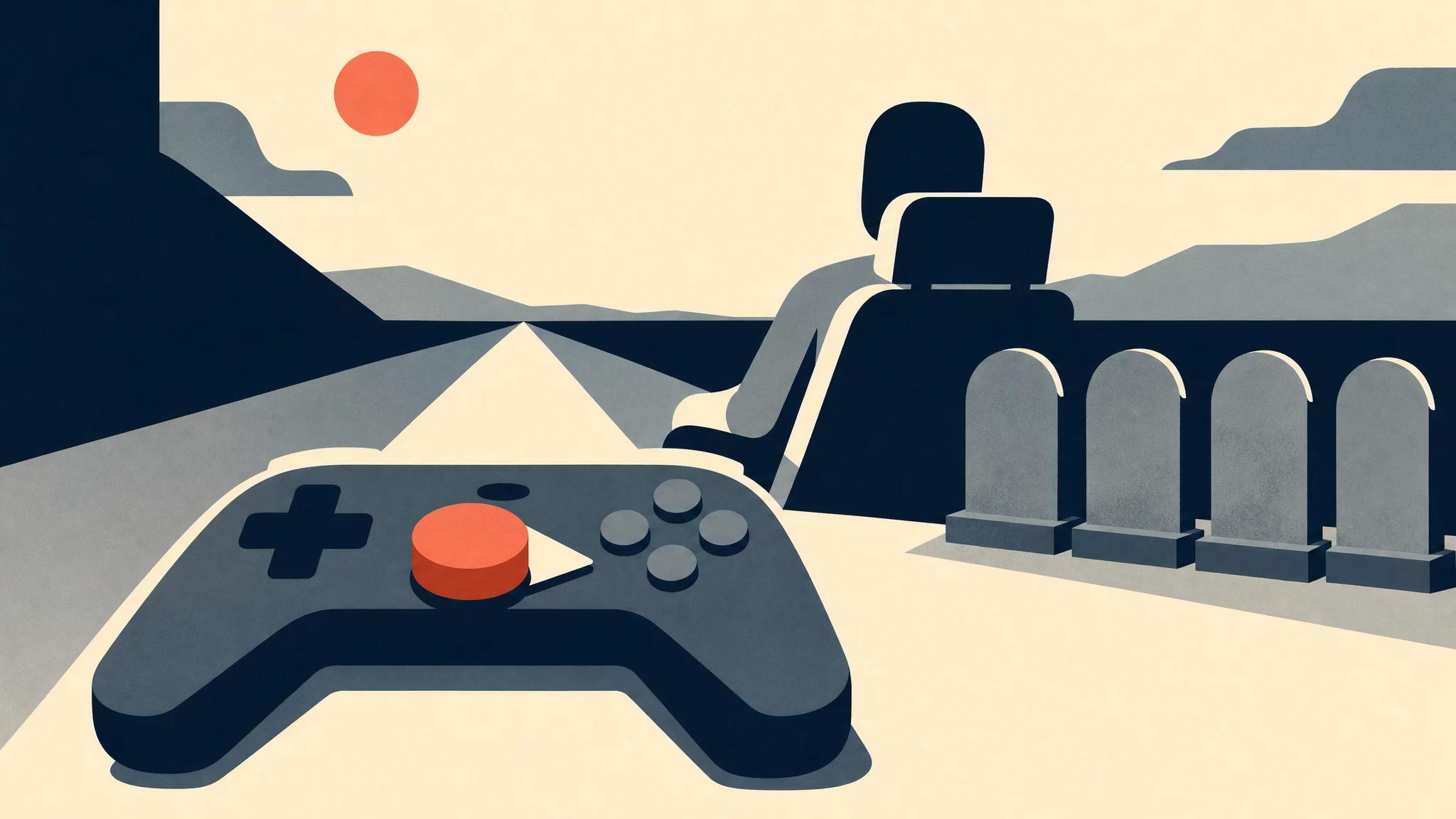
The on-chain economy structurally cannot refuse in this way. The moment a player owns an asset, taking that asset away is no longer game design—it becomes a violation of property rights. Die and you lose nothing; lose a match and the NFT sits unchanged in your wallet. Every attempt to introduce friction runs into the same pushback: 'Why are you touching my assets?' Ownership has stripped the right to refuse from the designer's hands. What remains is a game with loss and danger—the very engines of fun—removed.
Here a paradox emerges. Player-owned economies are the flagship strength Web3 promotes, yet that very ownership is the mechanism that makes games unfun. It is no accident that the small number of projects still alive in 2026 have begun funding rewards not through token issuance but through actual revenue—battle pass and cosmetic sales. They pushed tokens outside the core loop. Build fun first, then run economics as seasoning. That is the only arrangement that works.
What This Means from Busan
Busan's indie scene is full of small teams. The less capital you have, the louder the temptation of a token sale sounds. The proposition that you can raise money before making the game is fatally sweet for a solo developer. But the graveyards of on-chain games teach exactly the opposite. Structures that pull capital in first push core-loop validation back—and a loop deferred long enough ships empty.
A small team's weapon is not tokens but friction. One line of refusal, one loss, one hit that lodges in the hands. These are built with intention, not capital. Fun does not come from what you generate. It comes from deciding what you will not give. On-chain games fail every time not because the technology is too early, but because a game was placed on top of an economy that does not know how to refuse.
Sources: More than 90% of Web3 games failed, Why Gamers Rejected Play-to-Earn, Blockchain Gaming 2026
This article was automatically translated from the Korean original by AI. For the authoritative version, read it in Korean.
한국어 원문 읽기 →