Ownership Is Gone — Only the Key Remains
Where speculative NFTs collapsed, membership and access NFTs have taken their place. The promise of 'owning what is mine' has quietly become a permission to be let in. We ask who holds that door.
AI Summary
NFTs have quietly pivoted from speculative digital ownership to membership and access tokens — a shift the industry calls maturation but which, this column argues, moves real control firmly into issuers' hands. Wrapping access rights in blockchain tokens strips away consumer protections, enables granular on-chain surveillance, and leaves holders with little recourse when issuers change the rules. The author calls on Korea to regulate not the technology itself but the obligations of those who issue access-right NFTs, requiring transparent disclosure of benefit durations, closure conditions, and data consent.
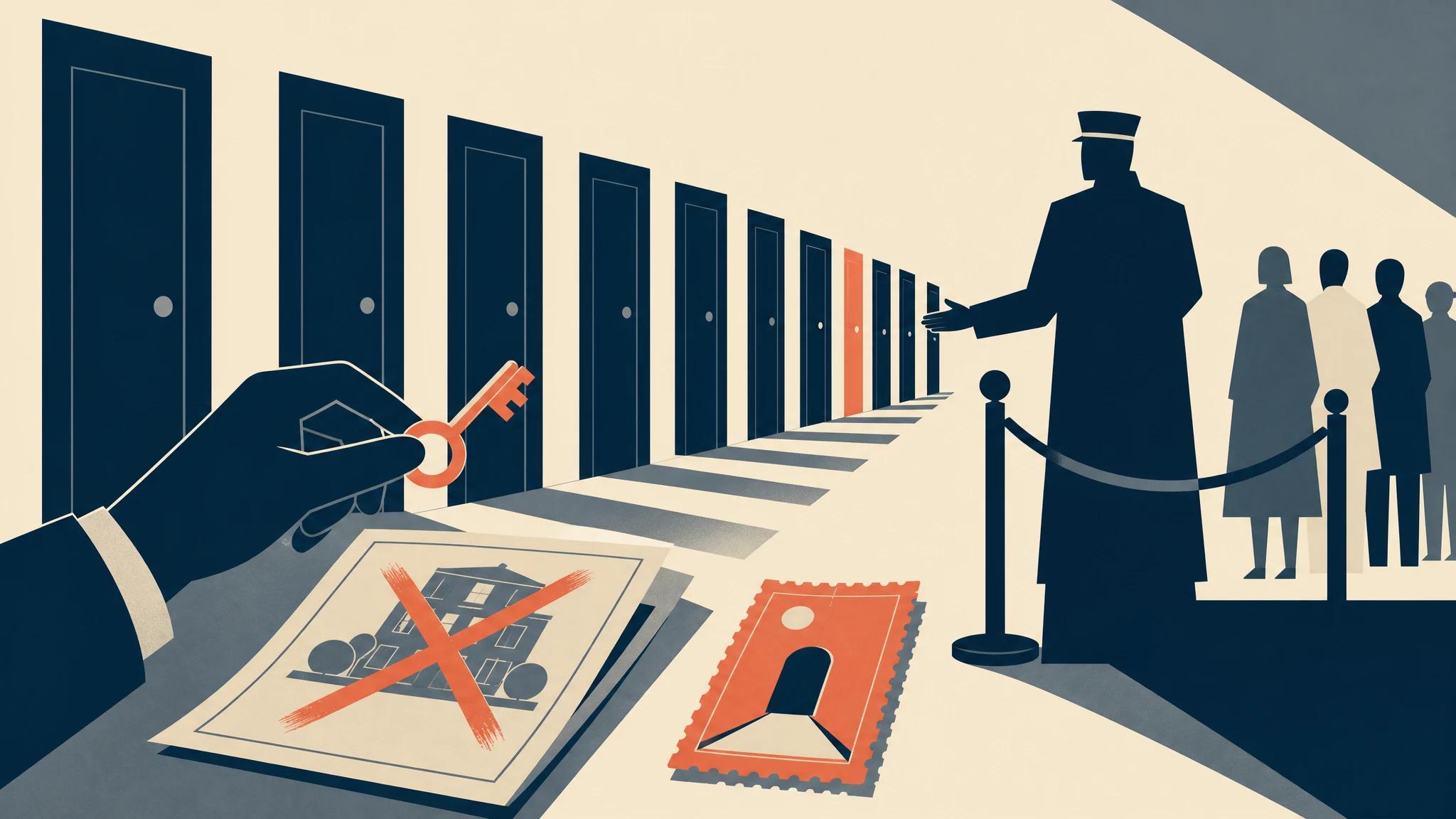
In 2021, some Twitter profiles featured a pixelated monkey worth hundreds of millions of won. Today, a small padlock icon takes that monkey's place. Same technology, different name. People who once declared 'this is my digital asset' now say 'this is an admission ticket.' It is a retreat that changes direction without admitting defeat. NFTs are not dead. They have simply stopped being certificates of ownership and become access passes.
The industry calls this transition maturity — the speculative bubble has deflated, leaving only genuine utility. There is something to that. Concert tickets, membership tiers, priority purchase rights for limited-edition goods: these are plainly less hollow than an exchange price. But every time words like 'efficiency' and 'practicality' come up, I reach for the same question: whose costs did this convenience reduce, and where did those savings go?
The Real Weight of 'From Ownership to Rights'
Ownership and access rights are legally distinct things. What you own, you can dispose of — sell it, lend it, destroy it, pass it on. Access rights operate only within the conditions set by whoever issued them. If the party holding the gate changes the rules, your rights change with them.
| Ownership | Access Rights | |
|---|---|---|
| Transferability | Can be sold, lent, or inherited | Operates only within conditions set by the issuer |
| Rule Control | The holder | Changes whenever the gatekeeper issuer changes the rules |
| If Issuer Shuts Down | The asset remains | A piece of metal that opens no doors |
The radicalism of early NFT discourse lay precisely in this right of disposal — the claim that you could truly own a digital object without an intermediary. Misguided, perhaps, but the direction was bold. The pivot to membership NFTs quietly folds that challenge away. The token remains on the blockchain, but what it promises lives inside the issuing brand's servers and terms of service. The token is decentralized; the utility is centralized. What we buy is a serial number recorded on a distributed ledger — what that number actually unlocks is decided by the company. When the company shuts down, the key becomes a piece of metal that opens no door.
This is not a trivial semantic shift. It is the moment when a decade-long debate about digital ownership retreats into pragmatism — 'ownership was probably impossible anyway, isn't well-managed access good enough?' The retreat itself is not the problem. The problem is calling that retreat progress while never asking who gets to write the rules.
The Gatekeeper Didn't Disappear — It Moved into Code
Traditional memberships at least had identifiable parties to hold responsible. If an airline unilaterally cuts your miles, consumer protection frameworks and terms of service kick in. But the moment access rights are wrapped in NFTs, those rights take on the appearance of 'assets I purchased on the open market.' The user feels less like a consumer and more like an investor. Accountability blurs; risk shifts to the individual.
Think back to when things went wrong. If an issuer cuts benefits or a community collapses, where do you take your grievance, token in hand? Secondary market prices hold only on the assumption that the issuer's promises remain alive. The right to break those promises belongs entirely to the issuer. Rights come packaged in the language of markets, but actual control is monopolized by whoever deployed the code. The gatekeeper hasn't disappeared — it has simply relocated somewhere beyond refunds and regulation.
A data problem compounds this. A wallet address looks anonymous, but it is a permanent identifier that strings together one person's entire history of holdings, transaction patterns, and participation trails. A brand that issues membership NFTs can see its customers' complete on-chain record. Under the banner of decentralization, a far more granular form of surveillance becomes possible than any conventional membership could deliver. It is a loyalty ledger that can be neither severed nor forgotten. This is where the cost of convenience migrates.
The Rules Korea Must Set
Imagine an indie game studio in Busan giving supporters membership NFTs that grant access to beta builds and a private Discord server. A fine use case. But if the studio closes, what happens to the 'lifetime access' supporters bought? If no terms of service answer that question, it is not a right — it is an atmosphere.
A counterargument is available: since all memberships depend on their issuer, singling out NFTs for regulation is excessive. That is half right. But NFTs differ from ordinary loyalty points in that they encourage secondary trading under the guise of being 'assets,' imply through price that their value will endure, and fall into consumer protection blind spots. If something is traded like an asset, it should be protected like one.
The rules Korea needs to set should therefore concern issuer obligations, not token technical specifications. Issuers should be required, at the time of issuance, to clearly state the expected duration and termination conditions of the promised utility. They should be required to notify holders in advance of how benefits will be handled in the event of company closure or benefit cancellation. When on-chain data is combined with marketing, the scope of consent should be disclosed separately. Expressions that encourage secondary trading should carry the same consumer-side liability as any equivalent solicitation. With Korea's virtual asset user protection regime already taking its first steps, now is the time to draw a distinct consumer track for access-right NFTs — separate from investment products.
The point is not to stop NFTs. NFTs as access passes have genuine utility. But we should decide who holds that door and to whom we bind the authority and responsibility to lock it. To call the movement from ownership to rights 'progress,' there must first be a guarantee that those rights will not evaporate with a single change of heart from the issuer. Technology has already placed a key in our hands. The remaining question is whether the door that key opens is truly ours — or whether we are simply being let into someone else's house.
This article was automatically translated from the Korean original by AI. For the authoritative version, read it in Korean.
한국어 원문 읽기 →