Cheap Cities Are Replicated
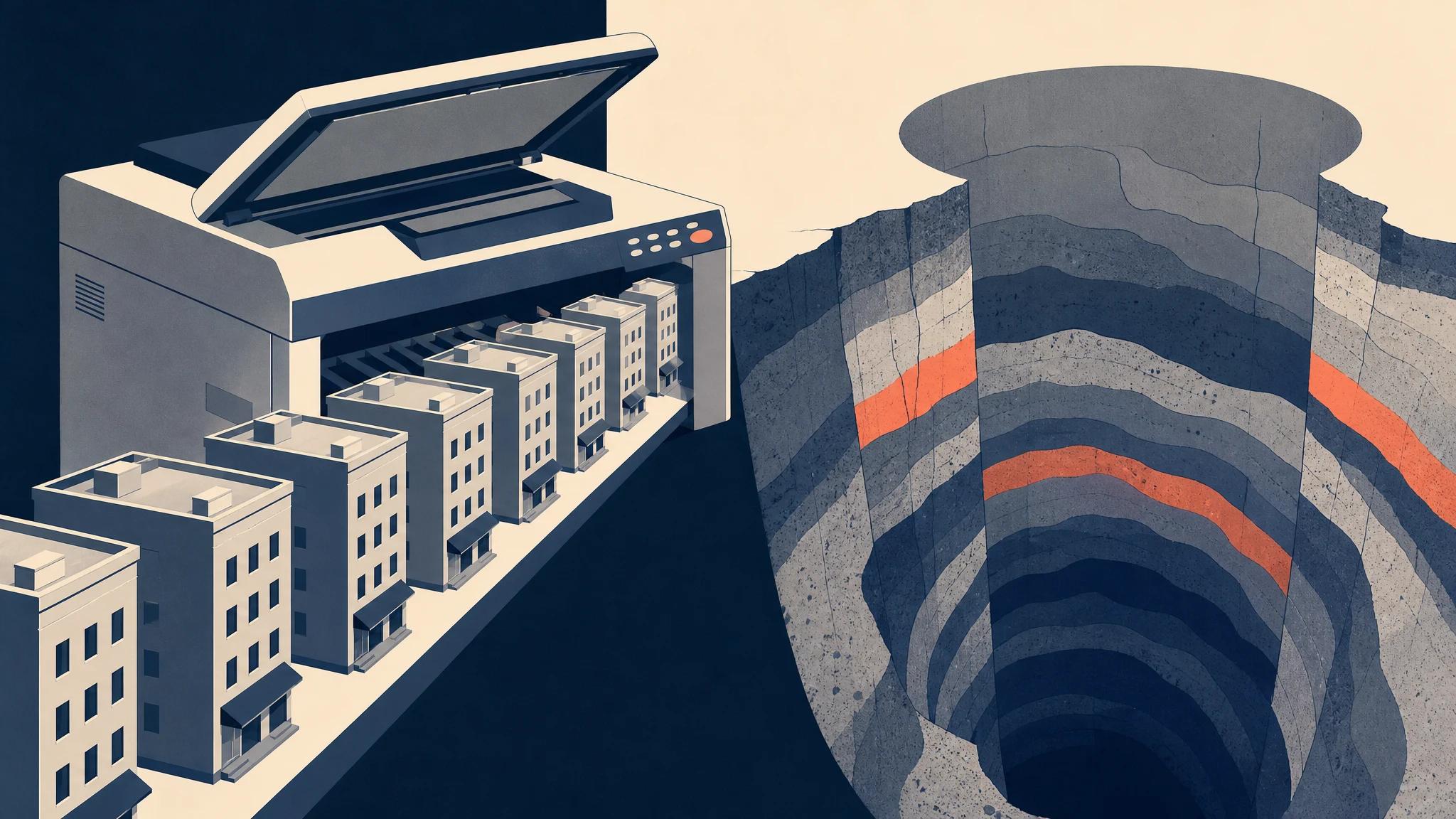
The vocabulary Busan uses to attract global talent consists of rent, settlement conditions, and quality of life. These are all the grammar of the catch-up era, calling people with costs. But costs can be replicated anywhere, while the depth of trial and error accumulated in one region cannot be replicated.
AI Summary
This article argues that Busan's strategy of attracting talent through low costs—cheap rent, comfortable living conditions—is fundamentally flawed because cost advantages can be easily replicated by other cities. Instead, cities should accumulate expertise in specific problem domains through collective trial and error, which creates non-replicable competitive advantages that remain even after individuals leave. The piece calls for shifting from cost-based attraction to problem-based accumulation, where failures are valued as learning assets rather than penalized in quarterly evaluations.
The Place Where Demo Day Applause Has Ended
I watch a startup demo day at an entrepreneurship support space in Busan. The slides on stage are polished. Phrases about attracting global talent, photos of overseas developers joining, interviews with foreign founders who have headquarters in Busan. The same words repeat in the press release from the hosting organization. Cheap rent, comfortable settlement conditions, quality of life better than Seoul. These words are sincere and they work. People actually come.
The problem is what comes after the applause ends. Why did that developer come to Busan? Because monthly rent is half of Seoul's and you can see the ocean. Then when do they leave? When a place appears where rent is half of Busan's and the ocean is even better. People called by cost move along the cost curve. It's not betrayal, it's rationality. Since the incentive we offered was price itself, their pursuit of a better price is the predetermined sequence of the game we designed.
This is where surface and structure diverge. The surface event is talent attraction. But the structural question is different. What remains in this city while this person stays in Busan? What can they not take with them when they leave? If there is nothing they leave behind, nothing that sediments in the city, we haven't attracted talent—we've temporarily rented it. Rental contracts expire.
The Grammar of Fast Catch-Up Remains in the City
The success formula Korea learned over half a century is clear. When countries ahead showed the answer, we reached that answer the fastest. Shipbuilding, steel, semiconductor memory, displays all followed the same path. The goal already existed externally, and Korea was the world's best at compressing the distance to that goal. In the era of catch-up, Busan was the port of that formula. The shipyards were, and the shoe factories were.
City-level talent attraction strategies inherited the same grammar. Cheaper, faster, more comfortable. Lower rent, reduce entry procedures, help with settlement. It's cost competition. The fatal weakness of cost competition is that cost is the most easily replicated variable in the world. Rent reductions can be done by Da Nang, Vietnam too, and visa simplification is done more aggressively by Dubai. Settlement conditions are provided by Valencia and Lisbon with climate added on top. Every price tag Busan can present can be countered somewhere else with a lower number.
People called with replicable incentives leave only replicable loyalty. The deeper problem is that this blocks the city's learning. When you call people with cost, the city only learns how to lower costs. Know-how for increasing the scale of rent subsidies, administrative skills for shortening entry procedures. These things accumulate but don't deepen. Because they're surface-level techniques anyone can follow. If you trace the incentive structure backwards, the answer becomes visible. Attraction results are measured quarterly and reported quarterly. The industrial ecosystem that talent will have left behind five years later doesn't appear on anyone's performance report. So everyone chases only the numbers that show up quarterly—that is, the number of attractions.
On the Frontier There Are No Correct Answers, So Trial and Error Becomes Capital
In domains where catch-up has ended, the rules of the game change entirely. There are no correct answers to copy from outside. In places no one has been, figuring out what the correct answer is becomes the competition itself. And the only way to figure out the correct answer is to be wrong. In frontier technology, trial and error is not waste but productive activity. Because each failed attempt becomes an input for the next attempt.
The Netherlands' ASML is a good case. Extreme ultraviolet lithography equipment, a semiconductor bottleneck technology, is the result of one company accumulating tens of thousands of failures over more than 30 years. In the process of reducing light wavelengths, they first figured out what doesn't work, and that list of things that don't work became the moat that competitors cannot cross. The reason latecomers cannot catch up to ASML is not because they lack blueprints. Blueprints are just the result, and the tens of thousands of dead ends ASML experienced reaching there are not written in the blueprints. That map of dead ends is the real asset.
Here's an important reversal. Trial and error doesn't exist only in people's heads. There is trial and error that remains in the city even when one person leaves. When companies wrestling with the same problem gather in one place and accumulate parts suppliers, maintenance personnel, regulatory officials, even drinking sessions sharing failure stories together, that learning sediments not in individuals but in the place. Germany's Stuttgart automotive parts ecosystem and Taiwan's Hsinchu semiconductor cluster were built that way. When an engineer changes companies, half of what they learned remains in the neighborhood. In the form of helping the company next door not make the same mistake. This is the only asset that cannot be replicated with cost. You can take the people, but you cannot take the depth of a region's collective experience of being wrong about a specific problem.
Advanced Countries Put Failure in the Budget, Korea Confines It to Quarters
The real difference between advanced country industrial policy and Korean performance-ism is not the amount of money but the length of time. The U.S. Defense Advanced Research Projects Agency reflects in its budget from the start that many projects will fail. The internet and GPS came from there, but they were byproducts of numerous failed studies. Accounting for failure not as a cost item but as a learning budget—this is the core of institutions that handle the frontier. The same principle applies to Germany transferring manufacturing field technology through apprenticeship systems for over 100 years. The sense of fingertips cannot be compressed into reports, so it's transferred from person to person taking time.
Korea's support systems are optimized in the opposite direction. Annual projects, quarterly performance reviews, evaluations demanding fast visible results. In this structure, trial and error is grounds for deduction. If you fail, next year's budget gets cut. So everyone crowds toward safe things that won't fail—that is, catch-up type tasks where the answer is already known. Money is given to do frontier work, but evaluation is done with catch-up standards. This contradiction is the invisible ceiling of Korean R&D.
The same crack exists in city attraction strategies. There are immediate results in bringing one talent. But the process of that talent colliding with people at neighboring companies, being wrong together, and sedimenting learning in the city takes 5 or 10 years and doesn't appear in any quarterly report. There's a strong counterargument. Talent attraction is just talent attraction—is there really a need to overlay the heavy lens of trial and error sedimentation? When good developers come, good products emerge, and isn't that enough? It's half right. If it's a one-off project, that's correct. But if the city wants industry, the story is different. Industry is not the result of one person's output but the result of an ecosystem where multiple people's failures accumulate in one place. Briefly borrowing one good developer versus the city becoming better at handling that problem even after they leave are completely different events. The latter is industry, the former is an event.
What Should Be Accumulated Is Not Price Tags but Problems
So what should be accumulated? Not cost but problems should be accumulated. Busan should choose one single problem domain where it has been wrong most deeply anywhere in the world, and concentrate people, companies, and institutions there. Busan has candidates. Decarbonization transition of the southeastern region's shipbuilding and equipment ecosystem, port logistics automation, energy redesign of aging industrial cities. Whichever it is, the key is in narrowing. A city that does three things halfheartedly is a city that exists nowhere, but a city that handles one problem most deeply in the world becomes a city that everyone with that problem visits.
Specifically, there are three things. First, change the vocabulary for calling talent from price to problem. Instead of saying it's cheap, say that if you come here, you can collide with people handling this most difficult problem in the world. Next, put failure into accounting. Create a system that recognizes honest failure and the learning that failure left behind as separate items in support program evaluations. Finally, make learning remain even when people leave. Don't prevent labor movement between companies; rather, physically concentrate companies handling the same problem so one person's trial and error is designed to leak to the company next door. The fact that Silicon Valley's competitiveness came not from trade secret protection but from people moving between companies spreading knowledge is an old lesson.
The questions that reporters covering the Busan beat should ask tomorrow also come from here. Next time any organization announces global talent attraction results, instead of asking about numbers, ask this. What remains in this city when that talent leaves? What problem did they get wrong together with people at neighboring companies? Has even one reason been created for companies with the same problem to seek out Busan five years from now? If there's no answer to this question, that attraction was a rental.
In the era of catch-up, countries that found answers quickly won. In the era of the frontier, countries that create questions first win. Cities are the same. The cheapest city always loses to a cheaper city. But a city with the deepest questions has no opponent to beat. Because questions are not replicated.
This article was automatically translated from the Korean original by AI. For the authoritative version, read it in Korean.
한국어 원문 읽기 →