Hanging a City and Its Sorrow on a Single Line
Most platformers think in jumps. SANABI thinks in hooks. That difference binds mechanics and emotion to the same rhythm.
AI Summary
SANABI, developed by WONDER POTION, is an action platformer built entirely around grappling hook mechanics that seamlessly integrates fast-paced movement with emotional narrative. The game stands out by synchronizing action and storytelling into a single rhythm, proving that small teams can design mechanics and emotion simultaneously. It represents a significant milestone for the Korean indie scene through its design density rather than sheer scale.
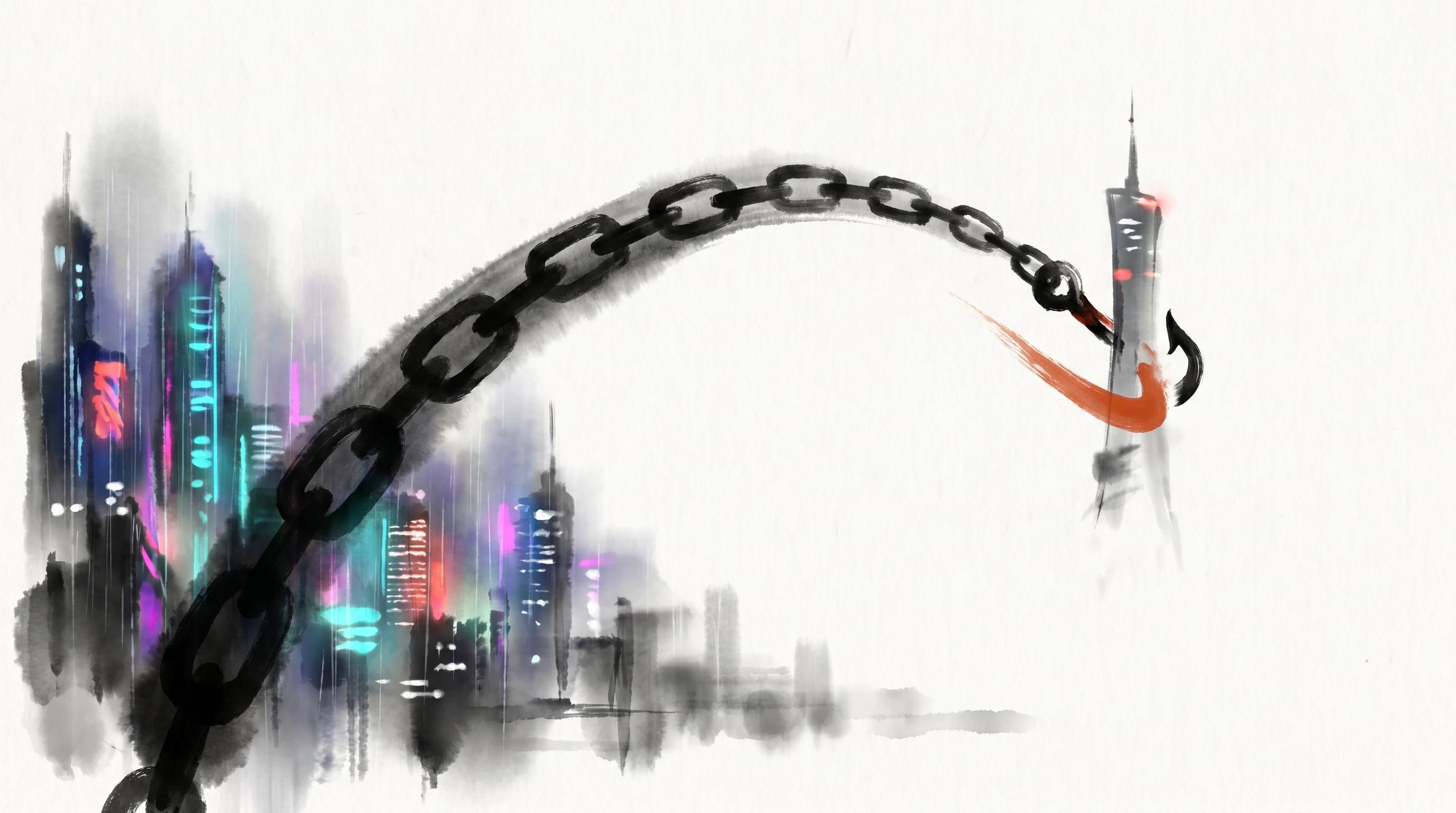
Slicing Through the City with a Single Line
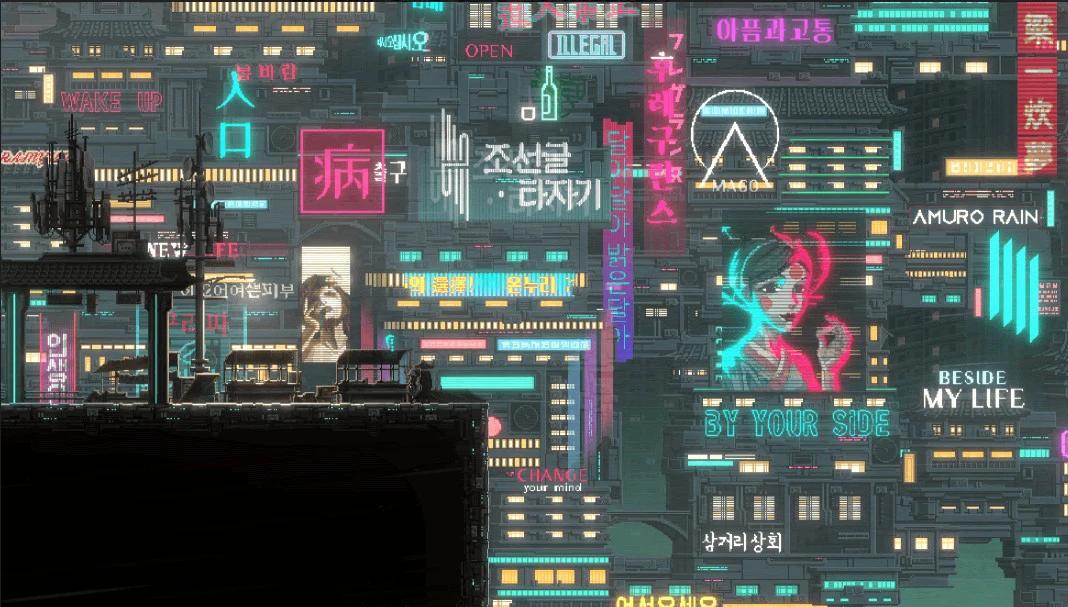
SANABI · Source: Steam
Most platformers think in jumps. SANABI thinks in hooks. This difference is bigger than it seems.
This game made by WONDER POTION places all its weight on a single grappling hook. Hook a line somewhere on the screen and throw your body—momentum carries you to the next point. When it doesn't work out, you fall; when it does, the entire city connects in a single trajectory. Against the neon of cyberpunk and the texture of pixel art, the player doesn't walk—they cut across the city. The reason SANABI is acclaimed as an action platformer is simple. Movement itself is fun.
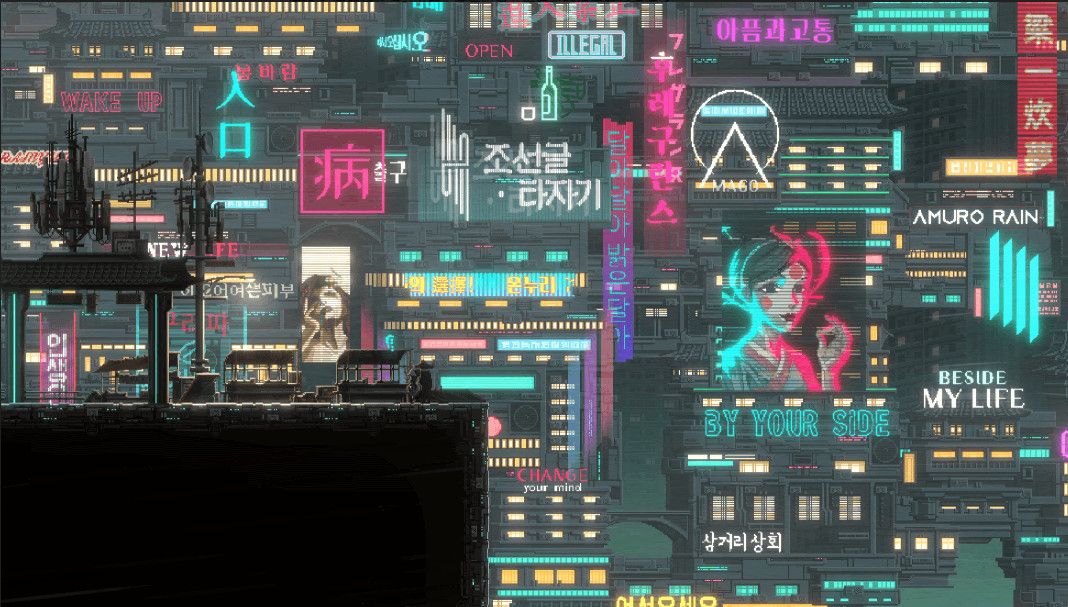
Where this game truly differs is what comes next. There are many games with fast movement action, but few that bind sorrow to that speed.
When Speed and Emotion Hang on the Same Line
The single design choice that makes SANABI special is that the thrill of action and the emotion of narrative don't interfere with each other. Usually these two clash. When the story gets heavy, hands stop moving; when hands get busy, hearts empty out. SANABI doesn't avoid this collision—instead, it layers both within the same action.
Moving quickly with a hook ultimately means throwing your body toward something, or away from something. Emotion rides that direction. The faster the speed through the city, the tighter the story's tension pulls, and when it's time to stop, the action pauses to catch its breath too. Mechanics and emotion aren't two separate tracks—they're bound in a single rhythm. This synthesis can't be achieved through design documents alone. It's a sensibility that emerges only after countless refinements, and SANABI pulled it off.
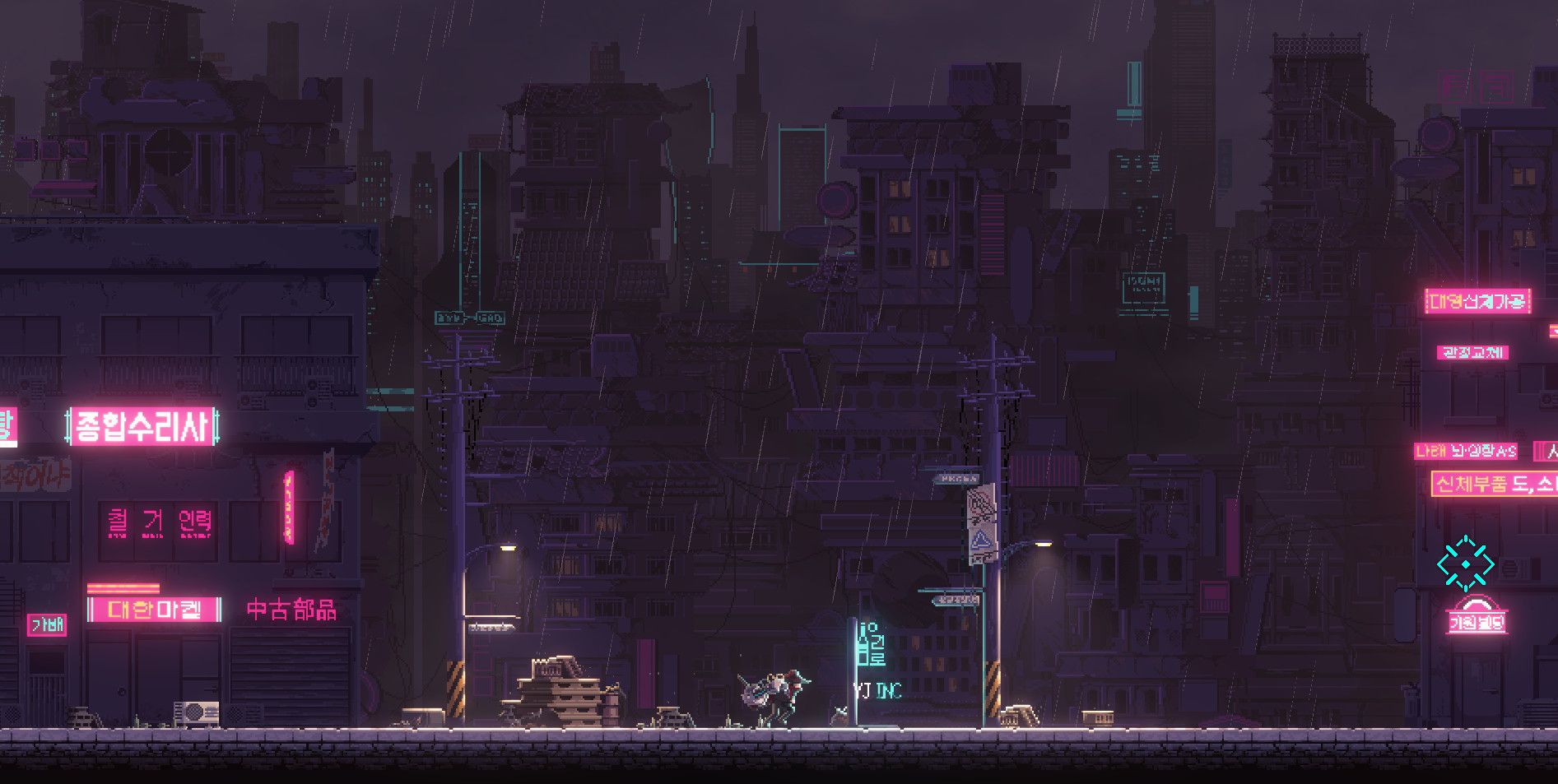
What's notable is that this fusion doesn't work in just one direction. The more familiar your hands become, the deeper the story embeds itself; the more you sink into the story, the more urgent your hands become. Action pulls up emotion, and emotion pushes action forward again—a cycle that happens within a single finger. The same button functions simultaneously as a tool of exhilaration and a conduit of feeling. The cyberpunk cityscape as a stage locks into this precisely. The cold, artificial backdrop supports the temperature of emotion by lowering it, while pixel art, rather than emptying out expressions, lets movement and space do the talking. It's a direction that chose to show less and leave more.
Honestly, One Weakness
Praise alone isn't criticism. SANABI doesn't entirely escape the burden that narrative-focused action platformers commonly bear. The more weight placed on story, the more sections inevitably emerge where the player's hands are briefly tied for the sake of narrative. The acceleration of action and the breathing of direction don't always move at the same speed. For players who want to flow quickly, these pauses can feel like breaks in rhythm. It's closer to a cost paid for immersion, though it's a bearable kind.
Coordinates Left on the Korean Indie Scene
SANABI's significance in Korean indie lies in being proof that even small teams can design mechanics and emotion simultaneously. There are many indies that excel at just one side. Great hand-feel but an empty story, or a good story but unsatisfying touch. Work that binds both on the same line and pulls it through to the end is rare.
As a Busan-based media outlet, this is why we spotlight this game. It's a work that competed on design density, not flashy scale. If you want to see what coordinates the Korean indie scene has reached, follow the tip of SANABI's hook.
Games where movement becomes emotion itself are rare. SANABI hooked its line into that rare spot.
This article was automatically translated from the Korean original by AI. For the authoritative version, read it in Korean.
한국어 원문 읽기 →