Five Generative AI Games, Hands-On
We play five real games where AI is the core mechanic. Infinite generation grants freedom, but what makes a game fun is the friction that carves that freedom down.
AI Summary
A hands-on review of five AI-integrated games — Suck Up!, inZOI, Vaudeville, PUBG's ACE-based CPC, and Wanderfolk — finds that volume of generation is not what separates a game from a tech demo. In each case, the titles that feel most like games are built around hard refusal conditions: fixed goals, failure states, and structures that say no. The piece closes with a direct message to Korea's indie scene: generative AI is most powerful as a tool layered over human-designed friction, not as a foundation that replaces it.
AI-powered games are flooding the market. Most write-ups evaluate them on two criteria: how convincingly they talk, and how infinitely they generate. Both are the wrong yardstick. A game is not a conversation program but a space of rules, and a space of rules takes its shape not from what it permits but from what it refuses. Here we look at five games we played hands-on by that standard. Whether something is a well-crafted demo or a well-crafted game is an entirely different question.
Suck Up!: The Moment Free Conversation Becomes a Game
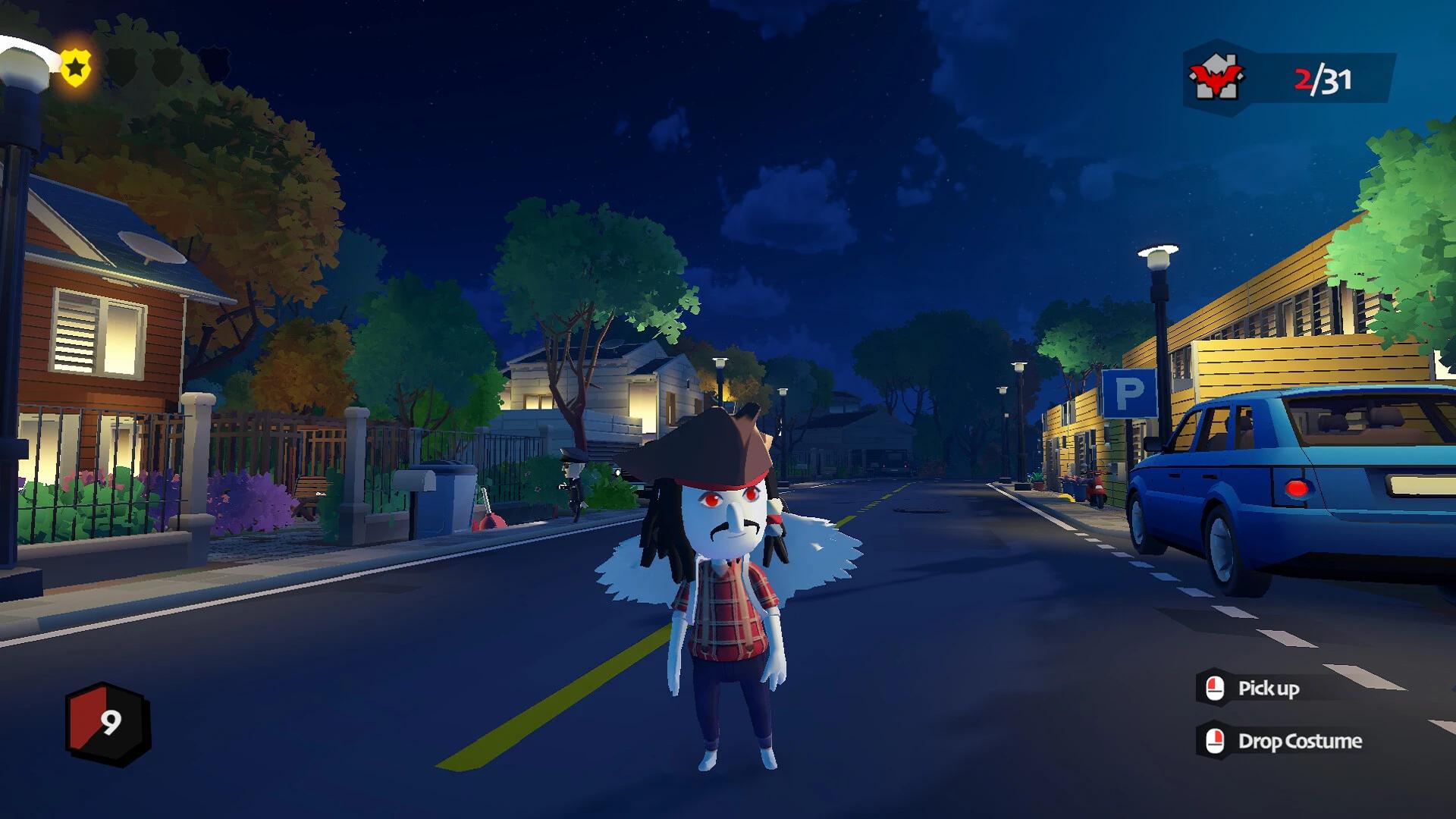
Suck Up! · Proxima. Source: Steam
Suck Up!, released by Proxima in 2023, is a rare game that places free-input conversation at its core. The player becomes a vampire who must verbally persuade language-model-driven village NPCs to invite them inside. Anything goes: fabricate lies, win sympathy, ramble until the NPC's guard drops — it all works. The first few minutes are genuinely thrilling. The sensation of trading words with something that pushes back feels real.
| Title | Refusal & Constraints (What Holds a Game Together as a Game) | |
|---|---|---|
| Suck Up! | Open-ended conversation | Identity exposed / time limit = failure |
| inZOI | Generation layered over life simulation | Whether meaningful trade-offs exist is on trial |
| Vaudeville | Dialogue is the mechanic | Culprit and truth are baked into the structure |
| PUBG+ACE | AI companion built on a human-crafted foundation | Map, balance, and blue zone rules |
| Wanderfolk | Memory & reputation NPCs | Rules only form when memory says 'no' |
This is where it becomes clear why the game actually works as a game. It is not the ability to talk endlessly. It is the two refusal conditions: get found out and you fail; run out of time and you fail. Disguises and props are the tools for sidestepping those refusals; free input is the arrow aimed at that goal. In exchange for unlimited speech, one fixed door must be reached and two lines must not be crossed. That fixedness is what turns conversation into play. In a world that accepted any utterance unconditionally, there would be nothing to expose you and nothing to expel you — and then nothing you said would carry any weight at all.
The game's limitations emerge from exactly the same place. The appeal of free conversation is strongest in the first few houses; the more you repeat it, the more the player shifts from persuading NPCs to hunting for their triggers. Once the pattern of which topics open the door and which words invite suspicion becomes legible, free input shrinks into the task of groping for the right keywords. Even on a stage built by an LLM, what the player truly latches on to is, in the end, the rules behind that stage. Free conversation was the entrance; the game was always inside the conditions that close that entrance.
inZOI: Layering Generation onto a Life Sim

inZOI · Krafton. Source: Steam
Krafton's inZOI is a Korean-born attempt to integrate generative AI into a life simulation game. It has promoted AI-driven generation of character behavior and environmental elements, along with a stated direction of increasing character autonomy. Exact feature configurations change from build to build, so sweeping conclusions are unwise, but the direction of its ambition is clear.
There is one question worth asking here: where does the fun in The Sims-style games come from? Not from infinite expression, but from the clash of needs against resources — the friction of never having enough time or enough money. Even if generative AI makes characters move more convincingly, that movement stays decorative if it fails to put pressure on the player's choices. inZOI's real test is not the visual spectacle or the flashiness of its AI features, but whether the generated autonomy creates meaningful trade-offs for the player. A puppet that moves well and a system that shakes your decisions are entirely different things.
Vaudeville: Conversation as the Mechanic Itself
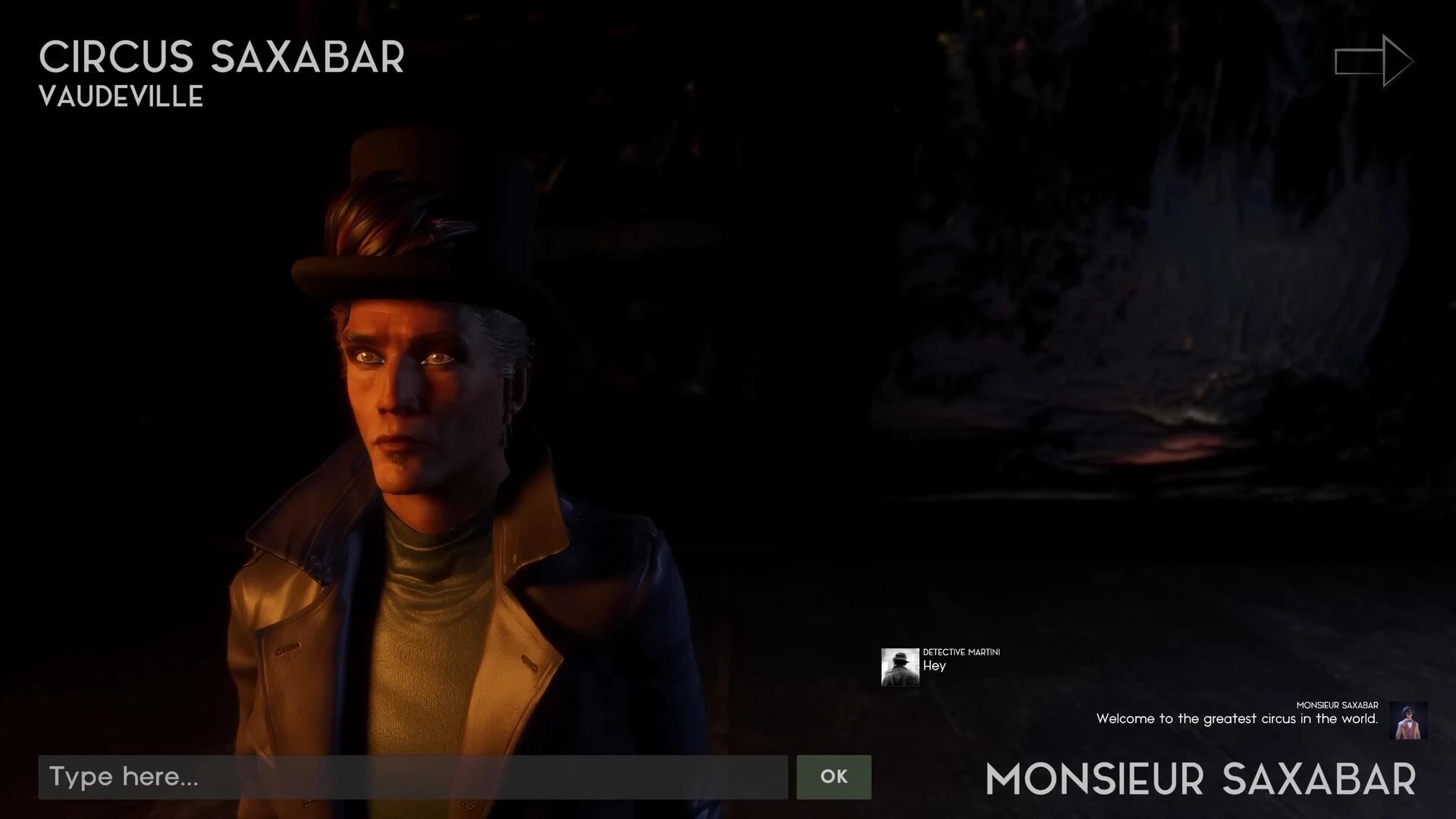
Vaudeville. Source: Steam
Vaudeville is another case of placing the LLM at the heart of the game's rules. The player interrogates murder suspects directly using free-input conversation. Dialogue is not staging — it is the mechanic itself. Ask the right questions and contradictions surface; ask the wrong ones and you waste time.
Set side by side with Suck Up!, the direction of constraint becomes sharp. Vaudeville does not pursue infinite generation. Who the killer is and what the truth is are fixed in advance. The language model only varies within the perimeter of that fixed truth. Freedom lives in the input; the answer is nailed into the structure. Where Suck Up!'s goal was to open one door, here it is to unearth one truth. In both cases, a goal aimed at free conversation and a line of failure are what bind the game together as a game. The limitations come from the roughness of execution — voice recognition, awkward responses — not from the direction of the design. You can feel with your hands which side has friction that is alive.
PUBG and NVIDIA ACE: Generative AI Layered onto a Foundation

PUBG: BATTLEGROUNDS. ACE-based AI companion revealed in an NVIDIA and Krafton demonstration. Source: Steam
Krafton demonstrated an AI companion — referred to as a CPC — built using NVIDIA's ACE technology. It is an attempt to realize generatively a teammate that responds like a human. What is interesting is the approach. This is not a case of handing the entire game over to AI; it is a hybrid that layers generative AI on top of the solid foundation of a human-designed battle royale.
This direction is the healthiest of the five. The map, weapon balance, and blue-zone rules are a mass of friction carved out by human hands. The AI companion is simply one more actor operating within those rules. Generative AI is not replacing the foundation — it is in service of it. That said, demonstration and live play are different things. Whether this companion is consistently smart under the pressure of real combat, or whether it goes dumb at the decisive moment, will only become clear in a live environment. Performing well in a demo and being trustworthy in a ranked match are problems of entirely different orders.
Wanderfolk: The Ambition of NPCs That Remember
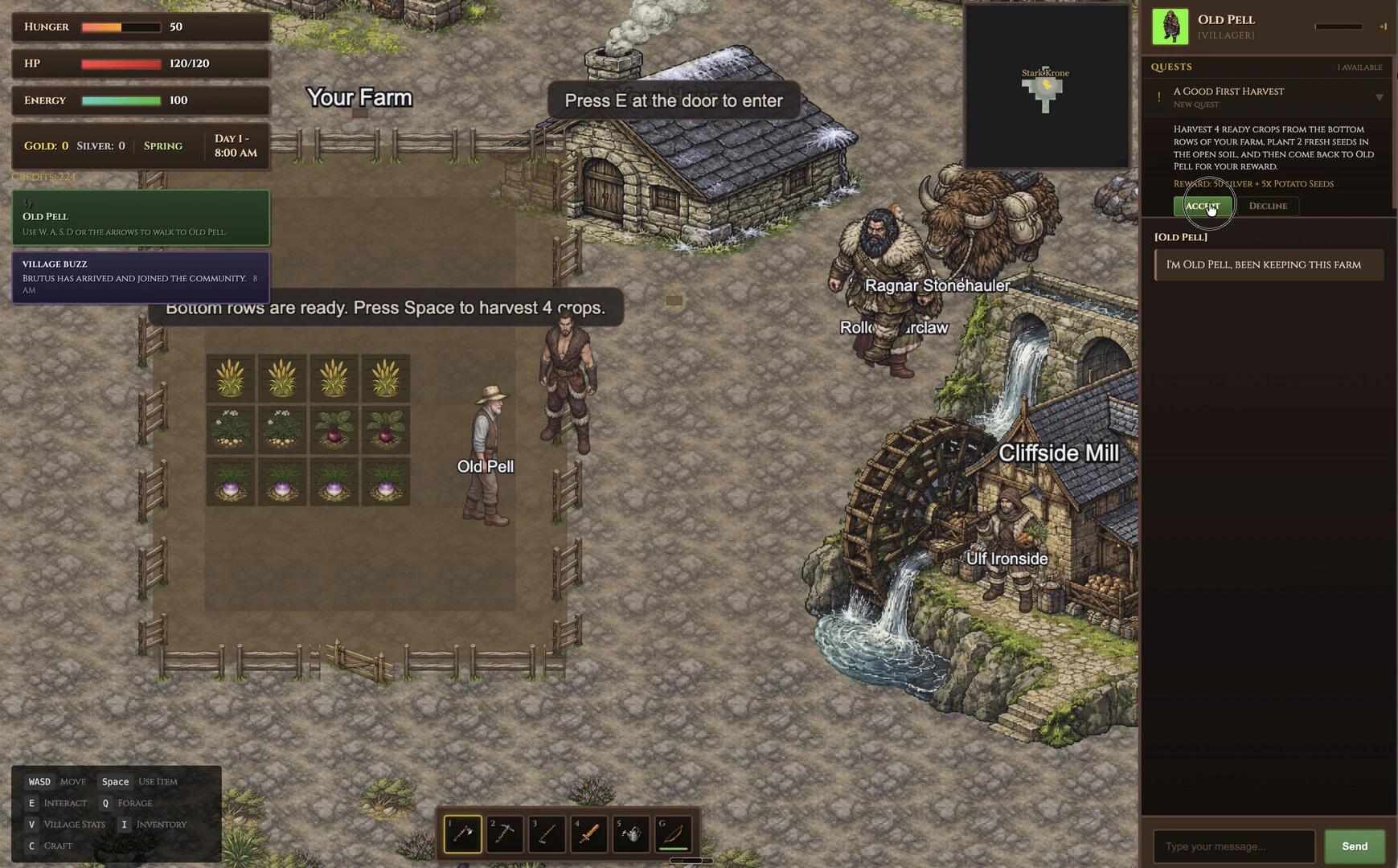
Wanderfolk. Source: Steam
Wanderfolk is an AI RPG built around the design premise that NPCs carry memories in vector form and reputation scores, and that rumors spread across a network. A world where what you did in one village arrives as gossip in the next. Unlike Suck Up!, where free conversation ends at one house, this aims for a single word or action to leave a trace across the entire world.
The ambition is precise. But there is a trap here. Memory and reputation existing as a system is different from the player feeling them as pressure. If rumors spread but do not change my next choice, it is sophisticated back-end engineering and nothing more — not friction in the game. The system only becomes a rule when reputation shuts doors and memory returns as retribution. Wanderfolk's success or failure rests not on technical sophistication but on how often that memory creates the moment it tells the player no. There is also a strong counterargument: the concern that NPCs who remember will ultimately make the game too punishing and suffocate the player. That concern is fair. But it is precisely that tightness that creates a world we cannot forget. A world that remembers nothing means nothing.
Conclusion: Fun Comes from Refusal
The thread running through all five is clear. The one that generates the most did not win. Even Suck Up!, where you can say anything, would have been nothing but a small-talk simulator without the two refusal conditions of exposure and time. Vaudeville, which nails the truth into the structure, and PUBG, whose foundation was carved by human hands, proved to be the more solid games. The appeal of free conversation is genuinely real, but what makes it a game is the introduction of constraints: a goal and conditions for failure. Fun does not come from how much the model can generate; it comes from the friction of a world that remembers your actions and says no to certain attempts. Intentional refusal is meaning itself.
This conclusion speaks directly to the Korean indie scene, including Busan. The capital to mount a massive language model may belong to Krafton, but small teams have their own arena to win. Use generative AI not as the foundation but as a tool. Sharpen a single rule to a fine edge and lay just one layer of AI on top. Not a demo that mimics infinity, but a small game that knows how to tell the player no. That is where indie has its place.
This article was automatically translated from the Korean original by AI. For the authoritative version, read it in Korean.
한국어 원문 읽기 →