Who Does Busan Recognize as a Busan Resident?
From the outside, Busan is recognized as the world's 5th largest container port and 8th best smart city. Inside, youth employment has been a chronic problem for 20 years. It's the same city with two faces. This misalignment creates people who have left, people who cannot come, and foreigners who cannot truly arrive.
AI Summary
Busan faces a paradox: while ranked globally as the 8th best smart city and 5th largest container port, it struggles with a 20-year chronic youth employment crisis. The city's failure to 'recognize' its own people—evidenced by wage gaps between large and small companies reaching 3.67 million won monthly, insufficient settlement support for incoming talent, and a foreign resident rate half the national average—has created a misalignment between external acclaim and internal reality. The article argues that Busan must extend the same recognition it receives globally to its own citizens, youth, potential newcomers, and foreign residents.
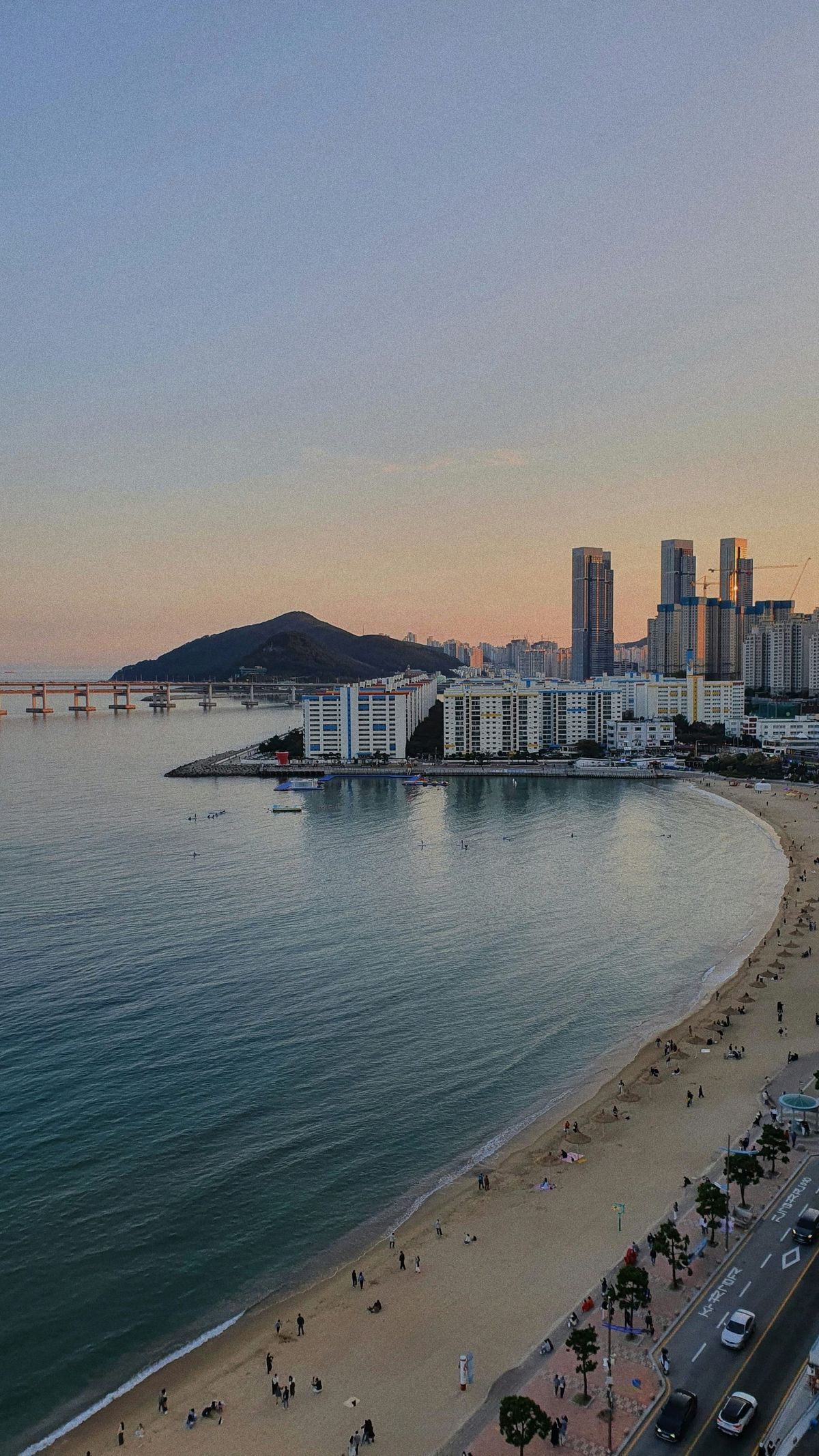
Two Busans
There is Busan as seen from the outside.
World's 5th largest container port. 8th best smart city globally and 2nd in Asia, with the Innovation Support category ranking 1st globally. External evaluations are clear. A city that ranked 62nd in 2021 has climbed to 8th place in just four years. Busan is a city recognized from the outside.
And there is Busan as lived from the inside.
Dr. Seo Ok-soon of the Busan Development Institute diagnosed the youth employment problem as a chronic illness Busan has suffered from for over 20 years. Busan's youth population decreased from 792,000 in 2015 to 650,000 in 2023—a drop of over 100,000 in eight years. The biggest reason youth leave is jobs.
According to a Busan Chamber of Commerce and Industry survey, Busan youth's desired minimum annual salary is 30 million won, while local companies' starting salary is 26 million won. During the same period, Busan's unfilled position rate was 12%, higher than the national average (11.2%). Companies cannot find people, and youth cannot find jobs. This mismatch has stood in the same place for 20 years.
The same city has two faces. Outside Busan is globally ranked 8th, inside Busan is a 20-year chronic illness.
This article's premise is simple. The outside world recognizes Busan. But Busan itself fails to recognize Busan people. This misalignment creates people who have left, people who cannot come, and people who cannot arrive.
The First Place of Misalignment: People Who Left
Where do young people who leave Busan go? To places with quality jobs.
As of 2023, the average monthly income of workers at workplaces with 300 or more employees was 4.77 million won, over 2 million won more per month than workers at workplaces with fewer than 50 employees (2.71 million won). Narrowing it down to large corporations and SMEs, it's 5.93 million won versus 2.98 million won—nearly double. After 20 years of service, the gap widens to 3.67 million won. The 810,000 won gap for new hires deepens over time.
What these numbers say is simple. The structure makes choosing to stay in Busan nearly equivalent to economic loss. Almost no youth leave because they dislike Busan. There are only youth who like it but cannot stay. The two are completely different things.
This is the first face of misalignment. From the outside, Busan is recognized as the world's 8th best smart city, but inside that city, youth labor is valued at half the price of large corporations. Outside Busan shines, but inside youth cannot find their place within that light.
The Second Place of Misalignment: People Who Cannot Come
In the Seoul metropolitan area, there are people who want to come to Busan. Work-life balance, coastal city, lower cost of living, more spacious housing. There are reasons why foreigners staying in Busan say it's a less hectic and more accessible city than Seoul.
Busan City already provides 3 million won in settlement support and 1.5 million won in continuous employment incentives to young SME workers who come from other regions or return. However, this support cannot bridge the 3.67 million won monthly gap between large corporations and SMEs. That's a gap exceeding 44 million won per year. The policy operates, but the real gap the policy tries to fill is much larger.
So there is a vacant space between people who want to come and people who have come. Busan people returning from the Seoul metropolitan area, external builders trying to start in Busan, employees volunteering for Busan branch offices of Seoul headquarters—people who should be living in that space are not there. The external perspective that recognizes Busan as globally 8th ranked does not actually arrive inside Busan. It is a misalignment between evaluation and arrival.
The Third Place of Misalignment: Foreigners Who Cannot Arrive. There are people who recognize Busan from the farthest distance. Foreigners living in Busan.
As of 2023, Busan's foreign resident population was 83,401. That's 2.5% of Busan's 3.21 million population. During the same period, the national average was 5.18% (2024) and 5.44% (2025)—Busan is half that. Over 15 years, Busan's foreign population grew 2.5 times, but not at a pace keeping up with the national average. The foreign resident ratio of Busan, a global port city, remains at half the national average.
The distribution makes it clearer. Nam-gu and Sasang-gu have international students; Saha-gu and Gangseo-gu have foreign workers. Foreigners living in Busan are closer to foreigners brought by universities and factories than foreigners for whom Busan designed permanent settlement. They have arrived, but the city has not reached the stage of recognizing them as Busan people.
This is where the misalignment runs deepest. External evaluation recognizes Busan as the world's 8th best smart city, but that recognition has not entered the city's daily vocabulary for foreigners who have arrived in Busan. A city that fails to recognize arrivals as Busan people will also find it difficult to call those who might arrive.
The Misalignment of Recognition
All three places are different faces of the same single thing.
Youth who left, talent who cannot come, foreigners who cannot arrive. What's common to all three places is not quality jobs. Quality jobs are the result. What comes before that is the misalignment of recognition.
The outside world recognizes Busan as the 8th best smart city globally, 1st in Innovation Support, and 5th largest container port. Busan does not recognize Busan people as much as external evaluations do. It values its own youth's labor at half the price of large corporations, tries to bridge the 3.67 million won gap for talent wanting to come to its city with 3 million won in settlement support, and recognizes foreigners who have arrived in its city at only half the national average.
It is true that youth leave because there are no quality jobs. But that is not all. If Busan is a city that fails to recognize its own people, even when quality jobs emerge, only half the reason to stay is filled. Recognition does not replace jobs. However, it points to a place that cannot be filled by jobs alone.
The 20-year chronic illness diagnosed by Dr. Seo Ok-soon is not merely a jobs problem. It is 20 years of Busan failing to recognize its own citizens as much as external evaluations do.
Who Does Busan Recognize as a Busan Resident?
We return to the initial question.
Busan people are people recognized by Busan. Birth alone does not make a Busan person. People born and raised who stayed in Busan, people who left and returned, people who came from afar and settled—all become Busan people when Busan recognizes them. In the place where that recognition should be directed are people who stayed, people who left, people who cannot come, and people who have arrived.
External evaluation has already arrived in Busan. Recognition as the world's 8th best smart city exists outside. The next place is where Busan returns that recognition to its own citizens. Recognizing youth labor not as half the price of large corporations but as quality positions. Accurately seeing and trying to fill the 3.67 million won gap for people wanting to come from the Seoul metropolitan area. Recognizing foreigners who have arrived as citizens of a global port city. These three are not different things but the same single thing.
External recognition has already arrived. The place where Busan's recognition must begin is the place where we now stand.
But who are we now? The mayor? City hall? Companies? Citizens? The subject of recognition—that is the next question.
| Busan from the outside | Busan lived from within | |
|---|---|---|
| Assessment | Smart City Global 8th · Port 5th | 20-year chronic problem (youth employment) |
| Youth | Innovation Support 1st | 2015: 792K → 2023: 650K |
This article was automatically translated from the Korean original by AI. For the authoritative version, read it in Korean.
한국어 원문 읽기 →