What Does Busan Pass Down to the Next Generation?
Cities pass down buildings, roads, and airports to the next generation. But what they truly pass down is something else. As AI rebuilds the structure of the era, the one thing Busan must pass down is the infrastructure of recognition. Momos Coffee has already walked this path.
AI Summary
As AI reshapes the economic landscape, Busan faces a critical question about its legacy to the next generation. Beyond physical infrastructure, the city must build an 'infrastructure of recognition'—the ability to identify, nurture, and retain talented builders through selection, education, community, and global networks. Momos Coffee exemplifies this approach, having built all four elements independently while remaining rooted in Busan, proving that recognition works regardless of technological shifts.
What We Pass Down
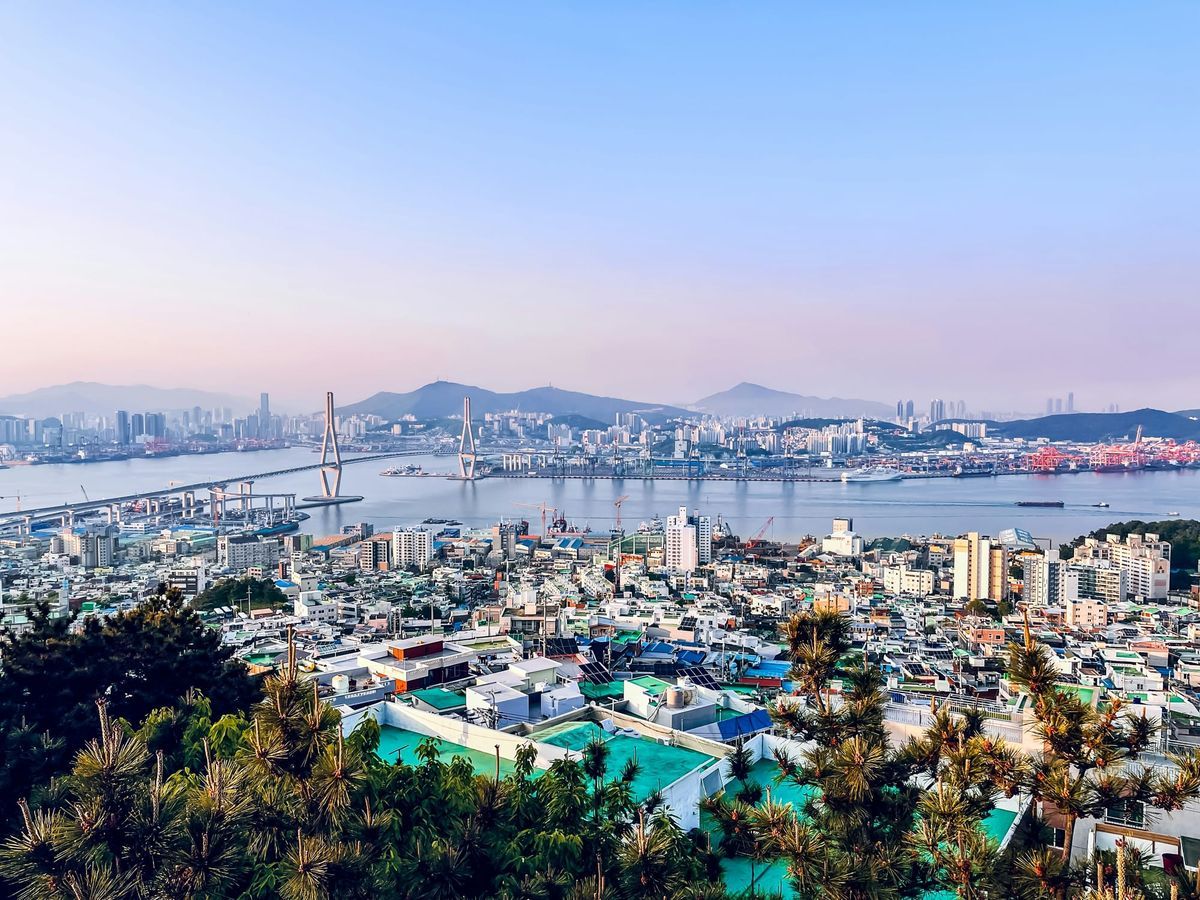
What does a city pass down to the next generation?
It passes down buildings. It passes down roads, airports, and ports. It passes down schools, hospitals, and administrative institutions, industrial complexes, commercial districts, and tourism resources, the sites of jobs and the sites of capital.
It passes down all of this. But what a city truly passes down is something else. What determines whether the next generation can build something within this city. It's the foundation upon which the recipients can establish their own lives. Buildings, roads, and airports are part of that foundation, but not all of it.
In the previous article, we saw that Busan was a city that failed to recognize builders who loved it. If we pass down the same city to the next generation, the next generation will also leave from the same place.
This article's proposition is simple. What Busan must pass down to the next generation is the infrastructure of recognition.
And Now Is That Era
We return to the one variable planted at the end of the previous article. The name of that variable is AI.
AI is not the emergence of a technological tool. It is an event that changes the structure of the era. That change occurs in five directions.
Replacement — Practical work changes. AI agents handle part of design, part of code, part of marketing copy, part of operational analysis. It only moves in the direction of becoming easier and cheaper. Much of the work that team leader-level practitioners did until yesterday — will be handled differently in the next generation.
Redefinition — Investment firms change. As AI takes over a significant portion of practical work, the position of investment firms that existed solely to supply capital changes. Capital becomes increasingly common — what becomes scarce is not capital but recognition. In this repositioned space, what remains for investment firms is the discernment to recognize good builders, education that cultivates builder capabilities for the AI era, community where builders meet builders, and global networks. Capital becomes an accessory layered on top.
Increase — The era of solo founders truly begins. If AI agents can replace the work half a team used to do, the scale of companies one person can create grows. The need for large teams diminishes. An environment is being created where one builder can carry an entire company.
Democratization — The definition of builder expands. As AI agents become easier and cheaper, the barrier to entry for building decreases. If only tech entrepreneurs were builders until yesterday, in the next generation, the neighborhood café owner in Busan, the photographer in Yeongdo, the video producer in Songjeong, the self-employed merchant in Bujeon Market all become builders who construct companies with AI tools. The number of builders does not decrease — it explosively increases.
Busan's Significance — The position of cities changes. Half the pressure that required moving companies to recruit team leader-level practitioners — disappears. When an era comes where builders who received Series A funding don't need to negotiate person by person, half the reason to headquarter in Seoul also disappears. The possibility for builders who started in Busan to go all the way in Busan — an environment much more favorable than five years ago is just now being created.
The five propositions ultimately point to one place. The era created by capital is ending, and the era created by recognition is beginning.
Infrastructure of Recognition — Four Sites
What is the infrastructure of recognition that Busan will pass down to the next generation? It grows in four sites.
First site — Selection.
The discernment to recognize good builders. In the AI era, builders cannot be filtered by technical specs or education alone. Love for Busan, the depth of the builder, whether they are someone who will last long. Discernment is needed to recognize what is difficult to quantify. That discernment does not grow from manuals but from repeated meetings. Only after seeing one person again each quarter, checking where last year's started work has reached this year, and observing whether promises were kept, does the discernment to recognize this person finally develop.
Busan has never sustained these repeated meetings in one place. The first site of recognition remains vacant.
Second site — Education.
In the AI era, knowledge that can be recorded is increasingly taught by AI. Recorded things like manuals, procedures, code, and case studies can be instantly retrieved and used by anyone. So what people must teach people becomes narrower and deeper. Things that cannot be recorded, namely judgment and discernment, understanding of people, love for the city. The next generation's builders do not learn this in school or from AI. They learn it beside people who are already building.
The education Busan will pass down to the next generation is not classroom education but education at the site of building. A place where newly started builders can sit beside people who have been building for a long time. The city can create that place.
Third site — Community.
A place where builders meet builders. As we saw in the previous article, repeated meetings create trust, and trust creates a city of builders. In the AI era, these meetings become more important. The smaller the team, the more other builders are needed. Even if one person creates a company, that one person cannot know everything alone. Connection with other builders becomes a resource that replaces teams.
The community Busan will pass down to the next generation is not events but continuity. A structure where the same people meet again each quarter in one place. A promise that even if the operating entity changes, the market changes, or policy changes, that place alone will continue.
Fourth site — Global network.
Among Busan's assets, one that no other Korean city can match is the port city network. Busan is one node in the global port city network. And builders who left Busan are in Tokyo, Singapore, New York, and Fukuoka. They introduce themselves as Busan people. They remember Busan as the first site of their lives.
This network already exists. It's just that Busan has never organized it as its own asset. The greatest single thing Busan could pass down to the next generation might be the organization of this network. A promise that next-generation builders can have one person each in Tokyo, Singapore, New York, and Fukuoka who will recognize them simply because they started in Busan.
There Is Already a Builder Who Did This
The four sites are not abstractions. In Busan, there is already a builder who constructed all four of these on their own. A coffee company.
Momos Coffee started in 2007 in a roughly 4-pyeong warehouse of a restaurant. They recognized barista Jeon Joo-yeon from the early days and stayed together until the end, producing the 2019 World Barista Champion. He is now co-CEO (selection). Since 2010, they have conducted education to cultivate baristas (education), and transformed an old logistics warehouse and old market residence in Yeongdo into places that will not disappear (community). Since 2011, they have traded directly with origin sites and stood shoulder to shoulder with coffee cities around the world (global network).
The infrastructure of recognition that the city failed to provide, one F&B builder constructed within themselves.
And this builder did not leave Busan. Domestic stores are only in Busan. Instead, online sales grew steeply. A figure of 30 times in one year was reported. The co-CEO's words are precise. Offline, they grow as one reason to come to Busan, and online, they break limits through expansion beyond their own mall. It's a path to connect with the world without abandoning the physical site called Busan. So Momos Coffee has now become a reason to visit Busan.
This is the moment when recognition becomes bidirectional. When the city recognizes builders, those builders become reasons to visit the city. If a builder who started with one cup of coffee walked this path, tech entrepreneurs are not the only builders. If solo builders in the AI era can connect with the world from anywhere, more builders can walk this path. But only when the city recognizes them.
However — No One Knows
It must be written honestly. That AI is advantageous to Busan has not yet been proven.
AI could increase solo builders and give opportunities to regional cities, or conversely, concentrate more power in giant platforms and intensify Seoul concentration. Half the reason to relocate headquarters could disappear, or the remaining half could become stronger. No one knows right now which of these two futures will come.
But one thing is clear. Whichever future comes, a city with infrastructure of recognition is better than one without it. If AI operates favorably for Busan, that infrastructure will amplify opportunities, and if it operates unfavorably, that infrastructure will become the last line of defense. What Momos Coffee proved is that recognition works regardless of the era. The WBC championship and online growth both happened before AI arrived.
So the infrastructure of recognition is not a bet on the future. It's the only investment needed in any future, one that will never be regretted.
What Busan Will Pass Down to the Next Generation
The four sites are all different names for the same one thing. What Busan will pass down to the next generation is — the infrastructure of recognition.
Buildings, roads, airports, industrial complexes will all be passed down. But whether the next generation can build something on top of them depends not on buildings but on recognition. Can Busan recognize next-generation builders who love Busan? Recognition is the beginning of trust, trust creates a city of builders, and a city of builders creates the next generation's Busan.
And now is that era. AI is rebuilding the structure of the era. The era created by capital is ending, and the era created by recognition is beginning. Whether Busan can become the first city of this era depends on what Busan begins to build now.
Busan of the past 10 years was a Busan that failed to recognize builders who loved Busan. Busan of the next 10 years could be a Busan that began building the infrastructure of recognition.
The place that determines the Busan the next generation will receive is not the next generation but the place where we stand now.
This article was automatically translated from the Korean original by AI. For the authoritative version, read it in Korean.
한국어 원문 읽기 →