Why Fukuoka, Not Busan?
Busan is the world's fifth-largest container port city. Fukuoka isn't even on that list. Yet digital nomads go to Fukuoka, not Busan. It's not about infrastructure.
AI Summary
Despite Busan's status as the world's fifth-largest container port, digital nomads choose Fukuoka over the Korean city because the two have answered fundamentally different questions. Fukuoka has spent 13 years building policies and infrastructure to help foreigners settle permanently—including startup visas, dedicated incubators, and global innovation hubs—while Busan has focused on tourism-oriented workation programs that attract temporary visitors. The contrast reveals how city identity and dedicated governance structures, not physical infrastructure, determine success in attracting global talent.
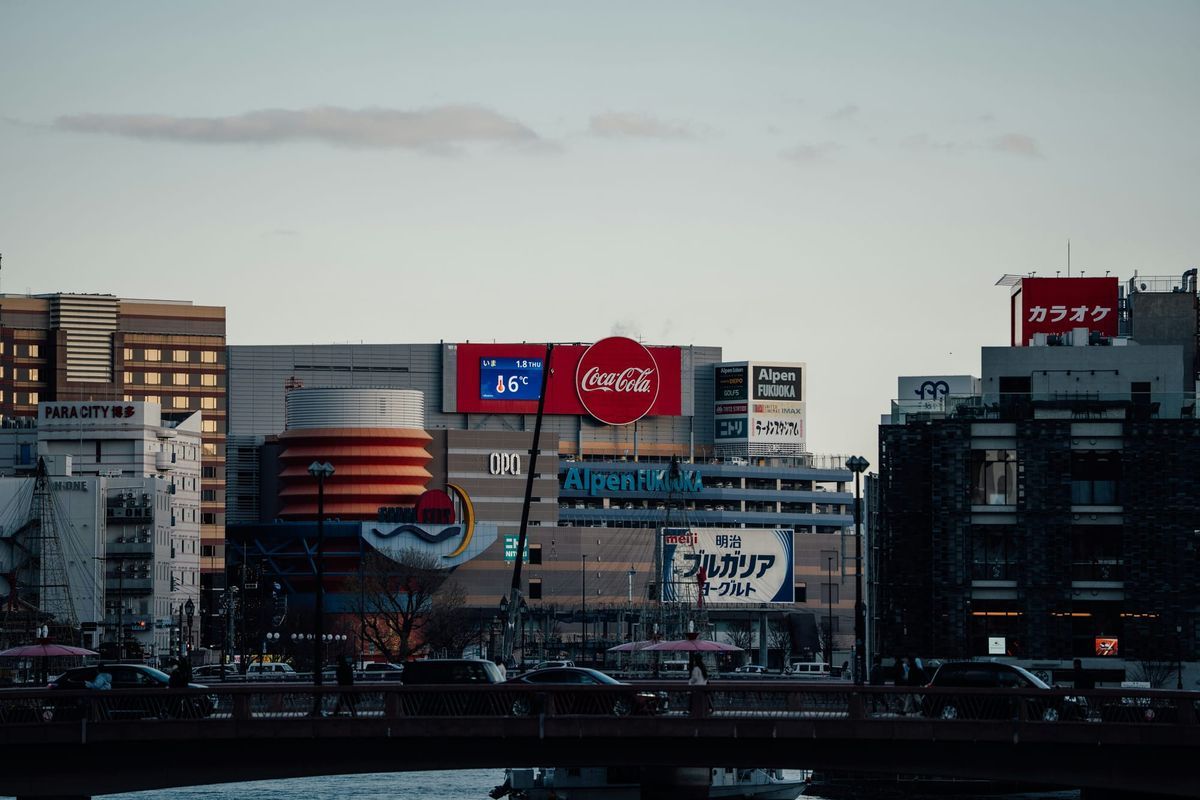
Fukuoka's population is 1.61 million, half of Busan's.
In DNV's 2025 global container port benchmark, Busan ranks fifth. Fukuoka is not on that list.
Yet digital nomads go to Fukuoka, not Busan.
It's not about infrastructure. It's because the two cities answered different questions.
Fukuoka asked: How do we get foreigners to live in our city? Busan asked: How do we get foreigners to stay briefly and leave?
| Fukuoka | Busan | |
|---|---|---|
| Driving Question | How can we make them live here? | How can we make them stay and visit? |
| Foundational Policy | Visa Policy (2015 Startup Visa) | Tourism Policy (Stay-type Tourism) |
| Target Audience | Entrepreneurs·Investors·Remote Workers | External Office Workers |
| Overseeing Department | Directly under Mayor | Tourism Policy Division |
Different questions yield different answers.
Fukuoka City declared itself a "Startup City" in 2012. And for 13 years, even through changes in mayor, it kept that promise.
In 2015, it created Japan's first Startup Visa for foreigners. Previously, foreign entrepreneurs in Japan needed an office, two full-time employees, and 5 million yen in capital. The Fukuoka visa allowed them to live for one year with just a business plan, no other requirements. Visas are not given to those who leave, but to those who come to live.
Closed schools were not demolished. In 2017, the city converted one into Fukuoka Growth Next, a startup incubator run directly by the city. Tenant startups have raised a cumulative 18 billion yen (approximately 160 billion won) in funding. Closed schools are not spaces to be erased, but spaces to be reused.
There are three cafés directly operated by the city: Engineer Café, Startup Café, and Artist Café. Cafés are not places you pass through, but places you return to.
In April 2025, CIC Fukuoka opened in ONE FUKUOKA BLDG. CIC stands for Cambridge Innovation Center. It's a world-class innovation campus brand that started next to MIT. This is the second location in Asia and the first in western Japan. 3,500 square meters, 143 offices, 40 coworking seats, 17 meeting rooms. Inside, Fukuoka Prefecture's Global Connect Fukuoka and the city's global business support desk are co-located.
Offices are not spaces that tourists rent.
Colive Fukuoka. Coliving. Cowork. Co-creation. The name itself means living together. Launched in 2023, it gathered 436 people from 45 countries in 2024 and 496 people from 57 countries in 2025. The economic impact left on the city during just one month in Fukuoka amounted to 140 million yen (approximately 1.2 billion won). It was named the world's best global nomad festival at the 2025 Nomad Retreats Awards.
Hotels were insufficient. In 2027, Ace Hotel will open in Fukuoka. This is the second Japanese location for the boutique hotel that started in Seattle. The first was Kyoto, followed by Fukuoka. Busan is not on that map. Boutique hotels are not just about check-in and done—they're community lounges.
All of this points in one direction: a city that settles people.
What has Busan done?
Busan also does workation. Starting in February 2023 with the opening of a hub center near Busan Station, it surpassed 6,900 people in 2024, reaching a cumulative 10,000. In 2026, it was selected as an excellent model by the Korea Tourism Organization and received an additional 200 million won in national funding.
However, the Busan-style workation is categorized as a stay-type tourism model. The department that issued the press release was the Tourism Policy Division. The application targets people with workplaces outside Busan—in other words, people with jobs elsewhere who briefly come to Busan to work before leaving.
Everything is contained in this one paragraph.
Fukuoka started with visa policy, while Busan started with tourism policy. Fukuoka called entrepreneurs, investors, and remote work professionals, but Busan called external office workers. When Fukuoka designed for settlement, Busan designed for tourists to stay slightly longer.
Even when attracting the same people, some cities give vouchers and call it done, while other cities connect them with co-founders, investors, and city networks.
Same words, different city strategies.
This is also reflected in operational structure. Busan-style workation is operated by the Busan Creative Economy Innovation Center. The same organization simultaneously handles startup investment, acceleration, incubation programs, and workation. Satellite centers are delegated twice: city → Creative Economy Innovation Center → private contractors in five districts.
The results came in numbers. The Busan-style workation project, which invested 4.1 billion won including local extinction response funds from the Ministry of the Interior and Safety, had only 1,070 total users in 2024—an average of about 4 people per weekday. Some satellite centers ceased operations during this period.
Because there is no dedicated organization. The reason there's no dedicated organization is because what needs to be dedicated to has not been defined.
Fukuoka decided. We are a city that settles foreigners. It kept that promise for 13 years. It created a dedicated organization to keep the promise and did not mix it with other projects.
Even when mayors changed, the momentum was not broken.
A city becomes as much of a city as it declares itself to be. Fukuoka declared itself. Busan has not yet declared itself.
Cities that have become gateways are not cities you pass through, but cities you return to. Busan is fully qualified to become a gateway, but it has never decided to become a city people return to.
The next Busan must start with that decision.
📑 PDF: Download Korean version · 🇬🇧 English version: Why Fukuoka, not Busan?
This article was automatically translated from the Korean original by AI. For the authoritative version, read it in Korean.
한국어 원문 읽기 →