Unpaid Labor Called Love
Streaming and mass campaigns are not cultural consumption but unpaid labor designed by platforms. The word 'love' conceals surplus value extraction. The problem is not fan devotion, but who writes the rules.
AI Summary
Fan activities like streaming campaigns and coordinated efforts to boost chart rankings constitute unpaid labor that benefits entertainment companies and platforms while transferring marketing costs to fans. Though voluntary and driven by genuine affection, these activities are structured like platform labor—measured, optimized, and generating data assets that fans have no rights over. The solution is not to stop fandom but to establish transparent rules around chart systems, data usage, and fan contributions.
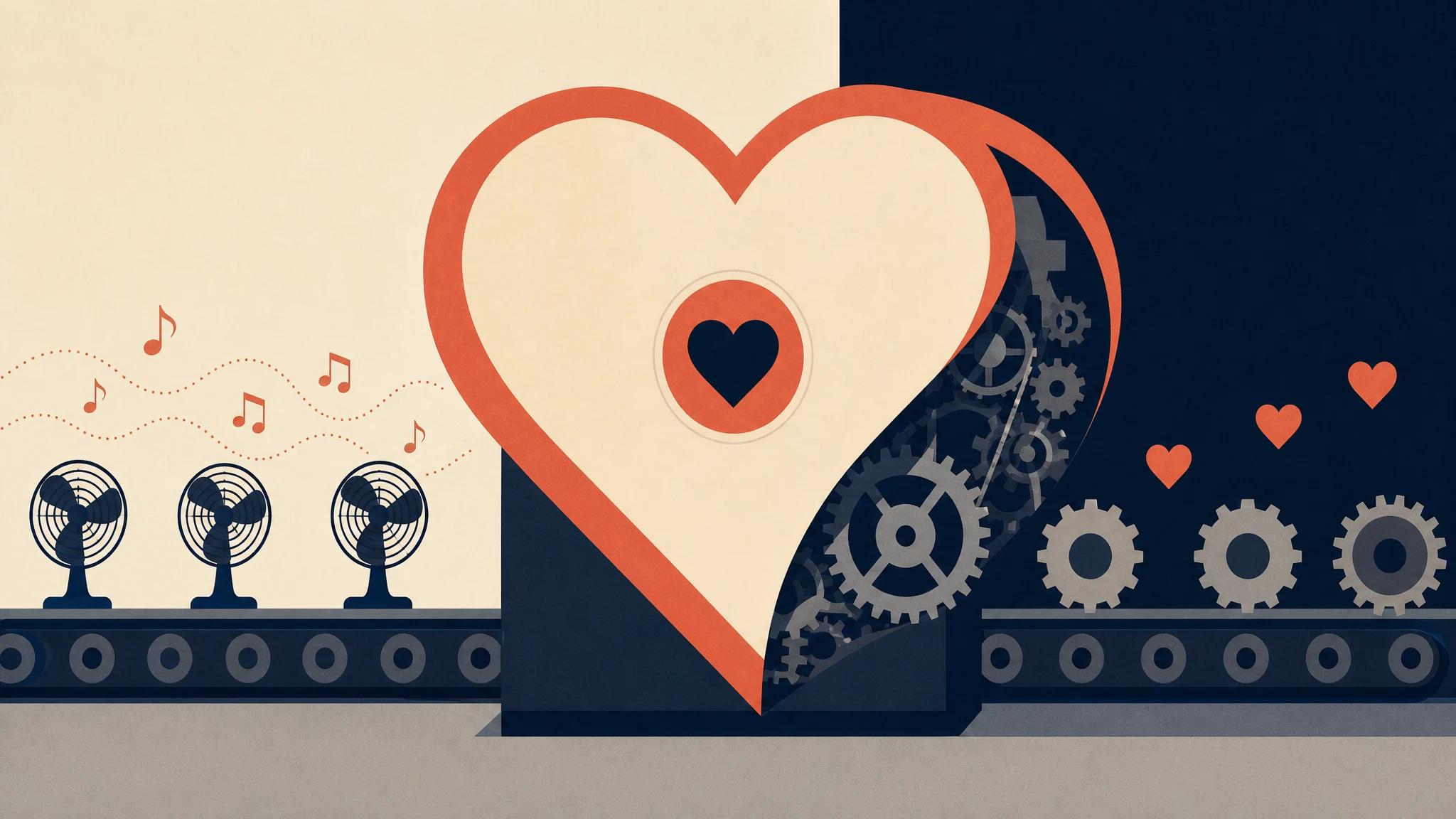
3 A.M. at the Workshop
At 3 a.m., a fan powers on three mobile phones side by side. One streams music, one boosts video view counts, and one infinitely repeats a muted channel. This is 'streaming'—an effort to raise chart rankings. The fan calls this love. The language within fandoms is filled with words like devotion, filial piety, and reciprocation. From the outside, it just looks like enthusiastic consumption.
But when you step back and look at this scene, it reads differently. A person repeating the same tasks at designated times, following set manuals, toward measurable performance indicators. This looks closer to a worker than a consumer. The only differences are the absence of wages, no employment contract, and that the person does it voluntarily. In terms of efficiency, it's an almost perfect system. Companies mobilize unlimited marketing personnel without labor costs. The question should start here: whose costs did this efficiency reduce, and where did those costs shift to?
Whose Costs Did Love Reduce?
From the perspective of record labels and platforms, fandoms are a structure that dramatically reduces costs. Normally, money would go into advertising expenses, chart marketing costs, data analysis personnel, and merchandise distribution networks. Fandoms take on these items themselves. They create coordinated attack accounts to run advertisements, compile and distribute streaming guidelines in Excel, and raise funds for birthday cafes and subway ads. The marketing costs that companies should pay have shifted to fans' time and wallets.
The key is that this transfer wears the guise of 'voluntariness.' If it were forced labor, resistance would emerge. But the language of love preemptively dismantles that resistance. A hierarchy operates where the more you spend and work, the better fan you become. Someone will counter: why call it exploitation when people do it willingly, isn't it fine if they're happy? It's a valid point. Voluntariness and pleasure are real. But pleasure doesn't mean value isn't being extracted. Pleasant labor is still labor, and if that pleasure is used as lubricant to smooth extraction, it demands even closer scrutiny. Just as game companies design fun to increase usage time, the entertainment industry designs affection to increase mobilization.
When It's Measured, It Becomes Labor
The critical dividing line between cultural consumption and platform labor is 'measurement.' Listening to a song you like is consumption. But the moment that listening is converted into an indicator called chart ranking, and behavior is organized to raise that indicator, it takes on the character of labor measured by performance. The aggregation algorithms of Melon, Spotify, and YouTube become work instructions. Fans optimize their behavior to match the methods the algorithm recognizes. Structurally, it's the same as delivery riders planning routes according to platform rating algorithms.
The flow of data makes it even clearer. All behavioral data created by fans—which content they reacted to, when, and how much—accumulates as assets for companies and platforms. The next album's concept, comeback timing, and merchandise lineup are decided based on this data. Fans produce the data but have neither rights to that data nor a voice in decisions made from it. They performed labor, but ownership of the results flows only one way. Behind the scene of a major concert hall in Busan selling out lie countless unpaid tasks that measured and organized that demand in advance. What's captured on screen is only the cheering; the labor that created that cheering isn't caught in statistics.
Not Saying Stop—Saying Write the Rules
Let's prevent misunderstanding. This isn't about criticizing fandoms or doubting affection. The love is real, and the energy of solidarity and creation that fan culture produces is valuable in itself. The problem isn't the sentiment but the design through which that sentiment flows. The current structure has a one-way channel converting fan devotion into corporate profit. A better design would open this channel in both directions.
The rules Korean society can create are not abstract. The starting point is transparently disclosing music chart aggregation methods, fixing chart structures that encourage ID theft and abnormal streaming, and establishing accounting transparency standards for fan fundraising and advertising expenditures. Going further, we can imagine norms where companies disclose when they use fan-generated behavioral data commercially and return some portion for public benefit. Just as we discuss algorithm explanation rights for platform workers, we can demand minimum information symmetry for the informal labor called fandom. This is an extension of areas already handled by the Fair Trade Commission and the Ministry of Culture, Sports and Tourism, not business from a new planet.
Technology and platforms are the real force that pushed K-pop into the global market. There's no reason to deny that. However, whose time and data that force burns as fuel, and what returns to those who supplied that fuel, must be determined separately. The word love conceals too much. Revealing what's concealed doesn't diminish love. Rather, it's about protecting that love from being unilaterally exhausted. This isn't about stopping fandom. It's time for fans themselves to decide by whose rules that enormous devotion will operate.
This article was automatically translated from the Korean original by AI. For the authoritative version, read it in Korean.
한국어 원문 읽기 →