Who Collects the Toll?
While the whole country fights over issuance rights, Visa and Circle have quietly laid the settlement rails where the real money drops.
AI Summary
While South Korea debates stablecoin issuance regulations, Visa and Circle are capturing the more profitable part of the value chain: settlement rails and cross-border transaction fees. The real revenue comes not from issuing stablecoins but from controlling the infrastructure that processes conversions and cross-border payments, where per-transaction toll fees are collected. Korean lawmakers are focused on issuance licensing while foreign players are quietly establishing the payment rails that will extract fees from every international transaction.
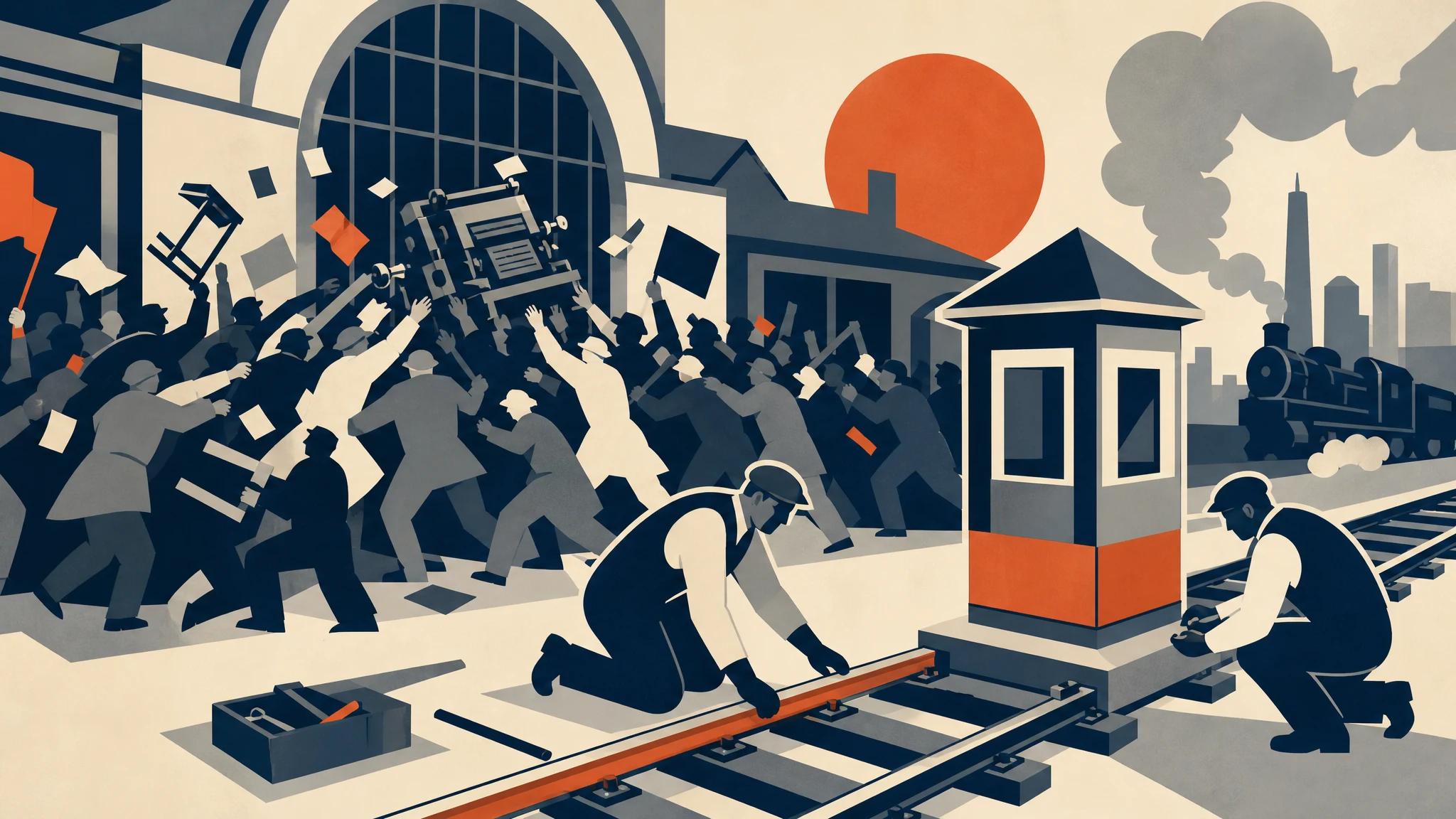
While the whole country fights over who gets stablecoin issuance rights, Visa simply loaded stablecoin payments onto its own network. It didn't issue a single line. But Visa is the one making money.
If you read this scene as product news, you miss the core entirely. "Visa supports USDC settlement," "Circle lays payment network." This isn't a feature addition. It's an event where the coordinates of where money drops have changed.
First, let's look at what Korea is fighting over right now. Issuance licenses. Whether banks or non-banks issue, what the minimum capital requirements should be, how far the Bank of Korea's authority extends. It's all warfare happening around 'issuance.'
The problem is that issuance is the least profitable node in the value chain. Issuers only earn interest on reserves, so when interest rates fall, earnings fall with them. Plus, they shoulder the entire regulatory burden. Reserve audits, redemption obligations, anti-money laundering responsibilities, bank run risks. Issuers enter not a control room but a liability room.
The real toll is collected elsewhere. If a won token just stays as a won token, nothing happens. Money drops when that token transfers. When converting from won to dollars, when moving from one chain to another, when a domestic token is swiped at an overseas merchant. At each of those transfer stations, someone collects a per-transaction fee.
Who holds those transfer stations? Not the issuers. Those who laid the settlement rails. Visa kept its card network intact and simply layered stablecoins on top. Merchants receive USDC, but settlement passes through Visa's network. Visa collects the toll. Circle goes a step further, combining issuance and settlement in one body, laying the very highway on which its own coin will flow.
The numbers make clear why everyone covets this position. In existing cross-border card payments, the network fees Visa and Mastercard take are in the 1 percent range of transaction value. Korea swipes and remits hundreds of billions of dollars overseas annually. That 1 percent flows out to foreign rails every year, and stablecoin rails are products that came in to take this position more cheaply. Even if the unit price drops to 0.5 percent, if transaction volume doubles, the total toll remains the same.
Let's trace the motives backward here. Why doesn't Visa issue? Not because it can't. Issuance has large regulatory liabilities and thin margins. Settlement rails have light liabilities and thick tolls. Visa cherry-picked only the most expensive node and offloaded the noisiest node to others. Everyone fighting over issuance licenses is actually competing for the position Visa avoided.
This is the stopping point. We're fixated on the question 'who issues the won,' but the truly important question is 'whose rail is it when won tokens convert to dollars and go overseas.' Issuance rights are determined within borders, but settlement rails are already foreign infrastructure the moment they cross borders.
It becomes clear when you separate the makers from the collectors. Issuers make. They stack reserves, mint tokens, and guarantee redemption. Rail operators collect. They stand at the crossroads where value made by others flows and just receive tolls. Korea's legislative debate only determines qualifications for 'makers,' while 'collectors' have quietly established position outside the legislative radar.
The counterargument is legitimate. What's new about foreign infrastructure controlling settlement rails? Even now, Visa and Mastercard eat up all cross-border card payments, and we're living well on top of that, aren't we. Stablecoins could just be a repetition of the same structure.
Correct. That's why it's more dangerous. Existing card networks were expensive and slow, leaving room for domestic simple payment systems to wedge in. Stablecoin rails are products designed to close that gap. If they collect tolls cheaper and faster, the space for domestic players disappears entirely. It's not a repetition of the same structure, but an upgraded version that blocks escape holes in advance.
Capital already knows the answer. Looking at the money U.S. VCs pour into stablecoins, it flows not to issuance startups but to payment infrastructure, on-off ramps, and settlement middleware. The market knows issuance will become a commoditized node and has lined up at the node where tolls are collected. The flow of money already points to 'collectors.'
Now let's mark Busan's coordinates. Korea is not a latecomer on the global adoption curve. By card and simple payment penetration rates, it's actually an advanced market. But the more advanced the market, the more it loses by ceding rails to foreign powers. Because the higher the transaction volume, the larger the total toll. Trade settlements passing through Busan Port, remittances going to Southeast Asia, cross-border settlements all ride those rails. Busan Port ranks around second globally by transshipment volume. Which rail the payments and settlements attached to that volume ride is an infrastructure issue as critical as port operating rights.
Here's the question for Korean reporters writing the same beat tomorrow. When a new stablecoin announcement comes out, push 'who issues it' to second place and ask first: when this token goes to dollars, to another chain, to overseas merchants, whose wallet does that transfer station fee drop into? Finding not the issuer's name but the settlement operator's name is the story.
The hidden risk has a clear location. Cash comes in from Korean users and merchants, and tolls flow out to foreign rails at transfer stations crossing borders. Even if a Korean company wins the issuance license, if the highway on which that token flows belongs to Visa and Circle, we become perpetual renters of tollgate operating rights. Legislation only determines who owns the garage, while the road has already been laid by others.
Silicon Valley's recent announcements aren't someone else's payment news. They're signals pre-writing the price list for how much Korean companies will pay foreign rails per transaction every time they send money overseas. Winning the issuance rights war doesn't matter if someone else collects the tolls—you've lost. The cost of watching is billed per transaction, every transaction.
This article was automatically translated from the Korean original by AI. For the authoritative version, read it in Korean.
한국어 원문 읽기 →