Technology Lives at the Port First
The first place cutting-edge technology gets road-tested isn't a sleek startup office — it's the rain-soaked ports and shipyards. A record of where high tech and hard labor converge in Busan.
AI Summary
At Busan's ports and shipyards, automation technologies — unmanned cranes, autonomous transport vehicles, and digital twins — are already daily operations, not pilot programs. Busan's high-stakes industrial environment, where a single error means scrapped steel or lost lives, functions as the world's most unforgiving proving ground for new technology. The city demonstrates that automation doesn't erase labor but relocates it, while raising the value of workers who truly know the floor.
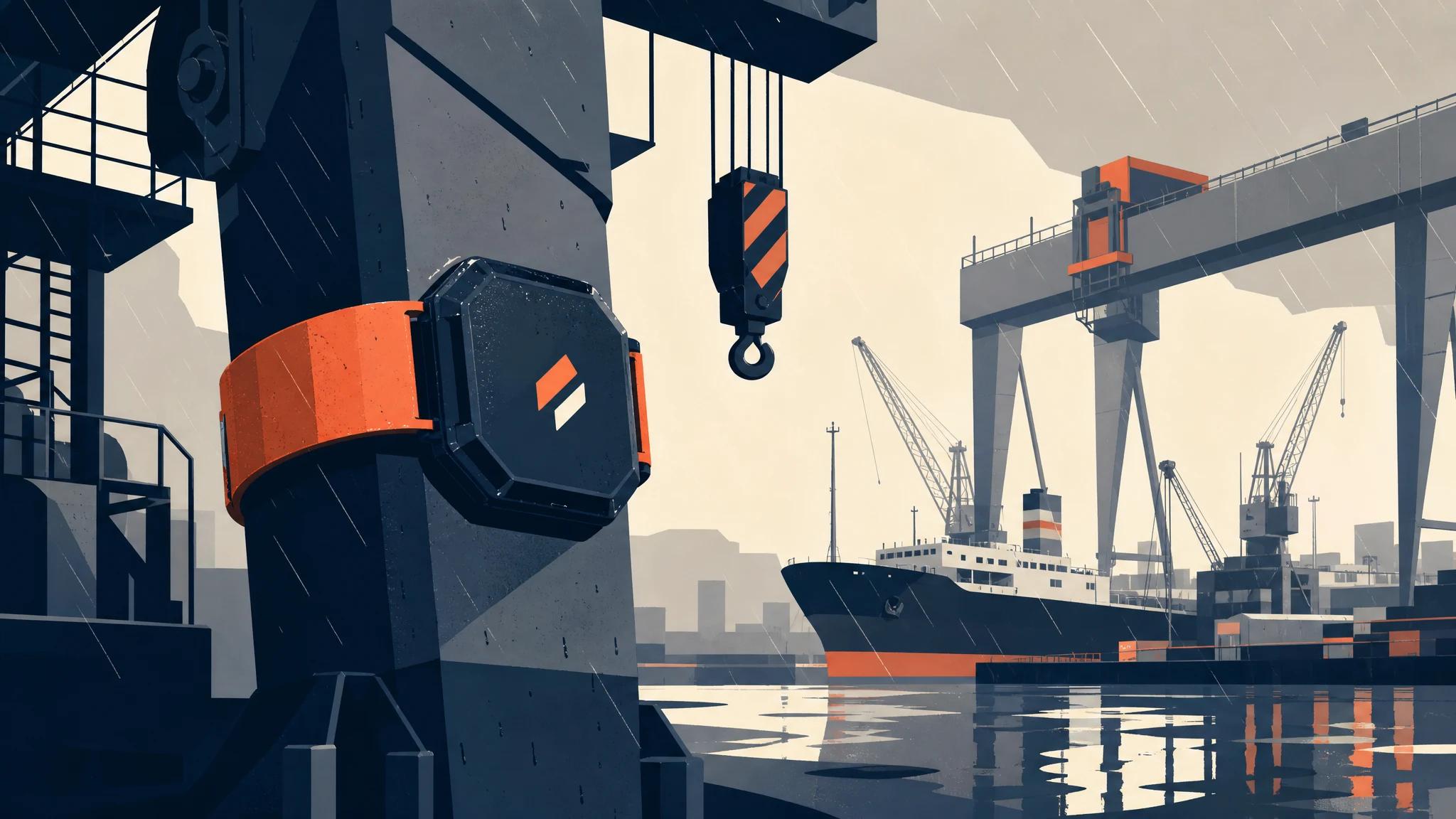
Dawn at Busan New Port. A crane lifts containers with no one aboard. The cab is empty; in a remote control room, one operator watches multiple screens. When it rains, the droplets hit the camera lens first. Saying technology takes the rain first is not a metaphor.
When people think of cutting-edge technology, they picture glass-walled offices in Pangyo — two monitors per desk, warm lighting, a latte.
But the places where new technology is deployed first, and most harshly, are the old industrial sites: ports, shipbuilding, logistics. Busan is the textbook.
The reason is simple. Here, one second is money, and one accident costs a human life. The most desperate places become the first testing grounds.
Parts of Busan New Port run as automated yards. Unmanned transport vehicles move containers, and cranes are operated remotely. This is not a demonstration — it is daily labor.
Here is the first lesson for builders: a demo and production are different animals. Autonomous driving on a conference stage earns applause if it succeeds once on a clear day. Autonomous driving on a dock must precisely set down a container in the early hours after a typhoon. When failures pile up, the system doesn't just stop — people get hurt.
Step into the shipyards. The belt that runs from Yeongdo to Geoje. Here, phrases like welding robots and digital twin are not marketing copy.
A single ship requires tens of thousands of blueprints. The digital twin — which virtually constructs the design first to catch conflicts — was born from the urgency of catching mistakes before cutting steel. If the on-screen model is wrong, real steel plates on the factory floor get scrapped.
The second lesson: the more constrained the environment, the more honest the technology. When tolerances are measured in millimeters and materials cost hundreds of millions of won, a function that doesn't fail beats a flashy one every time. If builders want to test their product, they should seek out a site that shows no mercy — not forgiving users.
Logistics is no different. Busan is a city of transshipment cargo. Containers offloaded from one ship transfer to another. Which slot holds what, when, and where it goes — solving this vast combinatorial problem is the algorithm's job.
Here is a counterargument. Doesn't this ultimately push workers out? Isn't the end point of automation the elimination of jobs?
The answer is only half right. Beside the unmanned crane stands a maintenance worker who steps in when it stops. In the remote control room, a new role emerges — someone who reads the screens. Labor doesn't disappear; its location shifts. Grease is simply translated into data, and the value of people who know the floor actually rises.
The third lesson: technology doesn't eliminate work — it relocates its coordinates. If builders don't know whose work their tool is moving, and to where, that tool will be rejected on the floor.
So don't read Busan only as a list of tourist spots. Beyond the night view of Gwangandaegyo and a plate of fresh sashimi, there is a site that wears the future first, in the rain. The port has always been the first user of the next technology.
This is Busan's standard: an impressive demo doesn't survive in this city. Only what works on a rainy dawn stays.
This article was automatically translated from the Korean original by AI. For the authoritative version, read it in Korean.
한국어 원문 읽기 →