IT Outages Are National Debt
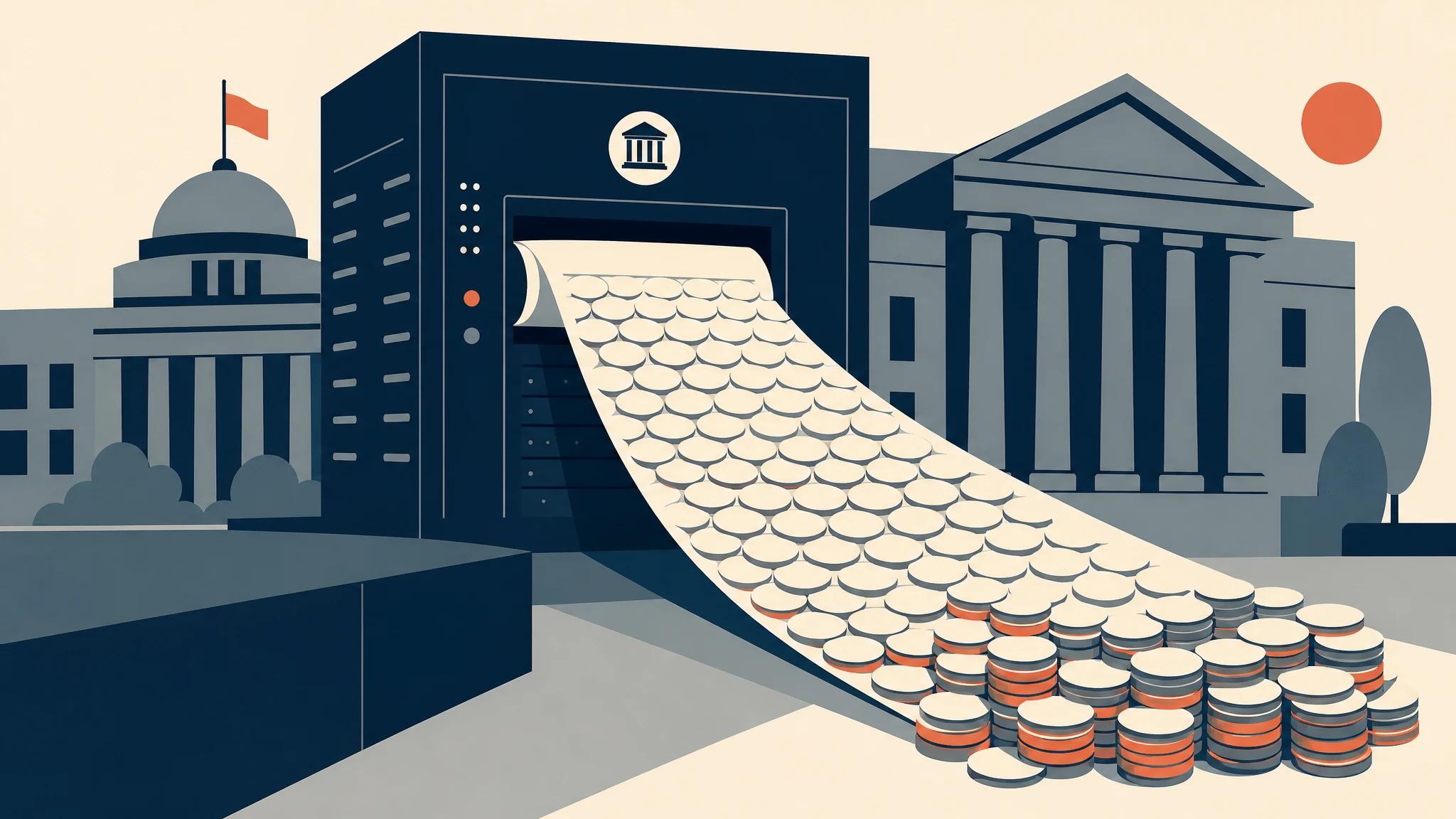
Every time a next-generation government or financial network goes down, we read it as an accident. It is not an accident — it is a deferred invoice. It is the interest accrued from years of running a country without truly understanding its own systems.
AI Summary
Korea's recurring government IT outages — from the November 2023 Government24 crash to the September 2025 National Information Resources Service fire in Daejeon — are symptoms of decades of accumulated technical debt that never appears on the national balance sheet. The country's lowest-bid, single-year procurement model structurally prevents any single actor from owning long-term system responsibility, making failures not accidents but scheduled consequences. The author argues that Korea's deepest digital strategy gap is the absence of metrics to measure system age and fragility, and that reading IT outages as deferred debt rather than bad weather is the minimum literacy required of citizens in the age of AI.
We Read Outages Like the Weather
When the administrative IT network goes down, the news repeats the same phrases: cause under investigation, restoration work in progress, measures to prevent recurrence. When Government24 and the Saegol Administrative System went offline in November 2023 and drove citizen service counters nationwide back to paper, and when a fire at the National Information Resources Service's main Daejeon facility in September 2025 took down hundreds of government systems at once, the language was much the same. Citizens accept it like the weather — the way rain occasionally falls, IT systems occasionally die.
This way of reading is half the problem. When outages are seen as accidents that arrive from outside, the response is always reactive: bigger servers, more redundancy, thicker manuals. But recurring IT failures do not fall from the sky. They are decisions made long ago, arriving all at once with invoices in hand.
The Invisible Debt Called Technical Debt
The software industry has a term: technical debt. It is an analogy for the accumulation of hastily written code, undocumented designs, and aging components left to deteriorate. Like actual debt, it feels comfortable at first — faster releases, lower upfront costs. The problem is interest. The longer a system goes untouched, the more the cost of fixing it compounds.
The house analogy makes it simple. If a 20-year-old home's plumbing has never been replaced, the pipe that eventually bursts will be at the weakest point. But if the person who drew the blueprints has since left and nobody knows where the pipes run, the leak is not an accident — it is a scheduled event. A significant number of Korea's public systems are close to this state: code layered in fragments over decades by multiple contractors, departed developers, vanished design documents. On the surface everything keeps running, but the debt inside grows year by year.
A fundamental shift in framing is needed here. This is not an individual problem, nor a single ministry's IT department problem. It is a liability that does not appear on the national balance sheet. The national debt ratio is published every year, but nowhere does a figure exist showing how outdated and how precarious our public systems are. Because it is invisible, there is no plan to repay it. This is the largest blank space in Korea's digital national strategy.
A Governance Problem, Not a Machine Problem
When an outage occurs, accountability typically flows to whoever is at the very end of the chain: the night-shift operator, the on-site engineer, a specific vendor. But examining the structure reveals a different picture. Korea's public IT procurement has long been constrained by lowest-bid awards and single-year budget cycles. The cheapest bidder wins a contract for one year; a different vendor comes in the next. There is structurally no single actor that bears long-term responsibility for, or understanding of, the system.
The next-generation social welfare information system's months-long payment errors following its launch, and the next-generation local tax system going dark upon debut, were less the result of insufficient technical capability than of diffused accountability. When those who build a system, those who operate it long-term, and those who bear responsibility for it are all different parties, there is no settled answer as to who repays the debt. For local governments like Busan that are expanding their own administrative data and citizen services, the weight of this structure falls on them most directly. When the center shakes, regional service counters are the first to stop.
A counterargument is possible: no large system can entirely avoid outages, and is Korea's public digital infrastructure not among the world's most advanced? That is true. But being ahead and managing one's debt are two different things. The faster and better-built a structure is, the more catastrophically it collapses when left without a maintenance plan. Speed does not repay debt.
A Nation That Understands, Not Just One That Uses Well
What is needed, therefore, is not more expensive servers but a new language and new standards: metrics that measure the deterioration of public systems; rules that preserve design documents and data structures as national assets; institutional accountability mechanisms that keep systems comprehensible even after the people who built them are gone. Korea has not yet filled this blank. We boast of our 'digital government' while lacking the vocabulary to measure what that government is built on and where it is weak.
Civic literacy is also at stake here. If AI is seen only as a personal productivity tool, this problem remains invisible. The important question is not 'Am I using this technology well?' but 'Does our society understand the systems it runs on?' The ability to read an IT outage not as an accident but as deferred debt — that is the minimum literacy required of citizens in the age of AI.
Many countries are good at using technology. But few truly understand what they are running on. Putting invisible debt on the ledger, calculating the interest, deciding the order of repayment — from the moment that work begins, the next outage becomes not weather but manageable debt.
This article was automatically translated from the Korean original by AI. For the authoritative version, read it in Korean.
한국어 원문 읽기 →