Mental Health Should Be the Boss's Burden Too
The moment burnout is translated into an individual's resilience problem, structural failure is written off as one entrepreneur's weakness. Who designed this ledger?
AI Summary
This article critiques how the startup ecosystem shifts structural pressures onto individual entrepreneurs by framing burnout as personal mental management failure rather than systemic issues. It argues that resilience discourse serves as a cost-transfer mechanism, allowing investors, accelerators, and platforms to avoid accountability while entrepreneurs bear all risks through self-exploitation measured by digital activity data. The author calls for redesigning rules so that structurally-created costs are shared by the structure itself, not borne solely by individual founders.
5 a.m. wake-up calls, cold showers, miracle morning proof shots. Scroll through startup community feeds and the same scenes keep repeating. Cutting sleep and grinding oneself down is displayed not as the opposite of laziness but as evidence of work ethic. People call this 'ruthless.' A different word comes to my mind: outsourcing.
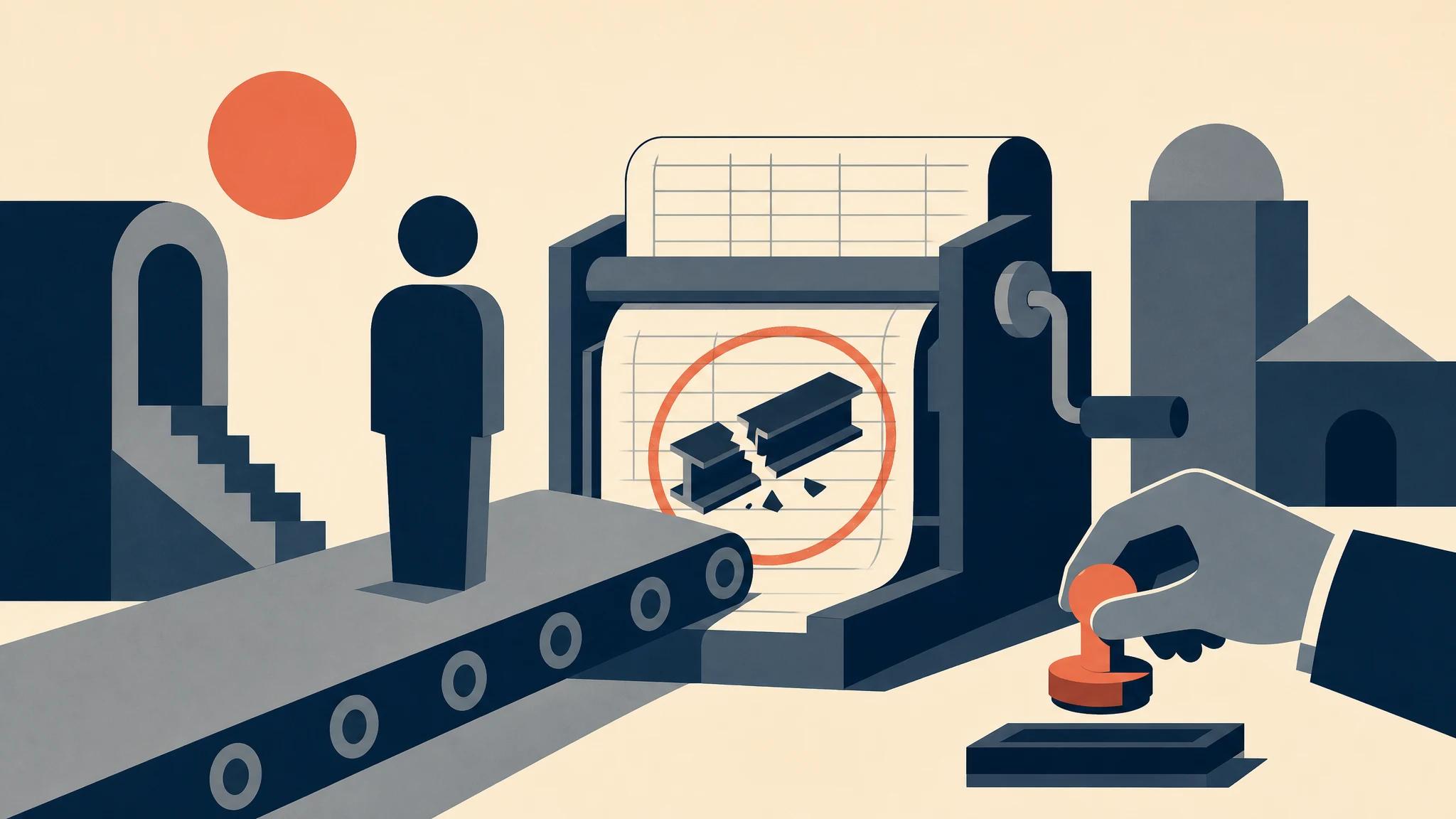
Resilience is originally a good word. The power to stand up again after falling. The problem is how this word operates in the startup scene. The investment market freezes and follow-on rounds get blocked, labor costs rise while revenue betrays the projections, and government support programs are cut off annually. All three are market and institutional variables. But when an entrepreneur collapses, the diagnosis becomes 'mental management failure.' The moment structural pressure is converted into individual psychological defects, the invoice quietly gets passed to one person.
Whose Costs Did Efficiency Reduce?
Let's reread the 'god-life' narrative through the language of efficiency. Someone's costs clearly decreased. When entrepreneurs manage themselves in a 24-hour available state, the risk for all surrounding stakeholders is lowered. Investors don't have to include burnout in due diligence items. Accelerators substitute 'mindset lectures' for mentoring. Platforms and media harvest views by turning self-exploitation into heroic content. Efficiency certainly occurred. Except that efficiency was withdrawn from accounts called the entrepreneur's sleep, relationships, and health.
Here, the advice to 'build resilience' is a technically sophisticated cost-transfer device. Download meditation apps, register for burnout workshops, subscribe to self-coaching content. While even recovery becomes a service individuals must purchase, the structure that actually broke them is never once named. That's why the expression 'mental health as an asset' is dangerous. If it's an asset, then losses are also your responsibility, management is also your job, and if depleted, you deserve to be expelled from the market.
Self-Management Turned into Data
This moralization now evolves into measurable forms. Entrepreneurs' daily routines increasingly leave data trails. GitHub commit times, Slack response speeds, last login records on collaboration tools. Accelerators and some investors say they read 'level of commitment' from these digital traces. In an environment where a 2 a.m. commit is interpreted as evidence of dedication, resting becomes a failure of signal management.
We need to change how we define the problem. The key question isn't 'how resilient is the entrepreneur' but 'who measures this person's limits, and what do they decide with those measurements?' The power of measurement is concentrated on one side. Entrepreneurs must constantly prove their availability without knowing by what standards their data is being read. This is a classic case of 'boundaryless labor' that labor research has long pointed out. Except here there isn't even an employment contract, so neither the Labor Standards Act's working hour regulations nor industrial accident compensation apply. The CEO is legally not a worker, so when they get ground down, the system remains silent.
Counterarguments and Better Design
There are naturally counterarguments. That entrepreneurship is essentially a choice to bear risk, and the ability to withstand that intensity is itself the entrepreneur's competence. Half of this is correct. Uncertainty is an inseparable attribute of entrepreneurship. However, bearable risk and offloaded risk are different. The opacity of follow-on investment practices, the short-term nature of support programs, the remnants of joint guarantees where failure directly leads to bad credit—these are not natural laws but rules someone designed. What's designed can be redesigned. The narrative of 'lost because of weak mentality' erases precisely this possibility of redesign from view.
This isn't about stopping technology or institutions. It's about changing the rules. For instance, when entrepreneurs' activity data is used for investment decisions, at minimum disclosing to the person what signals are interpreted how. Separating failed entrepreneurs' debt from unlimited liability so society shares part of the cost of second chances. Korea already has partial answers. Policy financial institutions' restart support and the trend toward abolishing joint guarantees are that starting point. However, this must be established not as the charitable language of 'rescuing the weak' but as the accounting principle that 'costs created by structure are shared by structure.'
Looking at the startup ecosystem around Centum and Haeundae in Busan makes this problem clearer. In places where the investment pool is shallower and exit routes shorter than the capital region, all the burden concentrates on individual entrepreneurs' 'endurance.' They're essentially asked to fill with personal mentality the gaps that infrastructure hasn't covered. One resilience lecture can't possibly bridge that gap.
Mental health is not an asset. At least not an asset for entrepreneurs to shoulder alone. The question isn't the total amount of resilience, but whose ledger we'll record the cost of that recovery in. We already know how to calculate one person's dawn hours as efficiency. Now it's time to determine whose rules that efficiency operates by.
This article was automatically translated from the Korean original by AI. For the authoritative version, read it in Korean.
한국어 원문 읽기 →