Agents Are Swallowing SaaS
Software once sold per seat is now shifting to per-outcome pricing. When the era of humans viewing screens ends, the very unit of billing changes.
AI Summary
AI agents are fundamentally transforming the SaaS business model by replacing seat-based pricing with outcome-based billing, as software shifts from human-operated interfaces to API-driven automation. This transition creates new economic actors where agents become customers, intersecting with payments, identity, robotics, and data infrastructure. Korea holds strategic advantages in this convergence through existing payment and identity platforms, with opportunities lying not in building larger models but in establishing the connection standards for agent-to-agent transactions.
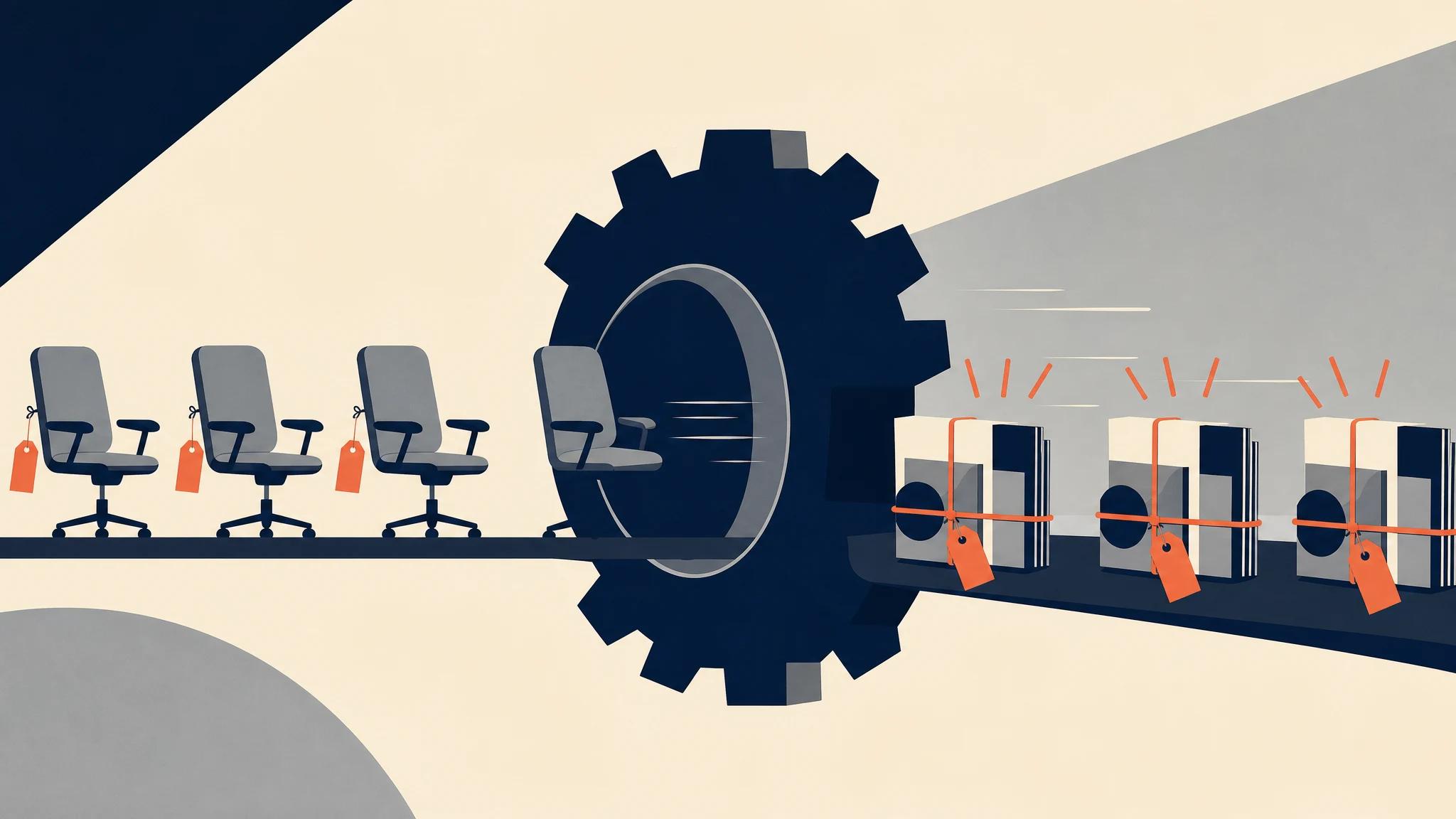
Most people view AI agents as smarter chatbots. A tool that answers when you ask. This narrow view obscures the biggest business transformation.
The real story isn't about the intelligence of models, but about who clicks the software.
For the past 30 years, SaaS has stood on one premise: humans look at screens. That's why the billing unit was seats—the number of people logging in. Salesforce, Notion, Slack—all charged a monthly fee per person.
But agents don't look at screens. They call APIs. Instead of people opening dashboards and pressing buttons, models invoke functions. When the viewing subject disappears, the seat as a unit loses meaning itself.
History shows that such unit transitions reshape industries. When electricity first entered factories, people simply replaced steam engines with electric motors. The real leap came when motors were distributed to each machine, redesigning the factory structure itself. It's not tool replacement but unit redefinition that transforms industries.
Look at the touchpoints agents are meeting now. When they meet payments, machine payments open up that complete transactions without human approval. Stripe's work on payment specifications for agents is a signal of this.
When they touch data and identity, Web3 emerges. For agents to hold their own wallets and pay other agents, machine identity and on-chain settlement are needed instead of human names. It seems small, but this is where infrastructure will be built later.
When they meet robots and mobility, they cross into the physical world. When software agents invoke warehouse robots and delivery vehicles like functions, screen-less automation expands to factories and roads.
This connection creates new economic actors. A market where agents, not people, become customers. Machines buy software, use it, and pay for it. Billing shifts from seats to outcomes. How much per transaction processed, ticket resolved, deal closed.
Here comes a strong counterargument: outcome-based billing isn't new—isn't that what advertising or usage-based SaaS pricing already does? True. But the difference is who creates that outcome. Usage-based billing increased when humans used more. Agent billing is charged based on how much work the model completes, regardless of human clicks. It's billing on top of a changed subject of labor.
Korea has surprisingly favorable cards at this convergence point. Kakao, Naver, and Toss already hold payments and identity on one axis. They're well-positioned to lay the infrastructure for an era when agents pay. Places like Busan, dense with logistics and ports, can become testing grounds for physical automation invoked by agents.
The opportunity isn't in growing models bigger. It's with whoever lays down the connection standards first for agents to pay safely, trust each other, and settle outcomes. Even if the U.S. builds large models, the plumbing in between is empty.
So SaaS won't disappear. But the UI that humans viewed will thin out, while the APIs that agents call will thicken. Companies that sold screens must sell outcomes.
The future doesn't come from one smarter AI. It comes from the seams where payments, identity, robots, and data mesh together on top of agents as callers. Those who see where the unit changes will take the next industry.
This article was automatically translated from the Korean original by AI. For the authoritative version, read it in Korean.
한국어 원문 읽기 →