Patronage Replaces Capital
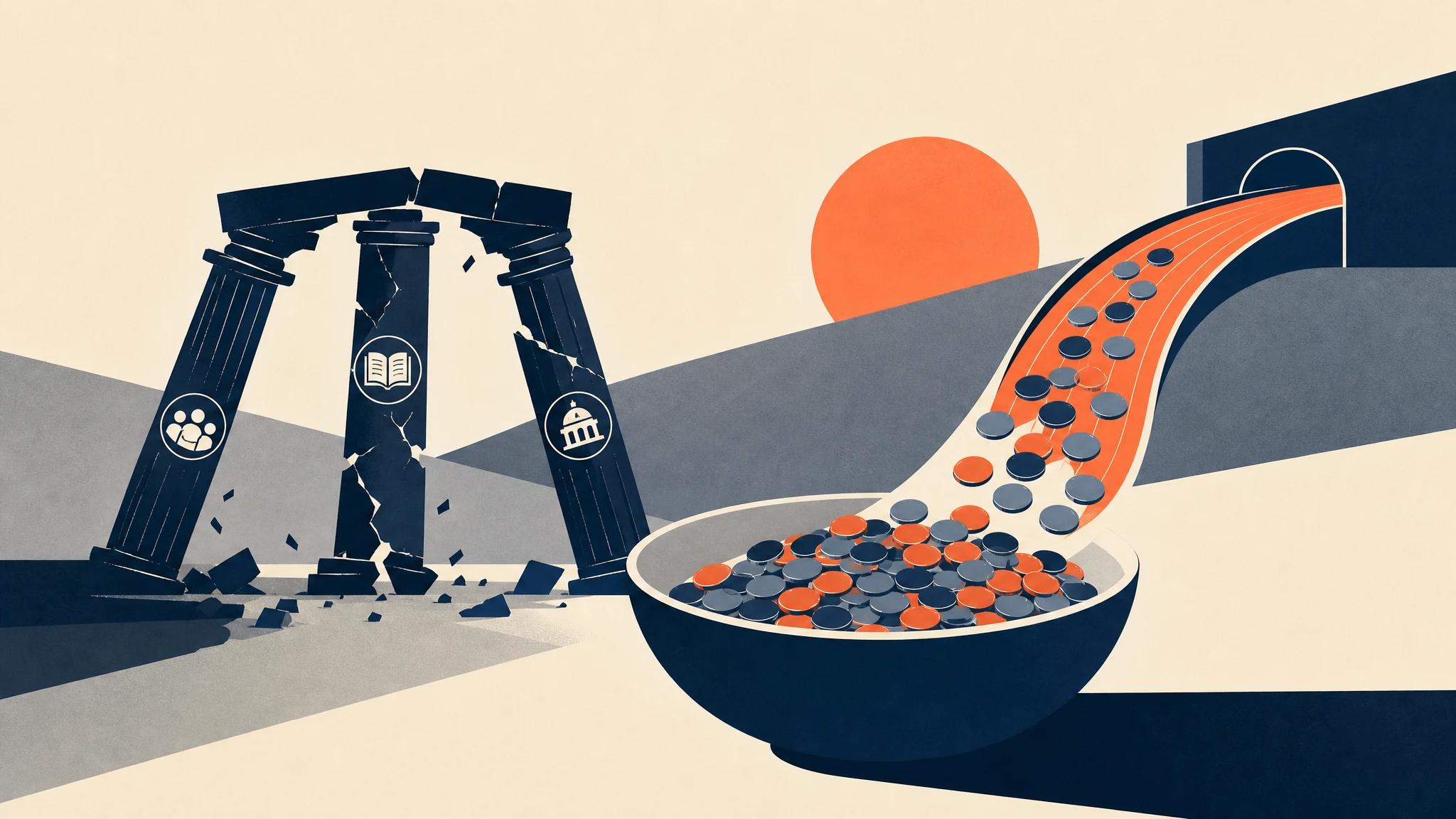
The triangular structure of crowdfunding, publishers, and government support is collapsing. Indie game founders now get their money from 'many small patrons + early access cash flow.' When the funding structure changes, who survives changes too.
AI Summary
The traditional indie game funding model—crowdfunding, publishers, and government grants—is breaking down as large-scale Kickstarter campaigns lose credibility, publisher terms tighten, and bureaucratic timelines lag behind market speed. A new funding paradigm is emerging based on recurring micro-patronage and early access revenue, shifting gatekeeping power from publishers and committees to players themselves. South Korea's indie developers face a bottleneck not in capital amount but in infrastructure: they lack the payment systems, community-building pipelines, and discovery structures that enable the small, steady cash flows now essential to global indie success.
A solo game developer in Busan applied to three government support programs last year. He was rejected by two, and one took six months to deliver results. In the meantime, he uploaded an early access version to Steam, and his first month's revenue exceeded the grant amount.
This scene encapsulates the current shift in indie funding.
For a long time, indie founders had three sources of money. They raised initial capital through crowdfunding, received development funds from publishers in exchange for publishing rights, and filled gaps with government support programs. This triangular structure was the standard.
All three pillars are shaking simultaneously.
Kickstarter-style large-scale crowdfunding has lost credibility due to the gap between promises and delivery. As cases accumulated of developers failing to complete games with the money raised, backers became reluctant to bet big money on 'something that doesn't exist yet.'
The publisher model has also changed. Publishers who only provided funding have decreased, while the model has grown heavier toward bundling marketing and portfolio services. Advances going to small teams have thinned, and conditions have tightened.
Government support has a speed problem. The market moves by quarters, but grant reviews move by half-years. By the time the money arrives, the game's timing has already passed.
Two alternatives have emerged instead: micro-patronage from many and early access cash flow.
Micro-patronage from many is a structure where instead of receiving 1 million won from one person, you receive 10,000 won each from a thousand people. Recurring patronage platforms like Patreon, Itko, and Boosty attach to this. The key is not the amount but the frequency. Not one big bet, but a small flow that comes in monthly.
Early access is more direct. You sell the game before completion and use that revenue to complete it. Players are investors—investors who can refund. If it's not fun, money doesn't come in, so market validation and fundraising merge into one action.
When these two combine, the nature of capital itself changes. Past money went to 'those who passed the screening.' New model money goes to 'those who captured players.' The gatekeeper has shifted from publishers and judges to users.
A common rebuttal emerges here. Isn't it ultimately a skill problem for founders who can't make good games? That patronage doesn't accumulate because the game is mediocre?
Only half right. Korean indie founders' game-making skills have already reached global standards. The problem is what comes next. Exposing games to English-speaking communities, reaching streamers, binding the first thousand patrons through Discord—these can't be done through individual skill alone. That's infrastructure laid down by the ecosystem. Korea lacks that plumbing.
While American indies accumulate wishlists, Discord communities grow, those communities become the first early access buyers, and they in turn create word-of-mouth. Fundraising, marketing, and community exist within one pipeline. Korean founders carve out the parts of this pipeline anew each time by themselves.
So the bottleneck is not the amount of capital but the form of capital. What Korean indies need is not larger grants. It's payment, exchange rate, and tax processing infrastructure to receive small monthly patronage; translation and exposure channels to reach global communities; and discovery structures that gather the initial thousand people for early access.
The requirements are clear: convert support programs to fast, small-scale quarterly matching; lower administrative barriers for global patronage payments; and nurture ecosystem players who provide community building services rather than traditional publishing.
Founders are already selling games directly to global players. Money comes from small patronage from a thousand people. Now the ecosystem must catch up to the speed of that payment pipeline and that community.
This article was automatically translated from the Korean original by AI. For the authoritative version, read it in Korean.
한국어 원문 읽기 →