Who Owns the Engine?
The Unity runtime fee crisis was not a price revolt. It was the first signal that production infrastructure must become a protocol. Gaming is asking about trust standards first.
AI Summary
The 2023 Unity runtime fee controversy revealed a deeper issue than pricing: the power dynamics of who controls production infrastructure and transaction records. As AI agents increasingly conduct autonomous transactions, the need for decentralized trust infrastructure—spanning identity, reputation, payment, and settlement—becomes critical, with open standards like stablecoins, ERC-8004, and tokenized assets forming a unified trust layer that no single company can unilaterally alter.
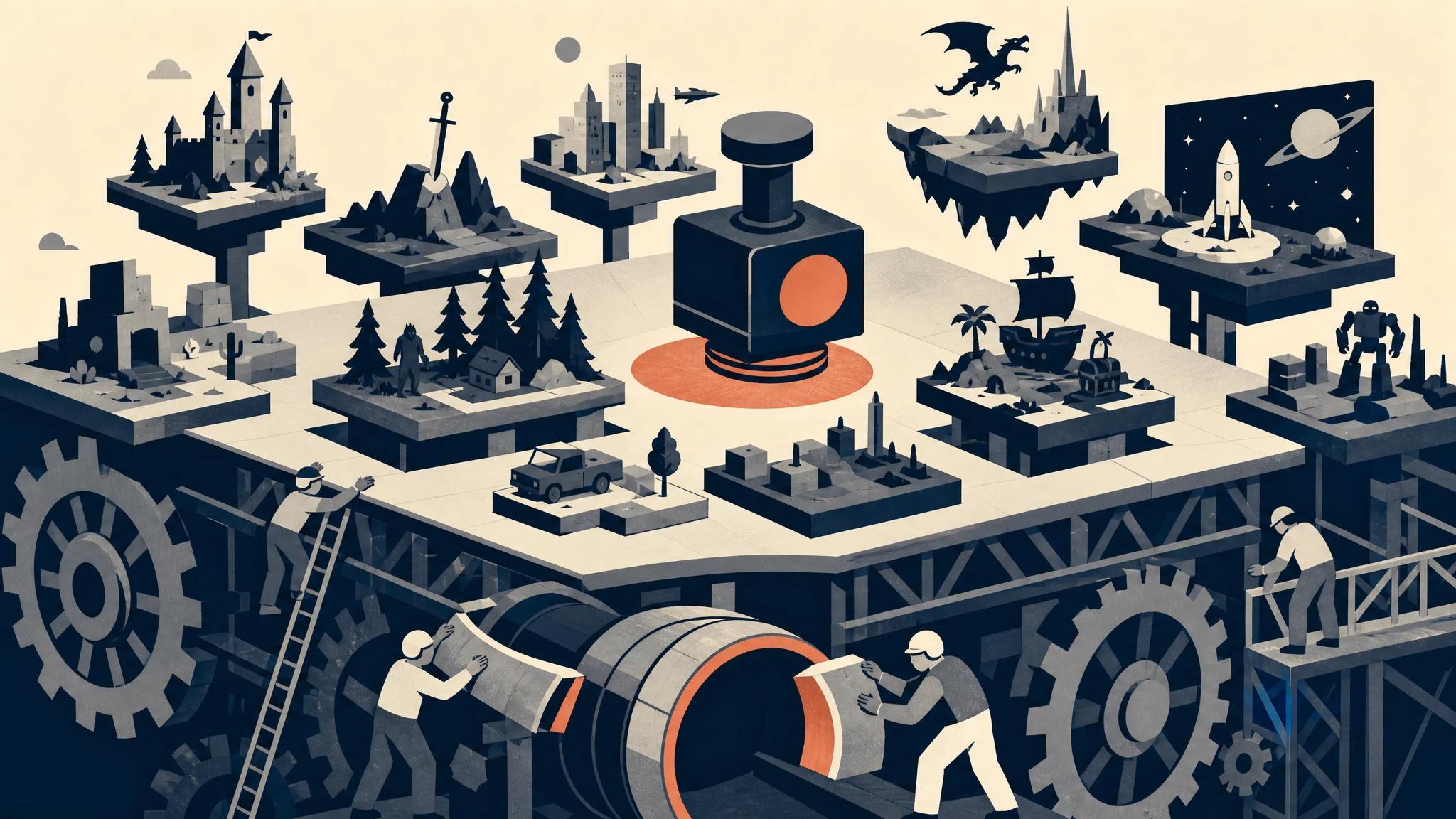
On the day in 2023 when Unity announced it would charge per installation, all people saw was the price tag. Too expensive, betrayal, let's switch. Not wrong reactions. Just small.
The real issue wasn't price but power. The fact that someone could count how many times my game was installed without my knowledge, and attach an invoice to that number. It was the discovery that a production tool could transform into a toll collector.
An engine is not a tool. It's a settlement house for production.
A single game involves the labor of hundreds and assets from dozens of companies. Who holds the ledger of all those transactions? The Unity crisis revealed that ledger was stored on a single private company's server. If that stops, the industry stops.
That's why people moved to Godot. Not because it's free. Because it's a structure where one company can't retroactively change the rules. Open source licenses embed promises in code. They entrust trust not to human goodwill but to protocol.
This is where the narrow vision of viewing Web3 only as coins becomes apparent. The core isn't token price. It's who prevents rules from being changed retroactively, how promises are solidified in code. The game engine exodus was the gaming version of that question.
Now the actors multiply. AI agents buy assets, rent modules, and outsource work to other agents. Transactions that were two people shaking hands become thousands of machine transactions per second.
Machines can't shake hands. They have no business cards, credit, or reputation. So who guarantees these four things—identity, reputation, payment, settlement—becomes everything.
Stablecoins solve payment. A unit of value not tied to human banking hours. x402 is an attempt to re-embed payment into HTTP. Agents call APIs and pay on the spot. No invoices, no sales team.
Identity and reputation are targeted by standards like ERC-8004. Who this agent is and whether they kept promises in the past is recorded on-chain. Reputation becomes a queryable record, not floating rumor.
Add asset tokenization and the stack closes. Verify who with identity, decide whether to trust with reputation, pay with stablecoins, settle with on-chain ledgers, and prove ownership with tokens. Not scattered technologies but a single layer of trust infrastructure.
The counterargument is sharp. Won't US Big Tech ultimately deploy closed settlement networks inside their own agents and capture the market without any standards? Correct. That's what Unity tried to do. And that's precisely why open standards survive. Because everyone who doesn't want to be trapped in one company's ledger seeks alternatives. Just as Unity nurtured Godot.
So is Korea a user of standards, or a designer? We're a rare country that embodies content, finance, gaming, and AI in one body. If transaction volume determines standards, we just need to write the rules first in the densest marketplace.
Gaming is that entrance. If a Busan indie studio first solidifies settlement rules for agent-to-agent asset and module transactions, that becomes the grammar not just for games but for all machine transactions. The path of starting small and becoming a standard.
The race to make AI agents smarter is already overheated. But if two smart agents can't trust each other, no transaction occurs. It's about trust standards before performance. On the day Unity sent its invoice, the gaming industry received that question before all of us.
This article was automatically translated from the Korean original by AI. For the authoritative version, read it in Korean.
한국어 원문 읽기 →