Busan's Grip on the Node of Discovery
The development capabilities of Korean indie games have already reached world-class levels. What's blocked is not skill, but the node of discovery where good games connect with capital and distribution networks. BIC reads that narrow entrance it opens for three days as a structural problem of the ecosystem.
AI Summary
BIC (Busan Indie Connect) functions as a critical 'discovery node' in Korea's indie game ecosystem, physically connecting developers with publishers, media, and players for three days each year. While Korean indie developers possess world-class skills, the bottleneck lies not in creation but in the narrow pathways to publishing capital and global distribution. BIC's value is not in making games successful, but in temporarily opening and decentralizing that narrow entrance, though its sustainability depends on demonstrated export outcomes returning to the city.
The Economics of a Single Booth
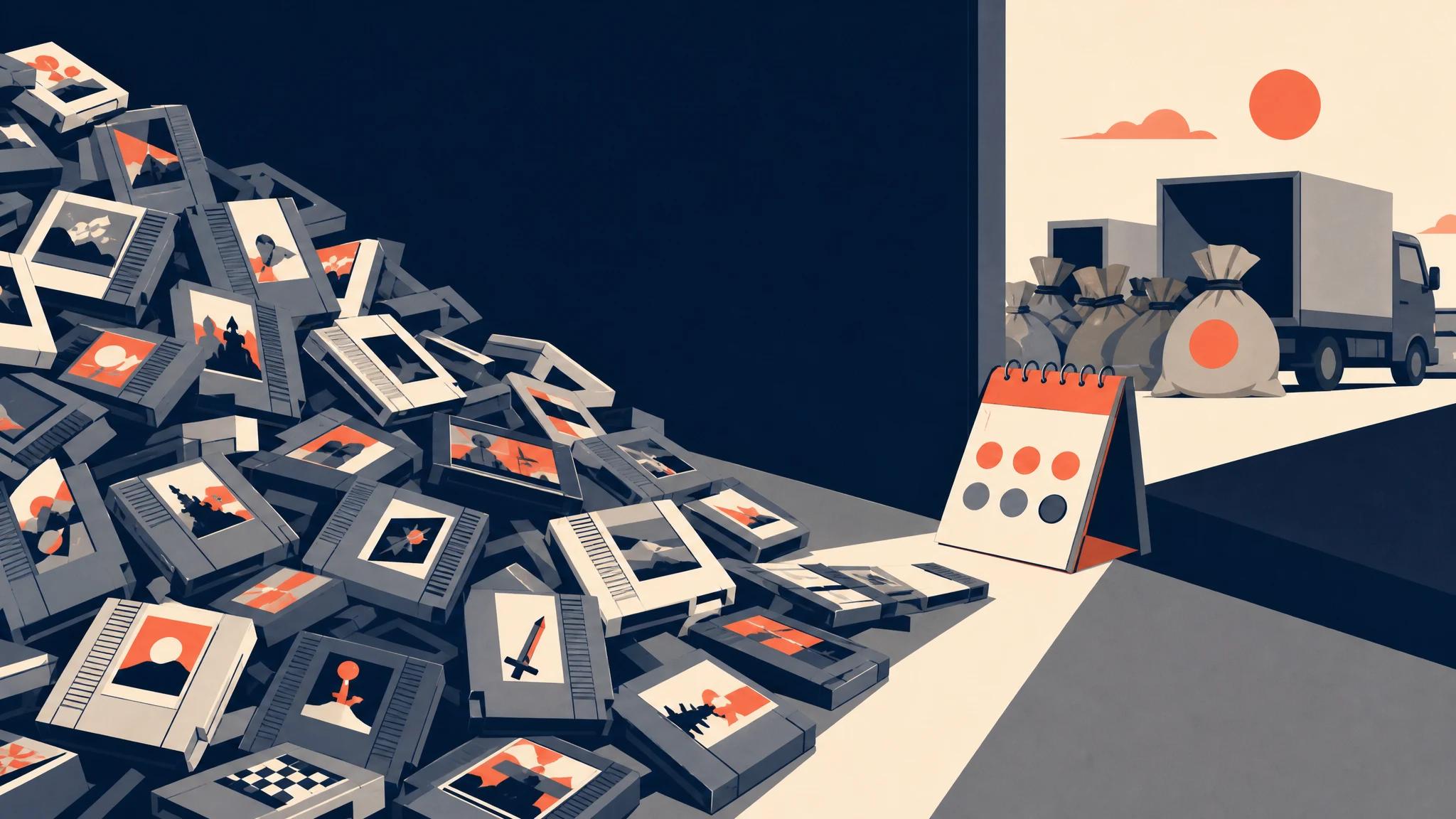
Picture a booth in one corner of BEXCO Hall 1, with one monitor and one developer sitting. Over three days, thousands pass by. Most touch the game briefly and leave. But then one person extends a business card. It's a business development manager from a publisher. In that moment, the developer's next six months change.
This scene is all that BIC is. In 2025, BIC posted numbers of 592 submissions from 41 countries and 283 exhibitions from 32 countries. It's the scale reached in the 11th edition of an event that started with about 90 entries at the Busan Cultural Contents Complex in 2015. But if you're distracted by the numbers, you miss what's truly important: what node BIC actually functions as in Korea's indie ecosystem.
The common diagnosis goes like this: Korean indie developers don't break through globally because they lack skill or planning. I reject this diagnosis. Look at WONDER POTION, which made SANABI, and Mintrocket behind Dave the Diver. The ability to create is already at world-class level. The problem comes after creation. The pathways for good games to reach good publishing capital and global distribution networks—those pathway nodes are too few and too narrow in Korea.
The Node BIC Holds Is Discovery
Let's break down the value chain. An indie game passes through roughly five nodes from planning to release: making, polishing, being discovered, publishing contract, global distribution. Which of these nodes is blocked in Korea? To cut to the conclusion: only one out of five—the third node.
Making is not blocked. The Steam platform has commodified distribution itself. Anyone can upload a game worldwide for a small registration fee (based on Steam Direct, $100 per title, refunded after certain sales are exceeded). But that's precisely the trap. Tens of thousands pour onto Steam every year. Uploading has become nearly free, but being seen has conversely become more expensive. The cost of discovery has skyrocketed.
The node BIC holds is precisely here: discovery. BIC does not distribute games. It makes games visible to people. For three days, it physically gathers developers, publisher business development teams, media, and real players in one space. It's a device that forcibly creates offline, through hands and business cards, the exposure that algorithms determine online.
Now let's reverse-engineer the motivation. Why would a public institution called the Busan IT Industry Promotion Agency bother to carry this event forward for 11 years? Press releases say it's to foster the indie ecosystem. Reading it structurally, it's different. Games are export content that, rarely in Korea, go global from the start rather than staying domestic. If a local government captures one discovery node, it can inscribe the city name of Busan onto the coordinates of publishing contracts and export performance that flow above it. Just as Tokyo Game Show and Gamescom have transformed their countries' discovery gates into city brands. Public investment in discovery is the cheapest way to stake equity in the upstream value chain.
Plot this on global coordinates and BIC's position becomes clear. Gamescom and Tokyo Game Show are already mature. They've moved beyond discovery to become showcases for massive capital, pushing indie booths to the periphery. America's PAX and Britain's EGX have strong consumer festival characteristics. Between them, BIC's coordinates are as an Asian gate specialized in discovery function, with high B2B density and mid-scale size. A stage not yet occupied by massive capital, where unknown developers can still stand on the same floor as publishers. But this stage doesn't last long. The next segment of the adoption curve is always commercialization. That BIC in 2025 abandoned the structure of separating Business Day and Festival Day and instead mixed B2B and B2C throughout all three days is a signal. It's an attempt to further increase the discovery gate's density, and also means that this less commercialized present will soon end. For builders, now is the period when the cheapest admission fee yields the highest signal.
But Isn't This Just an Ordinary Festival?
Here we must bring out the strongest counterargument to be honest. Isn't elevating BIC to a bottleneck node an overinterpretation? Neither SANABI nor Dave the Diver broke through after being discovered at a BIC booth. Capital from Neowiz and Nexon was already attached. In reality, the real successes of Korean indies have come from major game company publishing, not from festival booths. So the counterargument is: isn't BIC merely a well-executed annual event, and calling it a decisive ecosystem node just Busan-originated self-aggrandizement?
Half is correct. BIC cannot create capital. It's still Neowiz and Nexon signing the contracts. But that very counterargument points to the real bottleneck: that discovery and capital for Korean indies are concentrated in a few major publishers, and that the entrance for unknown developers to catch their eye is extremely narrow. BIC's value is not in making games successful. It's in physically holding that narrow entrance open for three days. A device that decentralizes the discovery node—that's BIC's structural function. And that this function is weak is precisely the bottleneck of Korea's ecosystem.
Who Should See What
Now let's descend to the practical. Three groups go to BIC.
If you're a developer, you're not going to show your game at the booth. You're going to read the expressions of publisher business development managers. Which scenes make their hands pause, what questions they ask—that's feedback from the global market. Five minutes of someone accurately pinpointing why this game won't sell is more valuable than a business card. Business networking spaces should be prioritized over booth exhibitions.
If you're a builder or investor, you don't need to see all 283 exhibited works. There's one question to ask: which booth this year at BIC was surrounded by the most publishers? That's the input value for the next 12 months of Korean indie exports. It's a place to read where the flow concentrates at the discovery node, not a place to enjoy games.
If you're a visitor, here's the most honest utility. It's free. Moreover, you can directly touch with your hands dozens of games that Steam's algorithm will never show you. In an era when the cost of discovery has skyrocketed, receiving curated discovery for free is a rare luxury.
One more point. Who bears the cost of this discovery gate? Free admission means event operating expenses are shouldered by public budget and sponsorships. The toll not collected from developers is paid by taxes instead. So the risk of discovery is borne in part not by developers but by the city of Busan. For this structure to persist, there must be visible return pathways where the export performance of discovered games flows back to the city. The moment those pathways blur, the first thing cut will be indie booths. BIC could follow the same path where indies were pushed to the periphery at Gamescom.
So the reason to go to BIC is not because the festival is enjoyable. It's because it's the almost only coordinate where you can confirm with your own eyes where and how the weakest node—discovery—in Korea's indie ecosystem operates. Korean developers are already looking at the world. SANABI received overwhelmingly positive reviews on Steam, and Dave the Diver created global box office success. The speed of creation is already fast enough. What's slow is the ecosystem. The discovery nodes are too few, the entrance to capital is too narrow, and the device that opens that narrow entrance even briefly is only three days a year in Busan. If a Korean game journalist covers BIC this time next year, the question to ask is already determined. Not how many works were exhibited this year, but how many of them reached publishing contracts and which capital those contracts concentrated on. Who paid the toll of the discovery node and where did those results flow. That contains the next year of Korea's indie ecosystem. Founders are already looking at the world. Now the ecosystem must keep up with that speed.
This article was automatically translated from the Korean original by AI. For the authoritative version, read it in Korean.
한국어 원문 읽기 →