How Does a City with Zero Top-100 Companies Work?
Among the nation's top 100 companies, zero are headquartered in Busan. How do people work in a city without large corporations, and what kind of ecosystem does that create?
AI Summary
Busan has zero headquarters among South Korea's top 100 companies, lacking the supplier ecosystems and corporate infrastructure that typically drive urban economies. Yet the city continues to function through small-scale operators in logistics, maritime services, fisheries, tourism, and content who create their own structures rather than working within corporate frameworks. This raises unanswered questions about what kind of ecosystem these choices create and what jobs they will leave for the next generation.
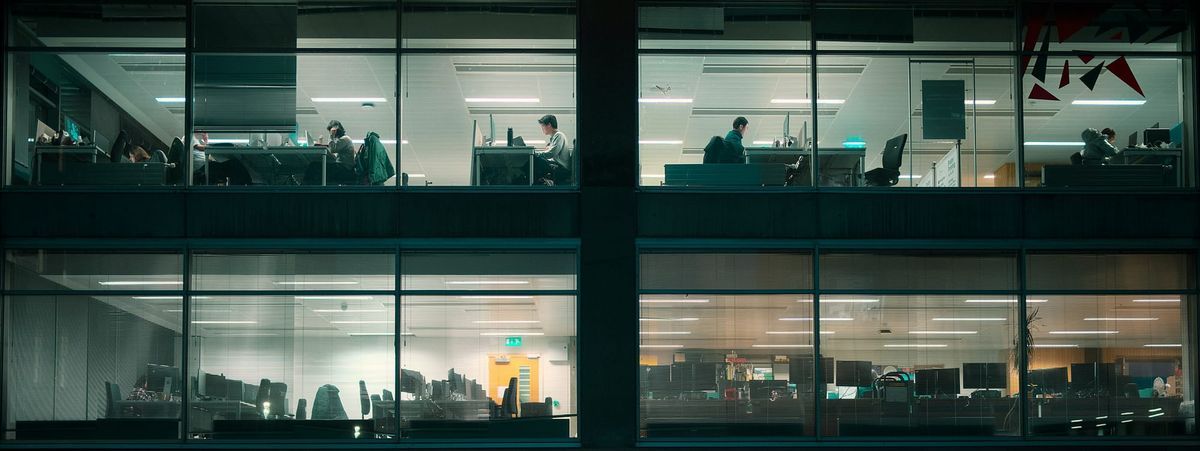
The Number Zero
In 14 days, the next mayor will be decided.
Yesterday we asked: Who stays?
Today we ask where those who stayed work.
Among the nation's top 100 companies, those headquartered in Busan — zero.
This number was passed over in Q1 and Q2. Today we enter into this number.
What does the number zero tell us? And — how do people work in a city that is zero?
What the Number Says
Zero is not just a number.
Having no large corporate headquarters means — there is no supplier ecosystem. No purchasing departments, no legal team orders, no benefit-linked consumption. It's a structure missing the capillaries of the urban economy.
But.
Busan keeps running while remaining at zero.
What I Saw on the 22nd Floor of BIFC2
Eight in the morning, BIFC2 22nd floor lounge.
Outside the window, the Nakdong River estuary and the ocean are visible simultaneously. Three people sit at tables. One is on a video call with a Singapore investment firm. One has a spreadsheet open, reviewing an import-export contract. One drinks coffee without a laptop — probably waiting for the next meeting.
None of the three belong to a large corporation.
One is from a logistics startup. One is a trade broker. I didn't ask what the third one does. In Busan, that's not very important. It's a city where what you're doing now comes before where you belong.
This is what work in Busan looks like.
Rather than operating within structures designed by large corporations — people move while creating their own structures.
Two Ways to Read
"How does a city with zero top-100 companies work?"
| Reading as Deficiency | Reading Differently | |
|---|---|---|
| Premise | 0 large corporation headquarters | Positions unfilled by large corporations remain |
| Conclusion | Lack of jobs → youth exodus → contraction | Low entry barriers → choice to create directly |
This question can also be read two ways.
First — Reading as Deficiency
Without large corporations, there are no good jobs. Without good jobs, young people leave. When young people leave, consumption declines, self-employment collapses, and the city contracts. It's a structural vicious cycle. This isn't wrong.
Second — Reading Differently
Because there are no large corporations — spaces that large corporations haven't filled remain.
Port logistics, maritime services, fisheries, tourism, content. Busan's main industries have traditionally been fields with many small-scale operators. Having many self-employed people means being vulnerable — but it also means low barriers to entry.
Instead of joining a large corporation in Seoul, there are people who chose to create directly in Busan. Like the person I met yesterday at a craft beer pub in Jeonpo.
What kind of ecosystem do these choices create together? What kind of jobs does that ecosystem leave for the next generation?
These are questions Busan has yet to answer.
One Request
Tomorrow is the fourth question.
What is the ocean to Busan?
Please read and share with at least one person. With someone who works in Busan creating their own structures.
— Gray Busan, May 2026
PolyBusan does not support any particular party or candidate. We only ask questions. Error reports · feedback: busanloop@gmail.com
This article was automatically translated from the Korean original by AI. For the authoritative version, read it in Korean.
한국어 원문 읽기 →