Same Words, Different Power
The EU, the United States, and China all speak of 'safety' and 'transparency.' But in each system, those words point to entirely different forms of power. Korea imports regulations while copying only the words, without translating the power structures that lie behind them.
AI Summary
This analysis examines how the same regulatory keywords — 'safety,' 'transparency,' and 'accountability' — carry fundamentally different power structures across the EU, US, and Chinese AI governance frameworks. While the EU makes transparency a bureaucratic gate controlled by regulators, the US treats it as a voluntary corporate commitment, and China deploys it as a mechanism for state information control. The author argues that Korea imports the vocabulary of global AI regulation without the underlying power dynamics, rendering it a subcontractor enforcing rules it never had a hand in defining.
What Happened in a Brussels Conference Room
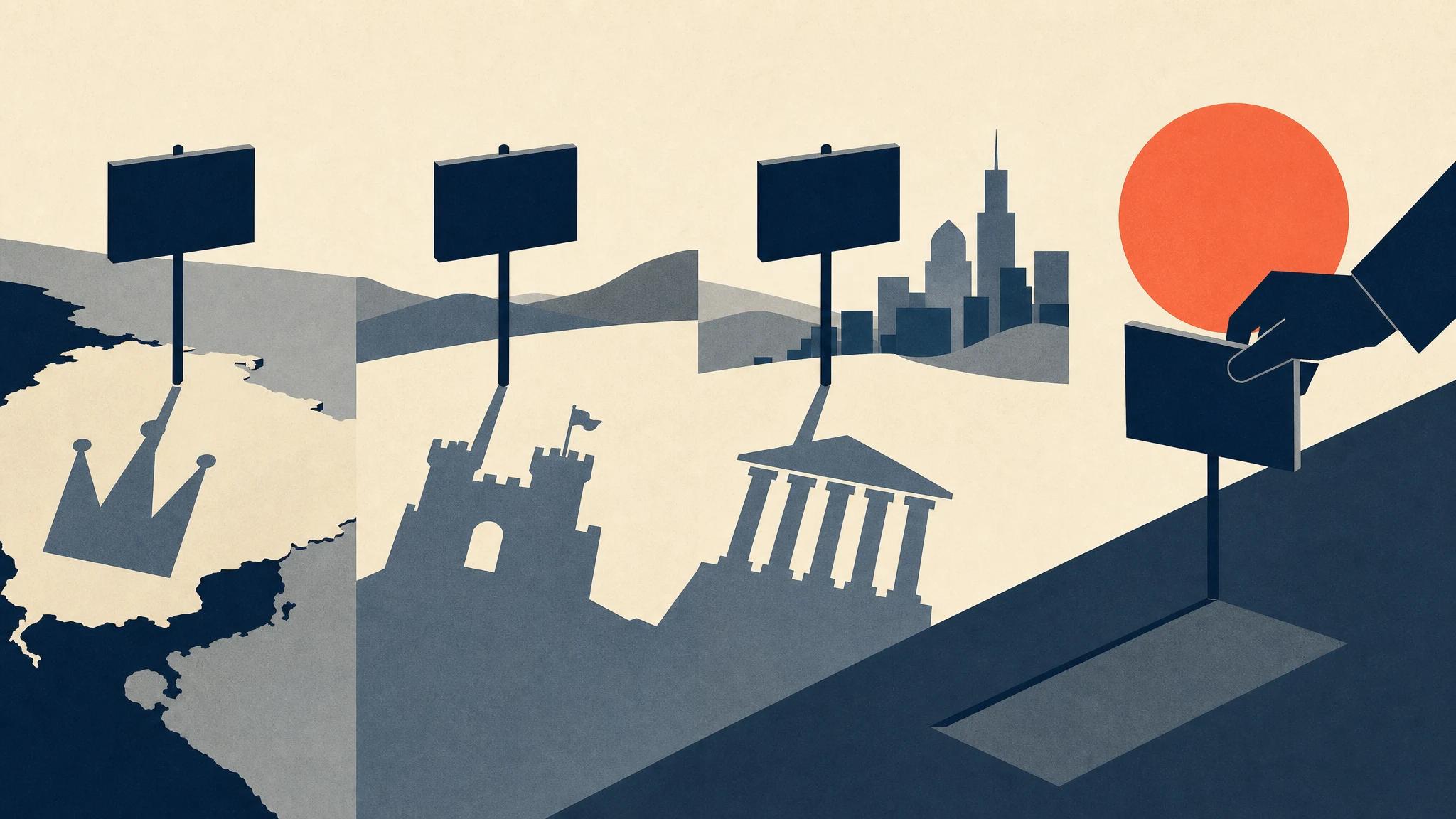
In the final stretch of last year's EU AI Act drafting, the word that held up the negotiating table longest was neither 'algorithm' nor 'model.' It was the unremarkable noun 'transparency.' Civil society groups read the word as a binding duty for companies to open their inner workings to the public. Big Tech lobbyists, by contrast, drove the same word toward a procedure that could be satisfied with a single pro-forma document while keeping trade secrets intact. Two camps fought over one word for weeks. There was one word, but there were two forms of power inside it.
Korean media typically reported this moment as follows: 'The EU passed the world's first powerful AI regulation.' Not an inaccurate sentence. But that summary erases what was actually happening in the conference room — the fact that this was not a fight over how strong the regulation would be, but over who would get to own the meaning of a key word.
How Korean Readers Misread This Scene
In Korea, global AI regulation is typically imported as a matter of 'stringency.' The EU is strict, the US is loose, China is heavily controlling. A tidy tripartite division — but one that misses almost everything.
The core vocabulary used by all three systems is in fact nearly identical: safety, transparency, accountability, risk. Open a dictionary and even the translations match. So Korea comfortably imports the words wholesale — establishing an 'AI Safety Institute,' writing 'transparency obligations' into legislation. The words are transferred accurately. The problem is that the power structures attached to those words have not traveled along with them.
Translation happens on two levels: the surface layer of words, and the power layer that determines which institutions those words connect to and whose interests they serve. Korea translates only the first layer and omits the second entirely.
The Invisible Structure: Three Powers Behind the Same Words
When the US administration spoke of 'safety' in the 2023 executive order, and in the subsequent work of standards body NIST, the word is not a sword the state uses to punish companies. It is closer to a gentlemen's agreement in which a handful of companies holding frontier models voluntarily test their own models and share the results with the government. In this framework, the real authority over 'safety' lies with the companies that hold the models. The state is not the auditor but the recipient of reports. The very fact that the executive order's weight shifted when administrations changed shows that American-style 'safety' floated not on law but on political consensus.
| United States | EU | China | |
|---|---|---|---|
| Key Word | Safety | Transparency | Control |
| Where Power Actually Sits | Companies holding the models | Regulatory bodies and standards organizations | State authority over information |
| Corporate Position | The side granting favors | The side seeking permission | The side that does not challenge the narrative |
When the EU speaks of 'transparency,' the word is a gate that must be cleared before a product enters the market: conformity assessment, registration, high-risk classification. Power flows to regulatory authorities and standards bodies. Companies are the ones seeking permission. Same word, 'transparency' — in the US it is a favor companies bestow; in Europe it is a toll demanded by authorities.
When China speaks of 'governance,' it is different again. The core of its generative AI regulations is whether content aligns with 'socialist core values,' and whether outputs might destabilize the system's prevailing narratives. Here the subject of safety is neither citizens nor markets but the state's power over information control. The same characters for 'safety' mean consumer protection in one context and public opinion management in another.
The three words meet in the dictionary. On the map of power, they will never meet.
Abroad, This Is Already Being Fought as the Language of Power
Anglo-American commentary and media criticism have long called this by a different name. When reading regulatory documents, they look first not at the definition of words but at 'who holds the authority to define them.' Figures like political scientist Henry Farrell consistently ask: whose corporate ecosystem is this rule written to favor? Is the AI Act an industrial policy that levies a toll on US Big Tech, or a genuine safety mechanism? Is the 'Brussels Effect' — where whoever writes the standard first captures the market — not a trade strategy wearing the costume of safety?
This is not conspiracy theory. It is the basic grammar of foreign discourse. There, regulatory news is read from the outset as a record of power struggle. The moment the word 'safety' appears, the question follows: whose safety, and who holds the definition?
A strong counterargument is available here. Whatever the words, doesn't Korea simply need to meet the strictest standard — the EU standard — to access every global market? That is half right. But the act of 'meeting' EU standards is itself a choice about whose definition to internalize. Importing the European toll-gate model may put Korea's small AI startups at a disadvantage before gates that large model holders have already cleared. The moment you copy the word, you also import the distribution of power attached to it. The difference between aligning and becoming subordinate is paper-thin.
The Price Korea Pays for Understanding Late
Consider a mid-size Busan manufacturer introducing an AI quality inspection solution. The regulatory language it will encounter consists of words copied in Seoul, which were in turn imported from Brussels and Washington. If the power structures behind those words were not translated along with them, the company will either mistake 'transparency obligations' for a single pro-forma document, or over-interpret them as an insurmountable gate. In either case, the cost falls hardest on those in the most vulnerable position.
The greater danger lies elsewhere. While Korea imports only the words, the power to define those words resides entirely across the sea. We revise our products to fit safety standards set by others and fill out paperwork to match transparency formats designed by others. We appear to possess regulatory sovereignty, but we have never once held the power to define the words.
Conclusion: What We Import Late Is Not the Words but the Questions
What Korea imports late is not only technology. Sometimes it is the question itself that arrives late. While the rest of the world asks 'who defines this word,' Korea is still at the stage of 'how do we translate that word.' The lexical translation is done; the translation of power has not yet begun.
Interpretive sovereignty is not something grandiose. It is the capacity — when the word 'safety' arrives — to ask for oneself whose safety it is and who has the power to change its meaning. The moment we delegate that question to others, we no longer hold regulation; we become subcontractors enforcing someone else's rules on their behalf. The words have already arrived. Now it is time to translate the power behind them.
This article was automatically translated from the Korean original by AI. For the authoritative version, read it in Korean.
한국어 원문 읽기 →