The CPU Has Been Taken Hostage
Semiconductor production tilted toward datacenters is passing the bill to personal PC price tags. Intel and AMD's consumer CPU price hikes are not a function of component cost fluctuations — they are the first signal of a resource reallocation in which AI infrastructure is displacing general-purpose computing.
AI Summary
Consumer CPU prices rose in 2026 not because of Intel or AMD greed, but because AI accelerators commandeer the same foundry capacity, advanced packaging, and HBM memory that personal-use chips depend on. What looks like a routine price hike is the first receipt of a structural shift: computing has become a contested, scarce resource as AI demand reorders manufacturing priorities. Korea — as a key HBM supplier and home to regional manufacturers in Busan — faces both immediate cost exposure and an emerging opportunity in distributed computing brokerage and idle-resource resale.
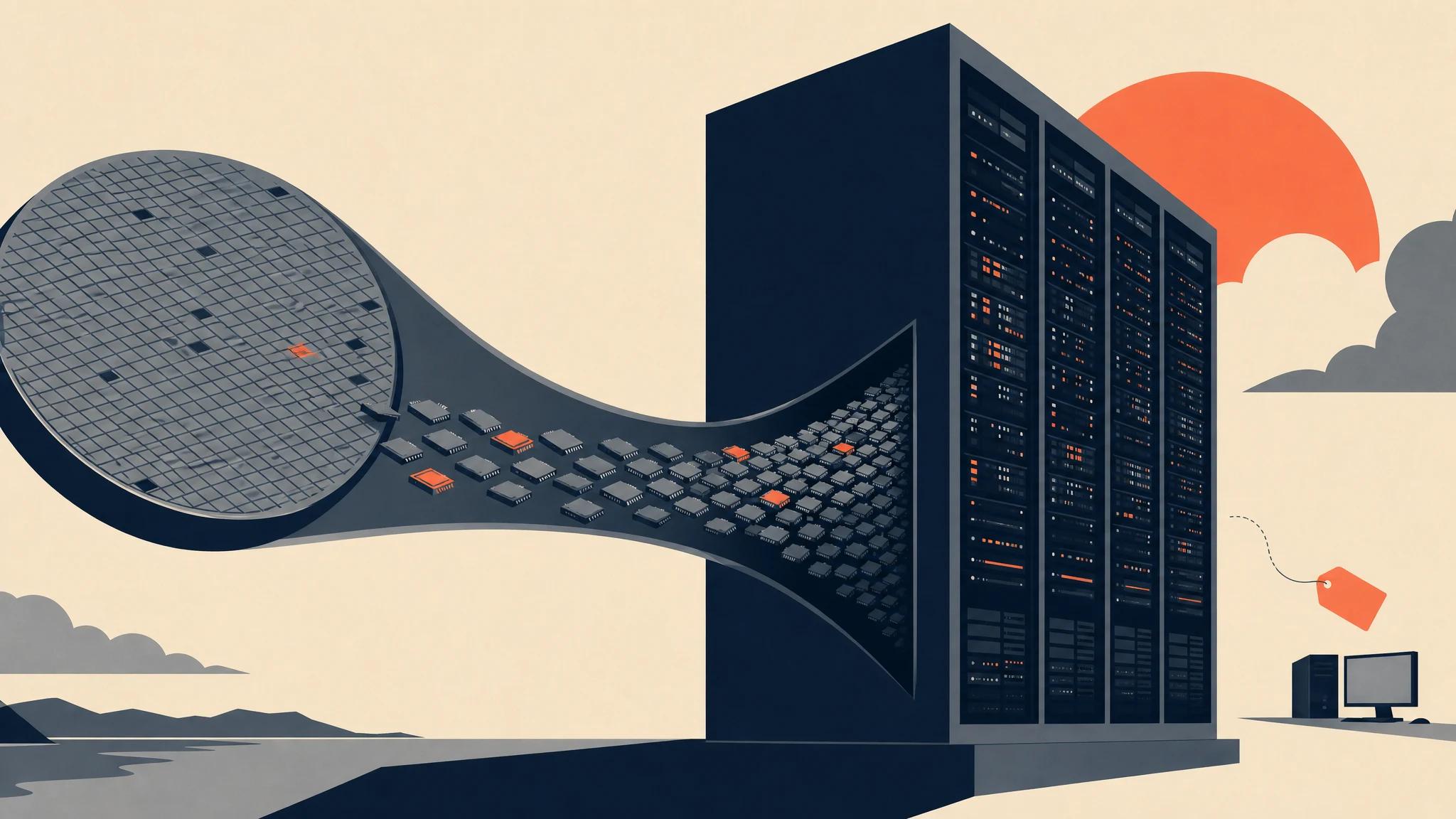
When CPU prices rise, people blame exchange rates or a spike in demand. Building a gaming PC and watching the estimate jump by roughly 200,000 won, they click their tongues and move on. That is too narrow a reading. The 2026 consumer CPU price increase is not the result of Intel and AMD getting greedy. The price emerged because datacenter-bound chips take first claim on the same factories, the same wafers, the same packaging lines — and personal-use chips fill whatever capacity remains. This is not a problem of a single chip; it is a question of where computing, as a resource, flows.
Not Components — Resource Allocation
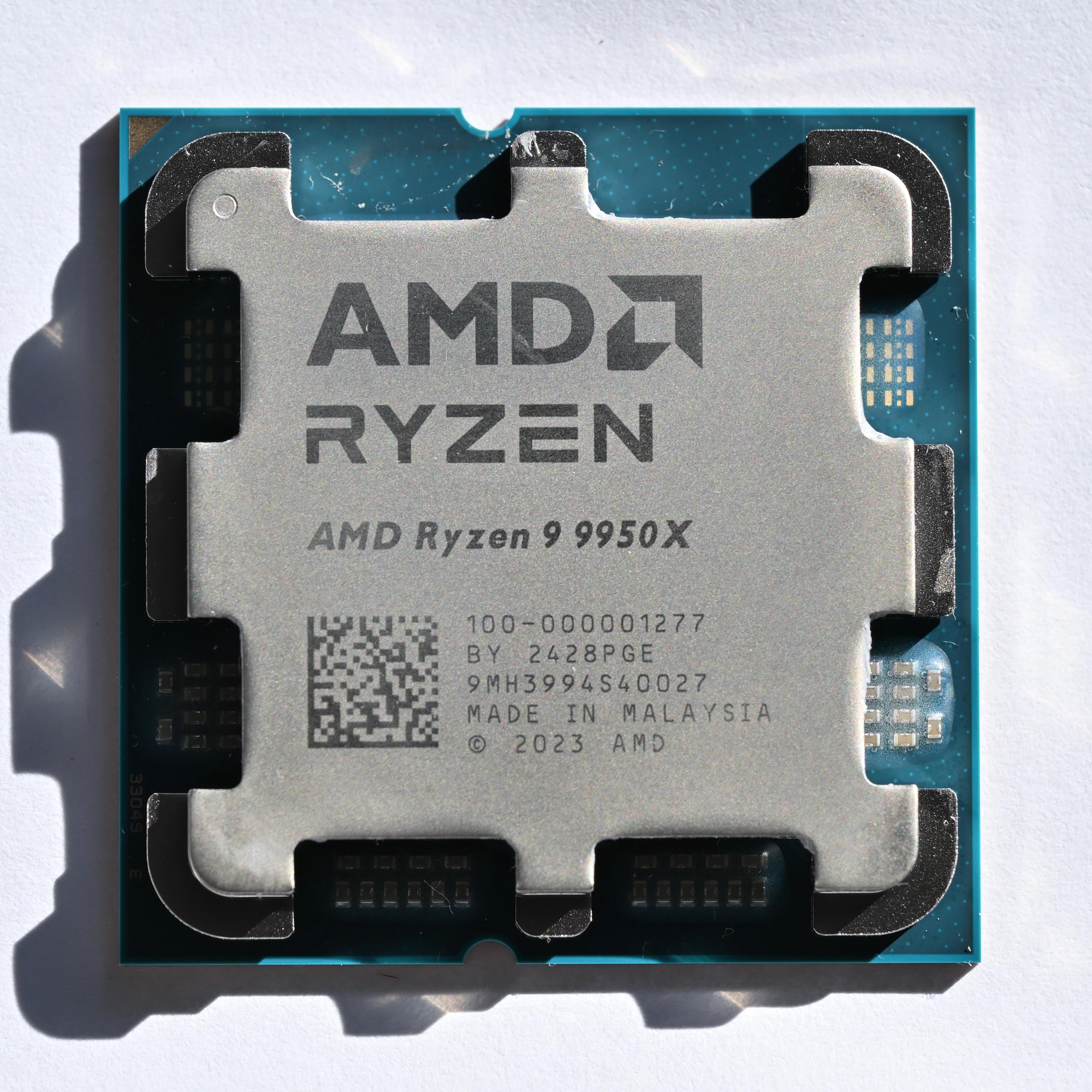
AMD Ryzen 9 9950X. Wikimedia Commons, CC BY 4.0
Viewing a CPU as a single component means missing this signal entirely. The crux is that foundry capacity, HBM memory, advanced packaging such as CoWoS, power, and cooling all draw from the same pool. Manufacturing a single AI accelerator consumes a significant share of that pool. When Nvidia locks up TSMC's advanced packaging allocation, every other chip destined for that line gets pushed back. Since datacenter GPU margins overwhelmingly exceed those of consumer CPUs, manufacturers' priorities are self-evident.
What is happening now, therefore, is not a price hike — it is a queue forming. The bill for the AI arms race is being transferred to individuals and small manufacturers in the form of computing costs. Individuals building PCs, design firms running CAD software, small factories operating local servers — all are unknowingly sharing in the capital expenditure of hyperscalers.
How Convergence Has Changed Industries
History shows that the moment one technology binds with another, the masters of an industry change. In the 1990s, the internet — born from the meeting of telecommunications and computing — completely overturned distribution and media. The smartphone converged communications, cameras, GPS, and payments into a single device and rewrote taxis, hospitality, and finance. Uber was not born as an automobile company; it emerged at the intersection of mobility, maps, and payments. What mattered was never the performance of any single technology, but what new coordinates it opened by meeting something else.
Today's CPU price signal must be read through the same grammar. As computing — as a resource — combines with the new demand of AI, general computation, long taken for granted as cheap and abundant, has for the first time become a scarce commodity. Just as abundant electricity kept industry running, abundant computation kept the digital economy rolling. That premise is now being shaken.
Connecting Points and New Actors
The CPU shortage event immediately meshes with other technological domains. Where it meets the power grid, datacenter location and electricity rates determine computing unit costs; where it meets robotics, the price of an autonomous machine's brain rises; medical imaging in healthcare, autonomous-driving computation in mobility, and personalized learning in education all compete for the same computing pool. When computation becomes scarce, the cost curves of all these industries bend upward simultaneously.
At this juncture, new economic actors emerge: distributed computing brokers who slice and lease surplus computation; demand-side companies designing their own chips to break free from pool dependency; infrastructure operators who bundle power and cooling into sellable offerings. Small today, these are the nodes that will become infrastructure tomorrow. Computing exchanges where computation is bought and sold, layers that aggregate idle GPUs for rental — that is where value will accrue. This is also why the decentralized computation networks being attempted by the Web3 camp are now being taken seriously. When the central pool becomes expensive, whoever aggregates dispersed computation gains pricing power.
Korea's Coordinates
A counterargument is available: capacity will expand, process nodes will shrink, and prices will return to baseline within a few quarters; when the AI bubble deflates, the pool will loosen again. In the short term, this is correct. However, the direction of convergence itself does not reverse. The structure in which industries line up to compete over where computation is allocated first was formalized for the first time in this cycle — and once established, queue-ordering structures rarely disappear.
Here, Korea's position comes into view. Being a key supplier of memory and HBM means holding a chokepoint in this pool. Small and mid-sized manufacturers and assembly operations in Busan and other regions are absorbing the immediate blow of rising computing costs — but at the same time, regions with relatively available power have room to experiment: placing distributed computation nodes, or reselling idle equipment time as computing resources. The point where Busan port's logistics data and regional manufacturing equipment data meet computing demand is a new set of coordinates. Viewing computing purely as a cost means shouldering the invoice; viewing it as a resource reveals opportunities in brokerage and leasing.
The future will not come from a single faster CPU. It will come from the point where computation, power, AI, and data converge to determine who stands at the front of the line. The CPU price tag that rose today is the first receipt signaling that the queue has begun to form.
This article was automatically translated from the Korean original by AI. For the authoritative version, read it in Korean.
한국어 원문 읽기 →