Prediction Is Over. Manipulation Has Begun.
AI personalized advertising has crossed from a technology that predicts you to one that moves you. Who is receiving the bill for that convenience?
AI Summary
AI personalized advertising has evolved beyond predicting consumer preferences to actively engineering purchasing decisions — calculating the precise moments to slip past impulse defenses and exploiting a collective map of human willpower's fault lines. The piece argues that what users experience as convenience is an asymmetric transaction in which platforms and advertisers capture conversion value while users quietly lose decision-making sovereignty. The author calls on Korea to establish three concrete guardrails: meaningful opt-out consent that does not forfeit service access, mandatory one-line explanations for why any given ad appeared, and hard limits on timing optimization that targets vulnerable moments such as late nights and minors.
12:17 a.m. You add a pair of sneakers to your cart — shoes you had no intention of buying. It feels like the algorithm perfectly read your taste, a satisfying bullseye. But that feeling itself was engineered.
Let's be clear about one thing. The ad didn't hit the mark on you — it brought you to that state. Those are two entirely different things.
Targeted advertising of the past was about prediction. Show hiking boots to a man in his thirties who has shown interest in hiking. It was about estimating who you are right now, using data.
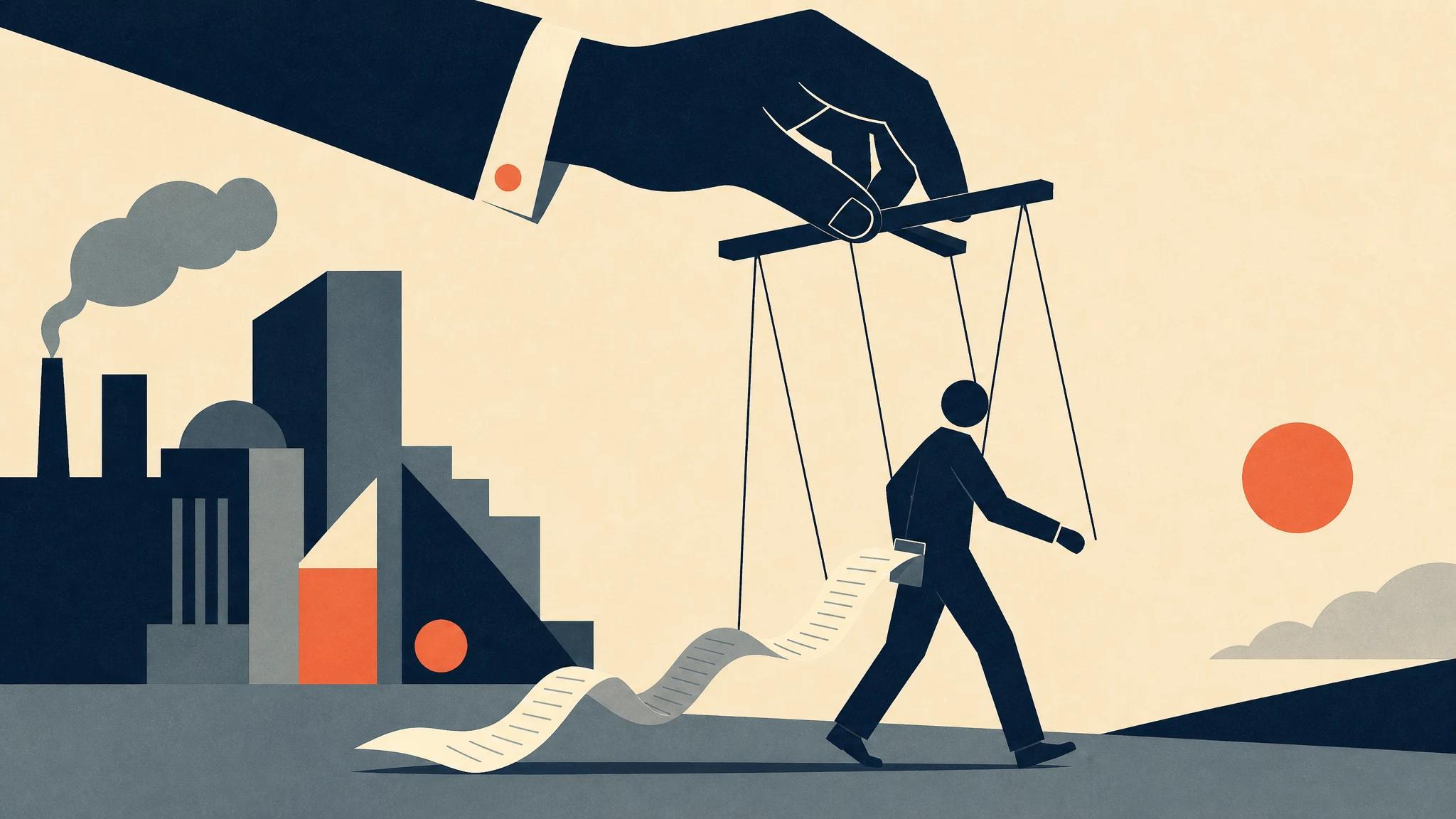
What is being refined today is not prediction but steering. It calculates when to show an ad so that an impulse slips past your weakest defenses, which phrasing manufactures a false sense of deadline urgency, and after letting you hesitate for a few days, precisely when to drop a coupon so that you hit the payment button. It is in the business of manufacturing your future behavior.
If the distinction sounds abstract, think of it this way. A weather forecast predicts rain. Cloud seeding makes rain happen. Personalized advertising has quietly shifted to doing the latter.
The core fuel powering this shift is not data about you. It is data about which stimuli caused tens of millions of people just like you to break down. Not an individual's profile, but a map of the fault lines in human willpower. That is the real asset.
So the question must change. Not how smart is this technology, but whose power does it grow.
It is packaged in the language of efficiency, but the cost shifts somewhere. Platforms raise their ad rates; advertisers gain conversion. What diminishes in between is not the cost of your decisions but the sovereignty of them — time to hesitate, room to compare, the moment to decide you simply don't need to buy. That is what gets shaved away.
In Korea, this is no vague concern. Major platforms collect not just search queries, dwell time, and scroll speed, but even the traces left by items you added to your cart and then lingered over. A single click on 'Agree to Terms' becomes the legal alibi for all of that tracking. If what they call consent is structured so that refusing means losing access to the service entirely, that is not consent — it is a toll.
If a small business owner in Busan sees their revenue cut in half the moment they stop running platform ads, they are less a free advertiser than a tenant farmer of the data infrastructure. The party that owns the infrastructure writes the rules, and everyone else does business only within them.
Here is where the counterargument surfaces. Isn't it better to be shown what you actually want, rather than suffer through ads for things you don't care about? That is fair. Relevance itself is not the problem. The problem is that relevance and manipulation come from the same engine. The ability to show you what fits you and the ability to nudge you at your most vulnerable moment are sold as a bundle, not as separate offerings. We believe we consented to the former, but what we actually bought was a package that includes the latter.
Let there be no misunderstanding: this is not a call to switch off the technology. Personalization, when well designed, is genuine convenience. The problem is that the current design tilts in only one direction. Benefits accumulate for platforms; costs accumulate against user autonomy. Correcting that tilt is not a matter of technology — it is a matter of rules.
So what does Korea need to decide? First, the integrity of consent. Consent only becomes real consent when users can still access core services after refusing data collection. Next, making manipulation visible: platforms must be required to explain in a single line why this particular ad appeared to you at this particular moment. The right to know is the starting point for the right to stop. Finally, protection at moments of vulnerability. There must be a clear line drawn against timing optimization that targets weak points — late-night hours, impulse-buying patterns, minors.
Technology is not neutral. It always reduces costs for some by sending the bill to others. Right now, that bill is being issued against your judgment, and you have been conditioned to call it convenience.
So the real question is this: not whether to stop this engine, but whose rules it runs on. If platforms are left to write those rules alone, the next pair of sneakers in your cart will not be something you chose.
This article was automatically translated from the Korean original by AI. For the authoritative version, read it in Korean.
한국어 원문 읽기 →