Chips Leak, Rates Block
AI chip export controls look like a technology blockade, but what determines the size of the holes punched through it is ultimately capital cost and dollar liquidity. Whether Korea can serve as a neutral node between the U.S. and China is not a matter of technology — it is a matter of deal structure.
AI Summary
AI chip export controls function more as a price mechanism than a physical barrier: capital flows toward gray-zone arbitrage whenever the margin on a blocked chip exceeds transport and detection risk. Three macroeconomic variables — U.S. interest rates, dollar strength, and global liquidity — ultimately decide whether any blockade holds, regardless of Washington's enforcement intent. For South Korea, a memory-chip chokepoint sitting inside the U.S. control regime yet deeply exposed to Chinese trade, the question of neutrality is not geopolitical posture but deal structure, and the gray zone is most visible not in policy documents but on the docks of Busan New Port.
Every time export control news breaks, people look at which chips got blocked. I look at where the money detours.
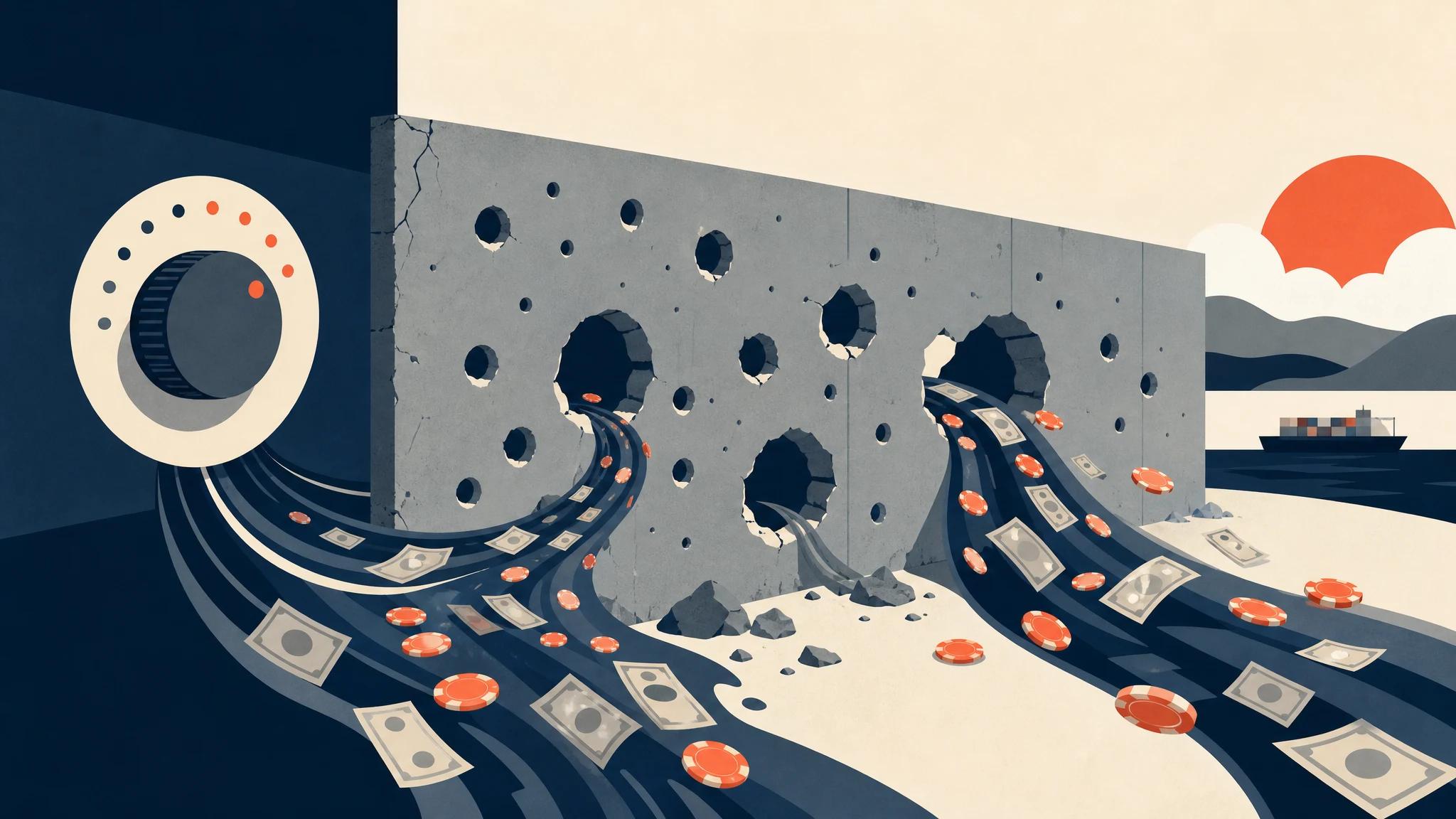
Controls are not a physical barrier — they are a price. They impose a premium on capital trying to flow through blocked channels. And when that premium is large enough, capital always digs new channels.
Reports of single H100 units selling at two to three times their list price through third countries keep circulating. This is not a smuggling problem — it is a capital cost problem. As long as the marginal return on a chip exceeds the cost of transport plus the risk premium for getting caught, the gray zone will not close.
The first variable here is interest rates. During the period when the U.S. maintained high rates, AI data centers were the textbook capital-intensive business. GPUs are fast-depreciating assets, and the money used to acquire them is mostly debt. When rates are high, the payback period on each chip lengthens and the capacity to absorb the gray-zone premium shrinks.
Conversely, when rates fall, the willingness to pay on the blocked side grows. The controls remain unchanged, but bypass demand comes back to life. Whether a blockade actually works is determined not by Washington but by the Federal Reserve. Policy targets chips, but its effectiveness is decided on the capital cost curve.
The second variable is the dollar. Gray-zone transactions are settled almost entirely in dollars. When the dollar is strong, the purchasing power of bypass importers is cut; when it weakens, the same chip gets cheaper. This is also why controlled countries are building out yuan-denominated settlement networks. The quietest way to break through a blockade is not to smuggle chips out — it is to change the settlement currency.
The third is liquidity. When global capital is abundant, intermediaries, shell companies, and re-export hubs that finance bypass supply chains proliferate overnight. When liquidity dries up, this ecosystem dies first. What these players fear more than getting caught is a capital recall. A credit crunch clears the gray zone faster than the blade of any export control.
Technology company growth is therefore inseparable from capital cost. Both Nvidia's margins and the pace at which controlled countries are catching up sit on top of the price of money. No matter how high chip performance climbs, the cost of financing its purchase is what puts a value on that performance.
Capital is now moving along the price differentials created by controls. The wider the spread between official and gray-channel prices, the larger the capital pool seeking to flow through that gap. Controls create the spread, the spread invites arbitrage, and arbitrage funds the bypass routes. The stronger the blockade, the more profitable the gray zone — a paradox.
This is where Korea's coordinates become visible. Korea holds a de facto chokehold in memory chips, sits inside the U.S. control regime, and yet carries substantial trade exposure to China. The phrase 'neutral node' is attractive, but what Korea actually occupies is a position that sees both sides' prices at the same time.
The problem is that neutrality is not a declaration — it is a deal-structure problem. The U.S. tracks re-exports even from allies, and China is the end destination for bypass demand. Korean companies are caught between the low margins of legitimate channels and the high margins — but equally high sanctions risk — of gray channels. This is not neutrality; it is dual-sided exposure.
The counterargument goes: technology ultimately beats capital cost; when performance is overwhelming, money follows. That is only half right. Performance creates demand, but it is interest rates and the dollar that convert that demand into financing. The routers of 1999 and the GPUs of 2021 were real technology, but when capital costs turned, valuations collapsed first. Technology promises the future; capital cost discounts that future to present value.
A significant portion of the containers moving through Busan New Port are nodes in the semiconductor supply chain. The gray zone of export controls does not exist in the abstract realm of geopolitics — it lives on the bills of lading, settlement currencies, and letters of credit at transshipment ports. The holes in any blockade show up at port first.
The discount applied to Korean markets is not unrelated to this dual-sided exposure. Geopolitical risk premiums, foreign exchange volatility, and the ambiguity that comes with the 'neutral' position. Opportunity goes to those who broker the price spread through legitimate channels; risk goes to those who lose track of where the line is.
Washington decides where chips are blocked. But whether that blockage actually holds is decided by interest rates, the dollar, and liquidity. Don't watch the speed of technology — watch the direction money flows as it tries to route around controls. Policy builds the blockade; capital cost tears it down.
This article was automatically translated from the Korean original by AI. For the authoritative version, read it in Korean.
한국어 원문 읽기 →