Network Usage Fees: Who Paved the Road?
What appears to be a billing dispute between telecoms and content companies is in fact a question of national governance — who builds the roads of digital society, and who gets to set the tolls? Korea raised this question first. But do we truly understand it?
AI Summary
South Korea's network usage fee dispute — pitting telecoms like SK Broadband against content providers like Netflix — is more than a commercial disagreement; it is a fundamental question about who pays for digital infrastructure. Despite leading the global conversation on this issue, Korea lacks transparent cost-verification mechanisms, leaving citizens, researchers, and small startups unable to scrutinize the numbers underlying network fee decisions. What matters, the article argues, is not which side prevails, but whether society as a whole can read and validate the legitimacy of the charges.
It Looks Like a Fee Fight, But It Isn't
The network usage fee dispute is usually framed this way: content companies like Netflix use a lot of Korea's internet infrastructure, so they should pay telecoms like SK Broadband — and they refuse. It reads as a commercial dispute between two companies squabbling over an invoice. Most people watch from across the river, wondering what any of this has to do with their monthly phone bill.
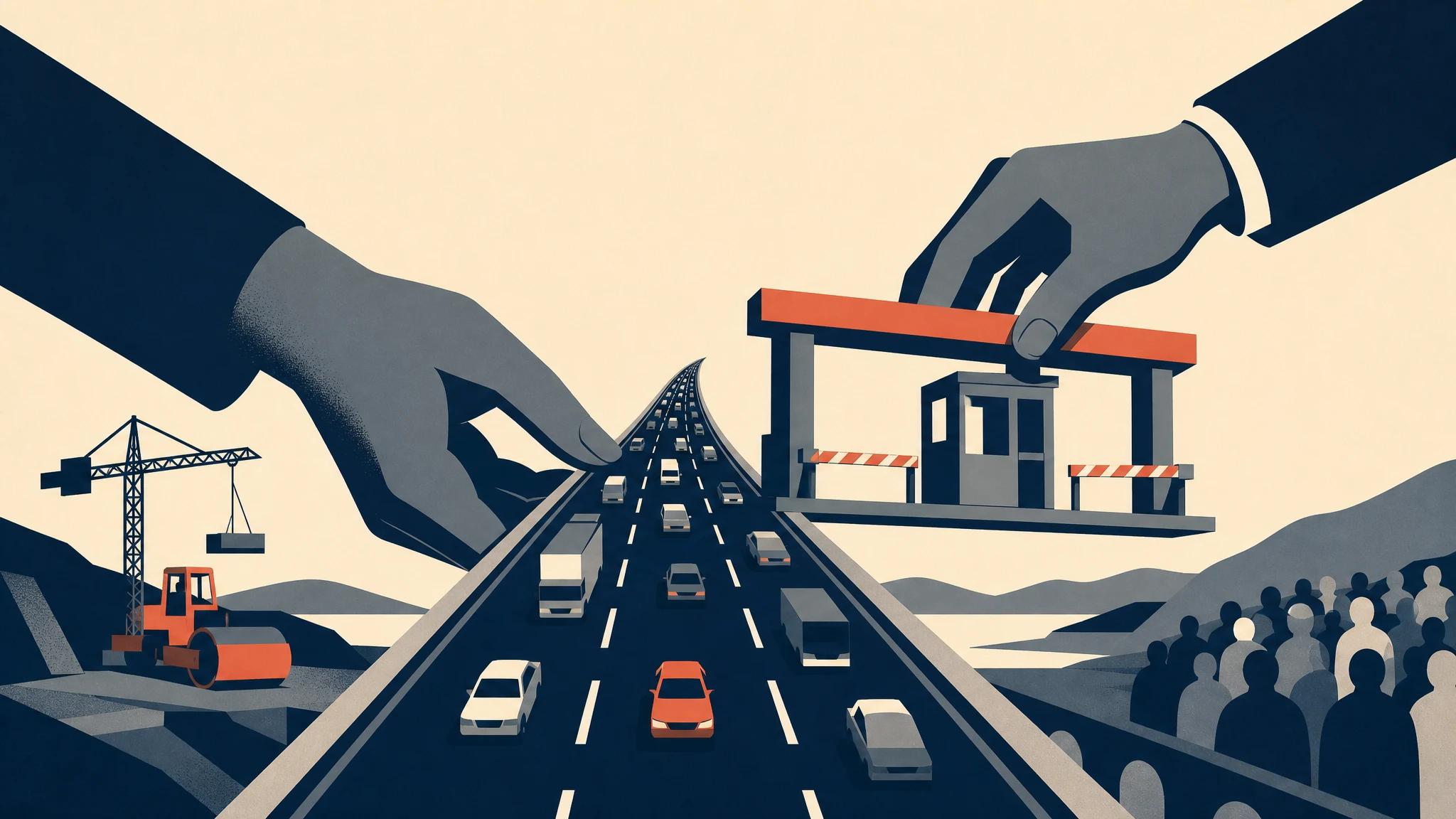
That indifference is the first misunderstanding. The real invoice in this dispute is not addressed to a corporation — it is addressed to society as a whole. The internet network is a road. A road built by private companies but used like public infrastructure. The question is simple: who bears the cost of building and maintaining it? The telecom that laid the road? The content company driving trucks down it to make money? Or the citizens paying monthly subscription fees? If none of the three bears the full cost, the bill flows inevitably to the weakest link.
The Network Is a Highway for Data
Let's push the analogy to its limit. Suppose a construction company builds a highway with its own money. Ordinary vehicles pay tolls. Then one day a logistics company starts running a fleet of heavy trucks that accounts for 30 percent of total traffic. The road wears out faster; lanes must be widened. The construction company says: you damage the road the most, so share the repair costs. The logistics company replies: the goods on our trucks were ordered by citizens, so charge them for the road. We already paid for the access road in front of our warehouse.
Neither side is entirely wrong. That is what makes this hard. Data traffic surges every year, and a significant portion of that surge originates from global video platforms. Telecoms need to recoup capital expenditure to build the next generation of network beyond 5G. Content companies fear that if one country begins levying transit fees, others will follow — a precedent they dread. Ultimately this is not a question of two companies' profit-and-loss statements. It is a question of distributive design: how does society allocate the costs of digital infrastructure?
This Is Not a Problem Individuals Can Cleverly Route Around
A common reaction follows: the companies will sort it out among themselves, and if prices rise, just find a cheaper plan or a workaround. That thinking reduces the network usage fee to a personal data-bill optimization problem — the same cognitive error as seeing AI only as a personal productivity tool. The toll structure of a road does not disappear because you found a clever shortcut. It applies equally regardless of which neighborhood you live in.
What matters is not how individuals use the system but society's capacity to read the structure itself. Understanding network usage fees at a societal level means being able to ask these questions: Who holds ownership of this road? Who controls the authority to set tolls? When those tolls are ultimately passed on to consumers through higher content prices, is there an institutional mechanism to monitor that? Fail to answer these questions, and we will only see the total on the invoice after it has already arrived.
The Empty Columns in Korea's Regulatory Framework
Korea was the first country in the world to engage this fight — and to do so in earnest. Multiple bills have been introduced in the National Assembly to mandate that content companies pay network usage fees, the so-called 'network free-rider prevention' legislation. The courtroom battle between SK Broadband and Netflix was an experiment watched closely by policymakers at home and abroad. The European Union, as it began similar deliberations, referenced Korea's case. There was genuine hope that Korea's regulatory experiment could become a globally exportable policy model.
Yet within Korea itself, many columns remain blank. There is no publicly available cost-calculation standard against which to judge whether a network usage fee is fair. Telecom capital expenditure data and the raw data underlying traffic measurements are largely undisclosed. The core figure at the heart of every dispute — who uses how much of the network, and by exactly how much — cannot be verified by citizens or researchers. Information that should be open as public data is locked inside corporate trade secrets. As a result, both the National Assembly's legislative debates and the courts' rulings proceed atop numbers that cannot be independently verified. Korea speaks of exporting its regulatory model, yet has not built the administrative capacity to measure and disclose the very data that model depends on. That is the institutional blank.
A strong counterargument exists: disclosing cost data would erode telecoms' negotiating leverage, expose trade secrets, and blunt investment incentives. That is a fair point. But the argument is not for full disclosure. If the road functions as a public good, there must be at least a minimum transparency mechanism — one that allows an independent body to verify the basis on which tolls are set, just as electricity tariffs have cost-verification procedures. When a small content startup in Busan prepares to go global and cannot even predict what its network costs will be, or on what basis they are calculated, that opacity is not trade-secret protection. It is a barrier to market entry.
Countries That Truly Understand, Not Just Skillfully Use
Network usage fees seem like a narrow topic. But compressed within them are all the infrastructure questions of the digital age: who builds the road, who sets the toll, who ultimately bears the cost, and who monitors the whole structure. These same questions will soon be asked — identically — about AI computing infrastructure, data center power, and public cloud.
Many countries use technology skillfully. Building faster networks and designing cheaper rate plans is something someone, eventually, will accomplish. But explaining in plain civic language how the costs of that infrastructure are distributed, opening the underlying evidence as public data, and placing disputes on a foundation of verifiable institutions — that is not something every country can do. Korea started this fight first, which means it also stands in a position to define the answers first. What matters is not becoming the country that extracts network fees most effectively, but becoming the country whose citizens can collectively read and validate the legitimacy of the invoice. Do we truly understand that road?
This article was automatically translated from the Korean original by AI. For the authoritative version, read it in Korean.
한국어 원문 읽기 →