The Diver Who Wields a Knife Every Night
A game that interlocks two verbs—diving and running a business—that never belonged in the same sentence, with a single mechanism. The real achievement of Dave the Diver is how it made this strange combination convincing.
AI Summary
Dave the Diver succeeds by creating a genuine two-way loop between diving gameplay and restaurant management, where each half drives the other rather than existing as separate mini-games. While the well-designed cycle risks becoming routine in later stages, the game represents a significant milestone for Korean indie development by validating an unproven genre combination instead of following safe formulas. It demonstrates structural courage that could serve as a blueprint for the next generation of Korean indie games.

A Game with Two Clocks Running
DAVE THE DIVER · Source: Steam
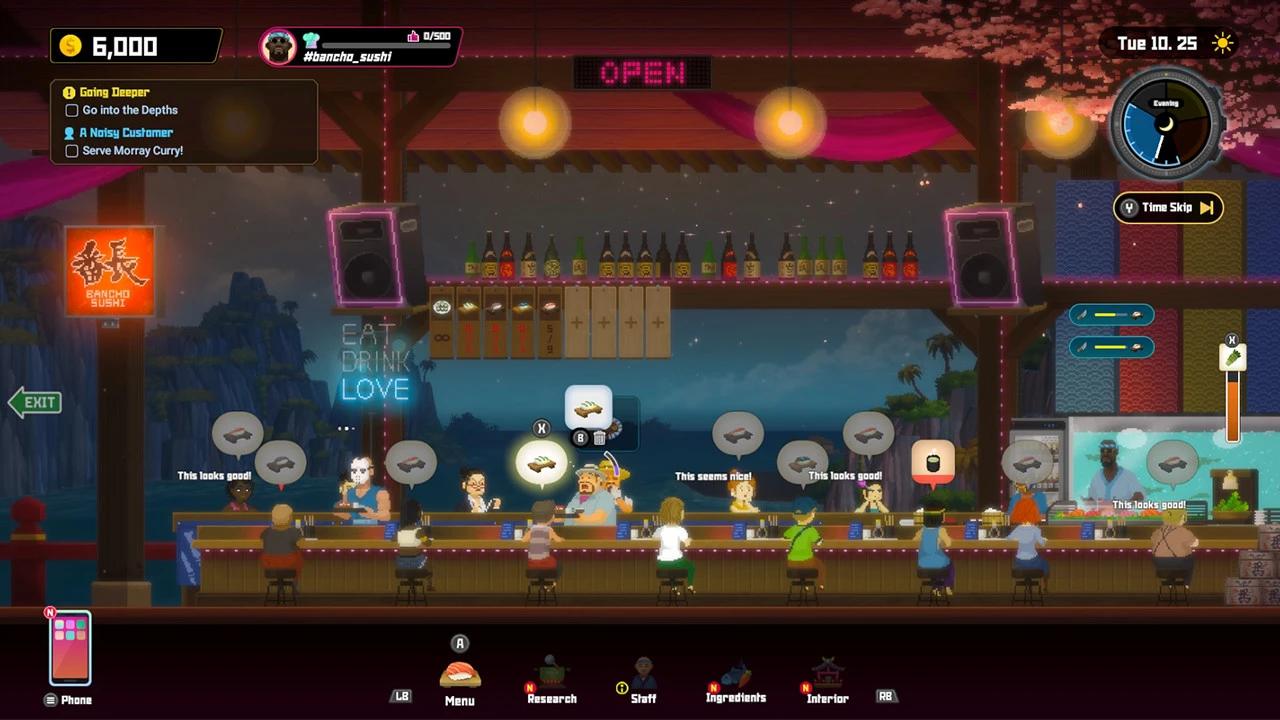
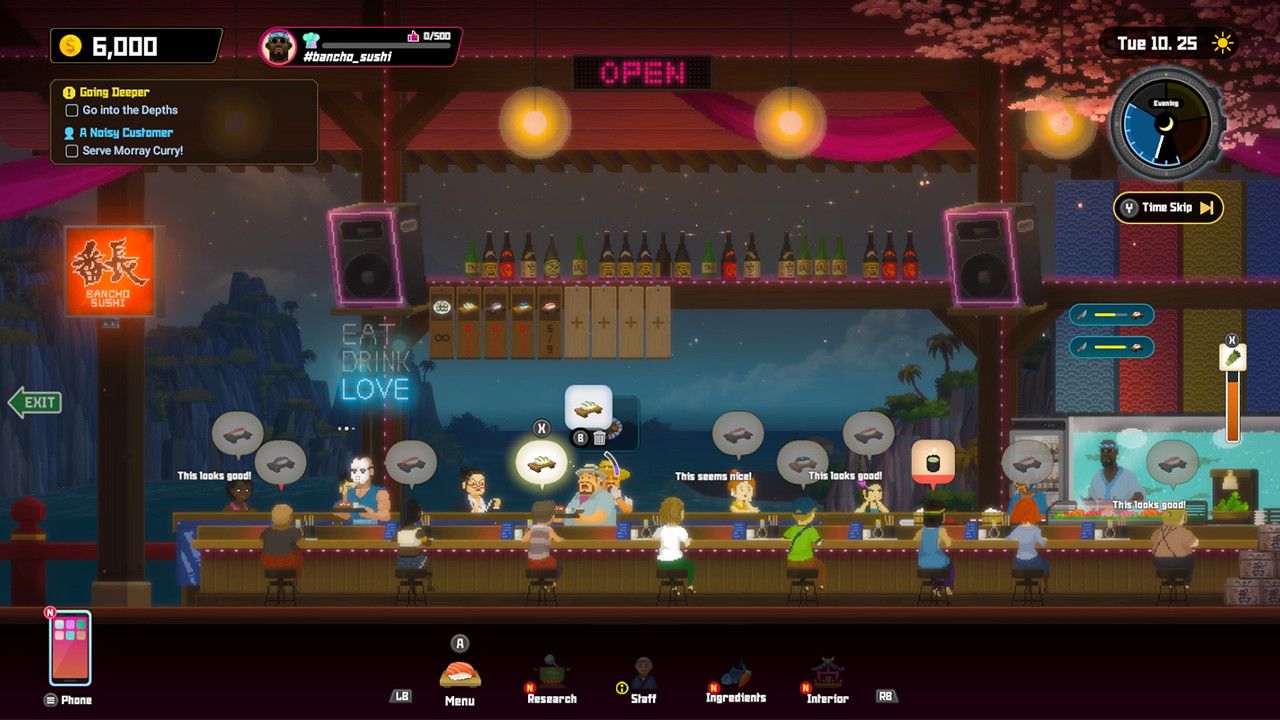
Most games revolve around a single verb. Shoot, build, or solve. Dave the Diver breaks that rule head-on. While the sun is up, you dive into the ocean to catch fish, and when the sun sets, you put down your harpoon and take on managing a sushi restaurant. Diving and running a business. These are words that don't normally belong in the same sentence.
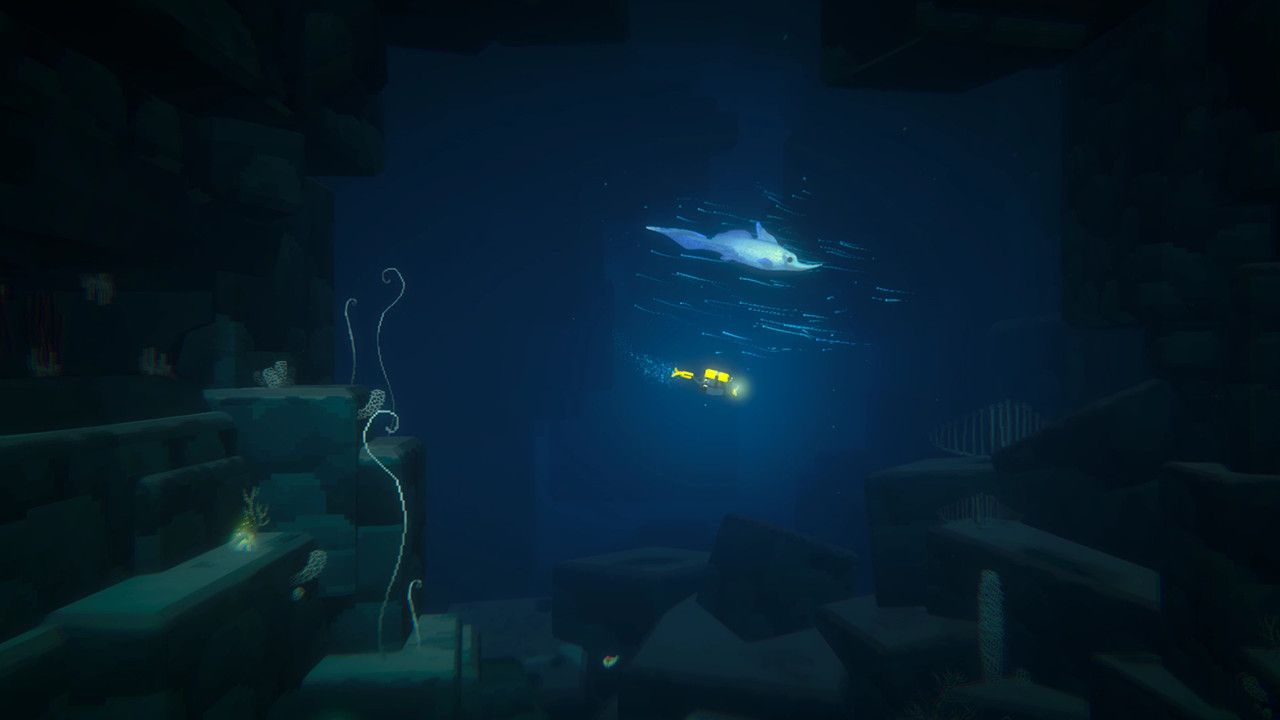
Mintrocket doesn't hide that awkwardness. Instead, it turns that gap into the game's rhythm. Day points downward. The deeper you go, the narrower your vision becomes, and tension builds as you weigh the path back against what you're holding. Night rises upward. Inside the cramped restaurant, your hands get busy clearing incoming orders. As the sinking day and rising night alternate, a strange pull develops that makes you curious about the next dive after each cycle ends. This isn't a collection of multiple mini-games stitched together. It's closer to a single machine where two clocks mesh and turn together.
The One Design Choice That Made This Game Special
Attempts to mix genres are common. It's just rare for them to succeed. Usually one side is the main attraction and the other becomes a token side branch for completeness. Action with management awkwardly tacked on, or management with action thrown in for show. Between two systems that run separately, players latch onto one side and abandon the rest.
This is exactly what Dave the Diver solved. Daytime actions determine nighttime results, and nighttime needs create the next day's goals. What you catch in the ocean dictates what you'll serve customers that evening, and what the restaurant needs determines where you'll dive tomorrow. The two loops don't point in one direction—they shoot arrows at each other. So diving becomes not labor but grocery shopping, and management becomes not paperwork but settlement of diving rewards.
This feedback loop is everything in this game. If either one breaks, the other loses meaning. This game understands that mixing doesn't mean putting two things on one screen—it means making them unable to survive without each other.
One Honest Weakness
However, the more the two clocks mesh and turn, a moment arrives when that rotation itself becomes an obligation. From diving to restaurant, from restaurant back to diving. A well-crafted cycle carries the risk of feeling like a detailed work order as you progress into the late game. If at first you swam not knowing what might be where in the ocean, once familiar you go straight down to the coordinates where the needed ingredients are, collect them, and come back up. The management that was interesting also hardens into a settlement procedure following the same sequence every day. When the ocean where you freely swam becomes a material procurement route, and the restaurant that was unfamiliar becomes a routine you've mastered, that initial excitement transforms into the language of efficiency. It's the fate of a well-made loop, and the shadow this game carries to the end.
Significance in the Korean Indie Scene
From the perspective of Busan-based media, our reason for focusing on this game is separate. It's the very fact that a game made in Korea held the card of genre combination—which has the highest failure rate—and achieved major commercial success. A sub-brand under a major publisher chose a strange combination instead of the safe path, and that strangeness became not a weakness but an identity.
The assessment that long followed Korean games was that they were well-made but seemed familiar from somewhere. The ability to rapidly absorb verified formulas and polish them smoothly. Dave the Diver goes one step further from that position. Instead of following verified formulas, it verified an unverified combination itself. It's a signal that Korean games have moved beyond the stage of copying well into the stage of making the unfamiliar convincing. The textbook for the next generation of Korean indies to unfold lies not in flashy graphics but precisely in this structural courage.
A diver who wields a knife every night is a joke-like premise. What this game left as its most solid statement is taking that joke, pushing it through seriously to the end, and establishing it as a genre.
This article was automatically translated from the Korean original by AI. For the authoritative version, read it in Korean.
한국어 원문 읽기 →