Why Nintendo Never Ages
Companies that survive without competing on specs don't accumulate hardware. They accumulate methods for handling constraints. That's the quality Korean game manufacturing never managed to acquire.
AI Summary
While Sony and Microsoft compete on hardware specifications, Nintendo has thrived for over 130 years by deliberately embracing technical constraints and building long-lasting IP through organizational structures that preserve knowledge from failures. Korean game companies, despite their technical prowess, lack the institutional mechanisms to sustain multi-decade creative visions and translate limitations into innovation—a capability that can't be bought or headhunted, only cultivated through time.
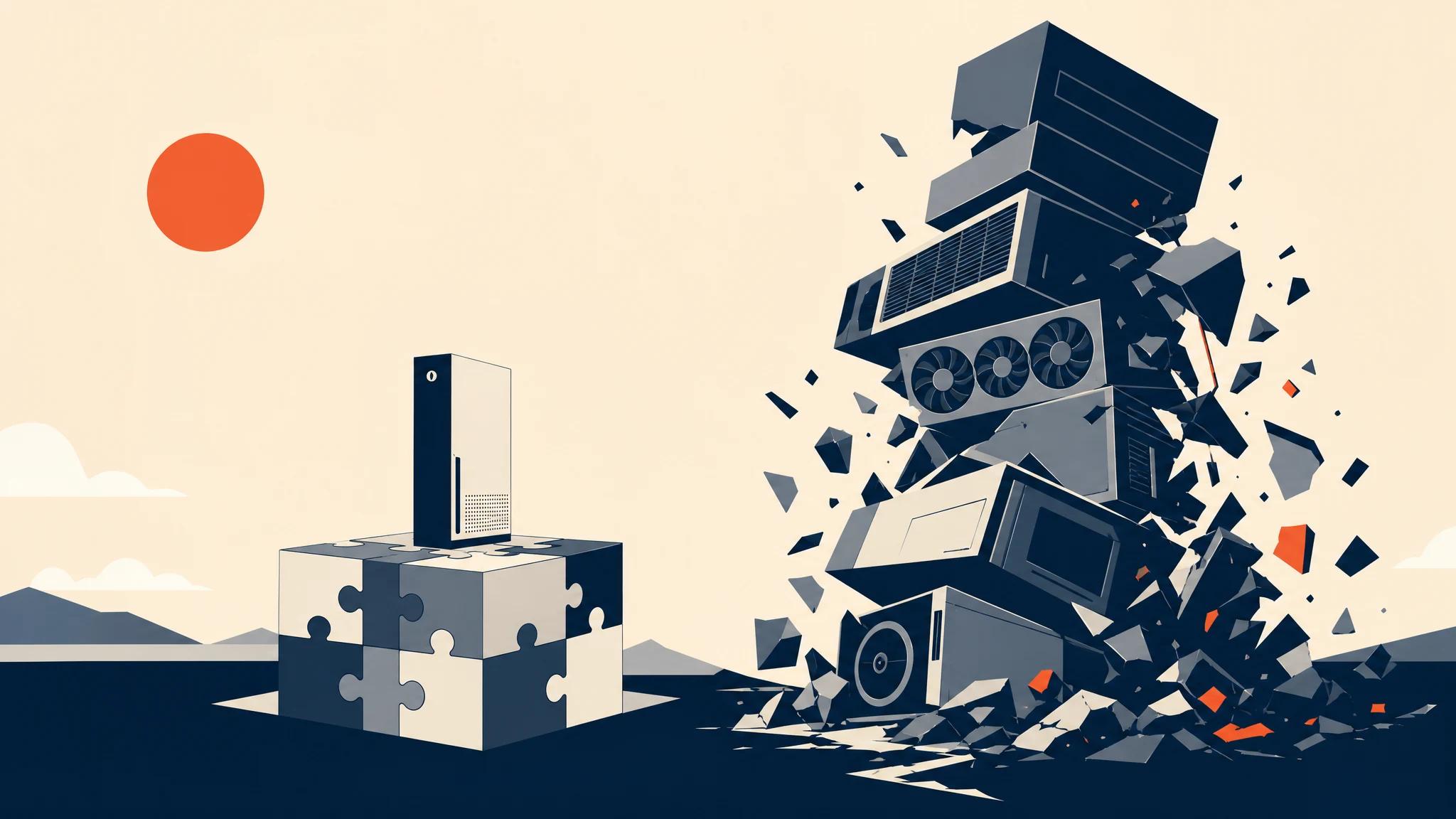
The weakest console lives the longest
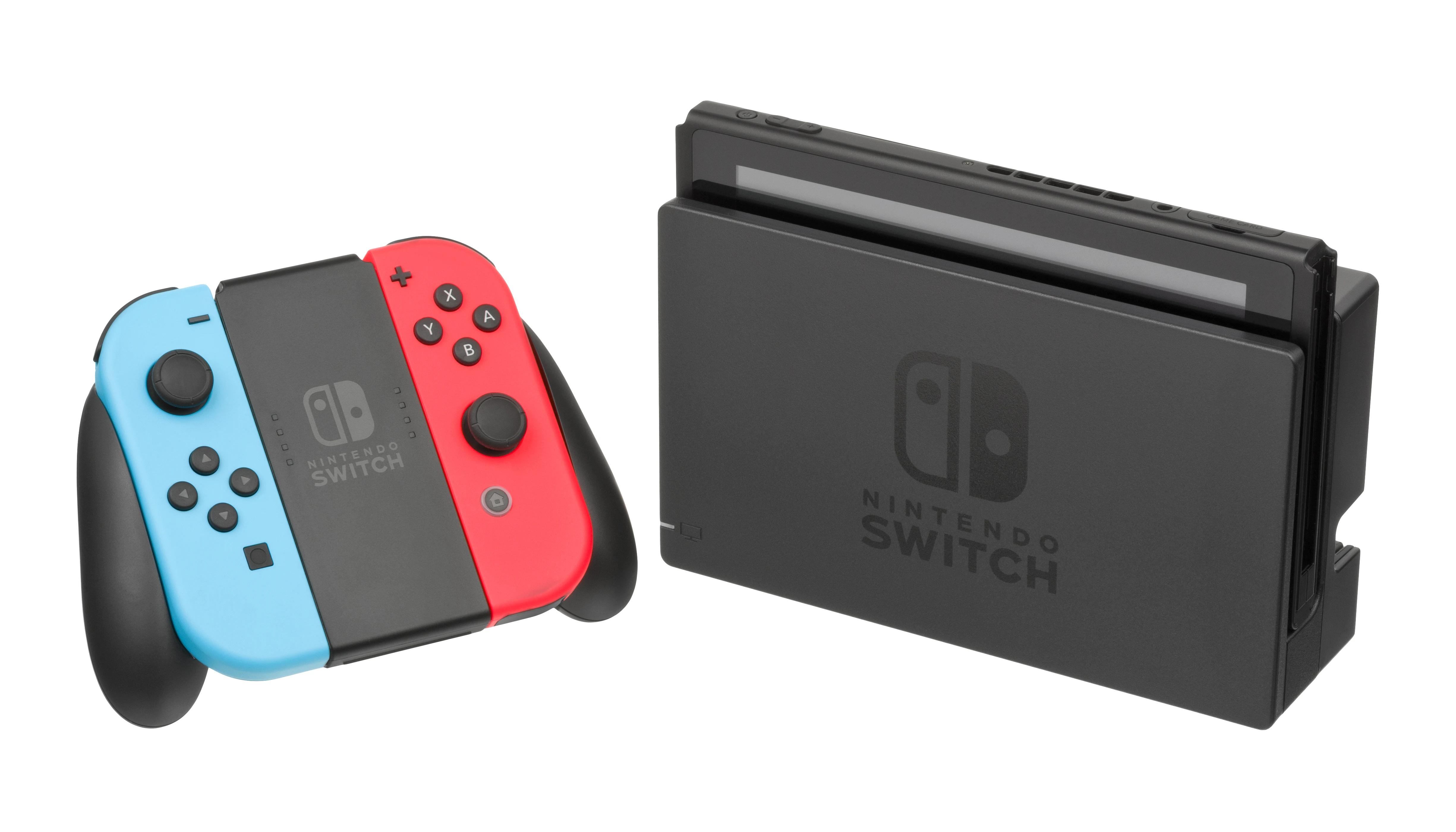
Nintendo Switch. Wikimedia Commons, Public domain
In 2026, another next-generation console replacement cycle has arrived. Sony and Microsoft come out each time with faster chips, higher resolutions, and more teraflops. Beside them stands Nintendo. Even as it releases the Switch successor, it's not ashamed of specs that don't even reach half those of competitors' latest machines. Yet in revenue and operating profit, Nintendo doesn't age. This company that started as a hanafuda card maker in 1889 has lasted over 130 years despite failures in Trump cards, taxis, love hotels, and even instant ramen.
Here overlaps one unsettling scene from Korea's game industry. We boast world-class graphics engines, top-spec servers, and the shortest development pipelines. Nexon, NC, and Krafton are fast and massive. But someone asks: does Korea have characters that live for 30 years like Nintendo's Mario, Zelda, and Pokémon? Dungeon&Fighter and PUBG come to mind, but both are not 30 years old—at most a dozen years or so. We lead in specs, but they lead in time.
Fast catch-up only follows specs
The strength of Korean game manufacturing is precisely the strength of the catch-up model. Take a genre someone else created and implement it faster, more precisely, with bigger traffic. Whether MMORPG or battle royale, push through with better graphics, more aggressive monetization design, and faster live operations. That's how semiconductors and shipbuilding won. Win by pushing processes to their limits in games where the correct answer is predetermined.
The problem is that the core asset of gaming is not process. Nintendo wins even with weak hardware because it accumulated something else in the space where it abandoned the specs race. The Wii's motion controller, the DS's dual screens, the Switch's detachable Joy-Cons—all were inventions that emerged while being inferior in specs. It accepted the constraint of weak hardware and created a grammar of play only possible within that constraint. Companies that follow specs only follow as far as specs. Nintendo escaped outside of specs and planted IP there.
Here comes the common objection: wasn't Nintendo just lucky with IP, didn't a character like Mario just happen to hit by chance? It's only half right. Mario was a carpenter in 1981's Donkey Kong who couldn't even jump. Mario lived because Miyamoto Shigeru spent 40 years repeatedly experimenting with jumping, kart racing, parties, tennis, and drawing with the same character, accumulating failures without discarding them. Luck doesn't create IP. Organizations that can ask the same question for 40 years create IP.
Advanced manufacturing accounts for failure as an asset
Accumulation doesn't happen through time alone. There must be an accounting structure where failures remain as experience rather than being discarded. Nintendo has a clear failure called the Wii U. Sales were sluggish and it shook the company. But the Wii U's GamePad experiment, the awkward combination of handheld and console, wasn't discarded—it was refined and returned as the Switch. The failed quarterly results disappeared, but the failed design knowledge remained within the organization. This is the system of accumulation.
Korea's short-term performance orientation works in the exact opposite way. When a new title fails in quarterly revenue, the studio is dissolved, and the trial-and-error accumulated within scatters as the people scatter. Failure remains as a blemish on individual résumés rather than organizational knowledge. Management tied to quarterly results and stock prices doesn't permit questions that take 30 years to ask. Miyamoto works on the same character at the same company into his seventies. Veteran Korean directors have no structure that allows them to stay at one company, with one IP, until that age. Good studios have gathered in Busan's Centum City game cluster, but what's gathered there is a talent pool, not 40-year questions.
What Korea needs to accumulate is not specs but the ability to handle constraints
So what should be accumulated? First, accounting and personnel structures that tie IP to generational rather than quarterly units. There must be an explicit mechanism that transplants failed IP into the next work rather than discarding it. Next is continuity of employment and authority that allows the same creator to handle the same world for 10, 20 years. In places where directors are replaced with every project, the craftsman's touch doesn't accumulate. Last is the training itself to translate constraints into opportunities. Nintendo's real asset isn't Mario—it's the thinking habit of accepting insufficient specs and squeezing out new play from there. This can't be bought with an engine license or poached through headhunting. It only emerges when an organization endures the same kind of difficulty for a long time.
Korean game companies already have capital, technology, and talent. What's missing is a structure that endures time. While many companies buy good chips, only Nintendo knows how to play for 30 years with bad chips.
In the era of catch-up, countries that found answers quickly won. Korea grew that way by implementing genres others created more quickly. In the era of the frontier, countries that create questions first win. Nintendo doesn't age not because it produces better answers. It's because for 130 years, it never once let go of the question: "How do we create new play with weak hardware?" Do we quickly solve problems others posed, or do we create the problems themselves? What Korea's game industry must answer in the next 30 years is not a spec sheet, but this one sentence.
This article was automatically translated from the Korean original by AI. For the authoritative version, read it in Korean.
한국어 원문 읽기 →