The Feel of Saving Death
Why do games that turn failure into a resource keep pulling us back? We dissect the core loop and return urge through direct play, and leave one takeaway for Busan's indie scene.
AI Summary
Games that save death rather than erase it—where failure becomes a resource for the next run—create a powerful retention loop through partial loss and partial preservation. The key lies not in content volume or graphics budgets, but in precisely calibrating the 0.3 between total loss and full preservation, turning death into accounting rather than punishment. For Busan's indie developers, this design philosophy offers a competitive advantage: tuning a single friction-rich loop with precision rather than competing on content scale.
When the Save Button Attaches to Death
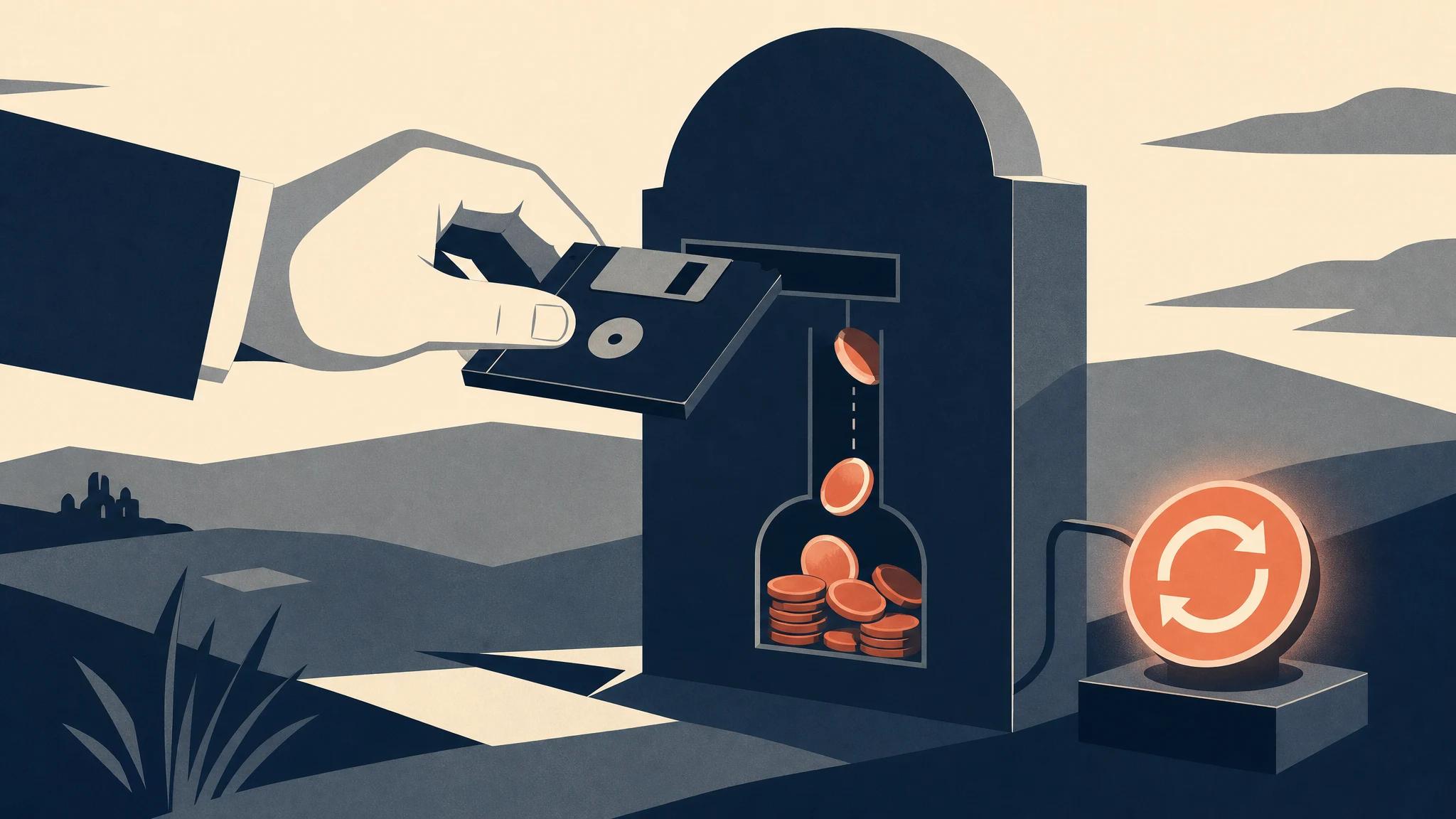
Most games erase death. They rewind to checkpoints, load the last save, and make it as if nothing happened. But there are games that save death instead of erasing it. When you die, your corpse remains in that spot, and the next run's version of you steps over that body to climb higher. It's a structure where death doesn't disappear but becomes material for the next cycle—like the ghost in 'Spelunky,' the accumulating dialogue in 'Hades,' or the cells in 'Dead Cells.' Recently, I spent several days with a game from this lineage that operates most honestly in this regard. Booting up, dying, and booting up again in repetition, what I witnessed wasn't graphics or content volume. It was the mechanism of how a single design that saves death pulls your fingers back to the controller.
The perspective that views games through graphics, volume, and buzz collapses here. Games that save death typically have modest visuals. A single run is short, and total content doesn't match massive RPGs. Buzz gets quickly pushed aside by first-week release trends. Yet two months later, you boot it up again. If volume is what retains people, then cleared games shouldn't be reopened—that would be normal. The reason for reopening lies on the opposite end of volume: in unending friction.
Core Loop: Loss Carries Forward
This game's cycle is simple. Enter, gather resources, die, and part of that death carries over to the next run. The key is the final step. When you die, you don't lose everything you gathered—some converts to permanent upgrades and the rest remains as traces in that location. Death becomes not 0 but around 0.3. This 0.3 is the heart of the design.
Losing everything is frustration; preserving everything eliminates tension. This game pinpoints the narrow band between. Partial loss leaves the sensation of 'that was a waste,' while partial preservation leaves the sensation of 'at least something remained.' These two sensations collide within a single run and pull you into the next. The first item on the game design litmus test: after completing one cycle, does 'one more run' emerge? It passes. But what's important is that the cause of passing isn't fun. Fun is the result, not the cause. The cause is the carryover of loss. The accounting-like sensation that what I lost hasn't disappeared but is accrued somewhere—that's what moves your fingers.
Here, one of our rules comes to mind. Don't let the interval between purchases exceed 7 levels; place the feeling of 'almost there' at 70 to 80 percent of the target value. This game always positions the next tier of permanent upgrades at an almost-reachable distance. Just two more deaths and the next slot opens. Those two runs are always empty. You enter to fill them.
Failure Handling: Death Is Not Blamed
Failure handling is the real proving ground for this genre. How does the game treat me when I die? If it insults me as an inadequate player, I put down the controller. Where 'Hades' was clever was in converting death into narrative progression. When you died and returned, someone in the house would offer new dialogue. Death itself was the next page. The game I played uses the same principle. The death screen isn't 'GAME OVER' but closer to a settlement statement. It shows what you brought back this time, how much remains until the next tier. It's accounting, not accusation.
This difference is subtle but decisive. Framing failure as loss trains avoidance; framing it as progress trains retry. It's the same death, but one screen's language determines the next action. What's notable is that this isn't a matter of reward magnitude. The resources accrued per death are small. Small, but not zero. The difference between 0 and 0.3 is greater than the difference between 1 and 10.
I tried it on the subway with sound off. The hand-feel persisted just from the motion of numbers rising on the settlement screen. It worked without sound. That means juice is embedded in the structure, not surface decoration. Conversely, let's ask: do all games that save death work this way? No. Many roguelikes either release carryover resources too loosely, making death meaningless, or lock them too tightly, making death pure punishment. Games that miss the 0.3 disappear from folders within days. Hitting this narrow band isn't about graphics budgets but the designer's fingertip sense.
Why Boot It Up Again, From Busan
The evaluation of 'fun' is lazy. After closing a game, does the thought 'what happened with that thing' occur—that's the real metric. Long after closing this game, the fact that the next upgrade slot sat empty two runs away remained in my head. It wasn't finished but in a state of suspended accrual. Rebooting wasn't to consume fun but to close unfinished accounting.
Here we land in Korea's indie scene. Games made by small teams in Busan cannot win the volume war against massive RPGs. The visual budget war is the same. There's only one battlefield where victory is possible: precisely tuning a single loop. Design that saves death is decided not by capital but by the sense of hitting 0.3. Not the direction of churning out more content, but the direction of refining a single friction that converts failure into resource. Fun comes not from production volume but from friction, constraints, and intentional refusal. That one refusal—choosing to save death rather than erase it—makes the game reopenable two months later. That's where Busan's small teams will find their weapon.
This article was automatically translated from the Korean original by AI. For the authoritative version, read it in Korean.
한국어 원문 읽기 →