Working Next to the Waves
For those working in Busan, the real asset isn't the office—it's the short distance between the office and the waves. When choosing a neighborhood, what matters isn't the view, but the speed of transition.
AI Summary
Working in Busan means being able to reach the ocean within ten minutes of closing your laptop, turning the sea into a rhythm rather than just scenery. Different neighborhoods—from Gwangalli's quick transitions to Dadaepo's solitude—offer varying proximities to the water and work environments suited to different creative needs. The city's real advantage for builders is the ability to seamlessly move between focused work and ocean breaks throughout the day.
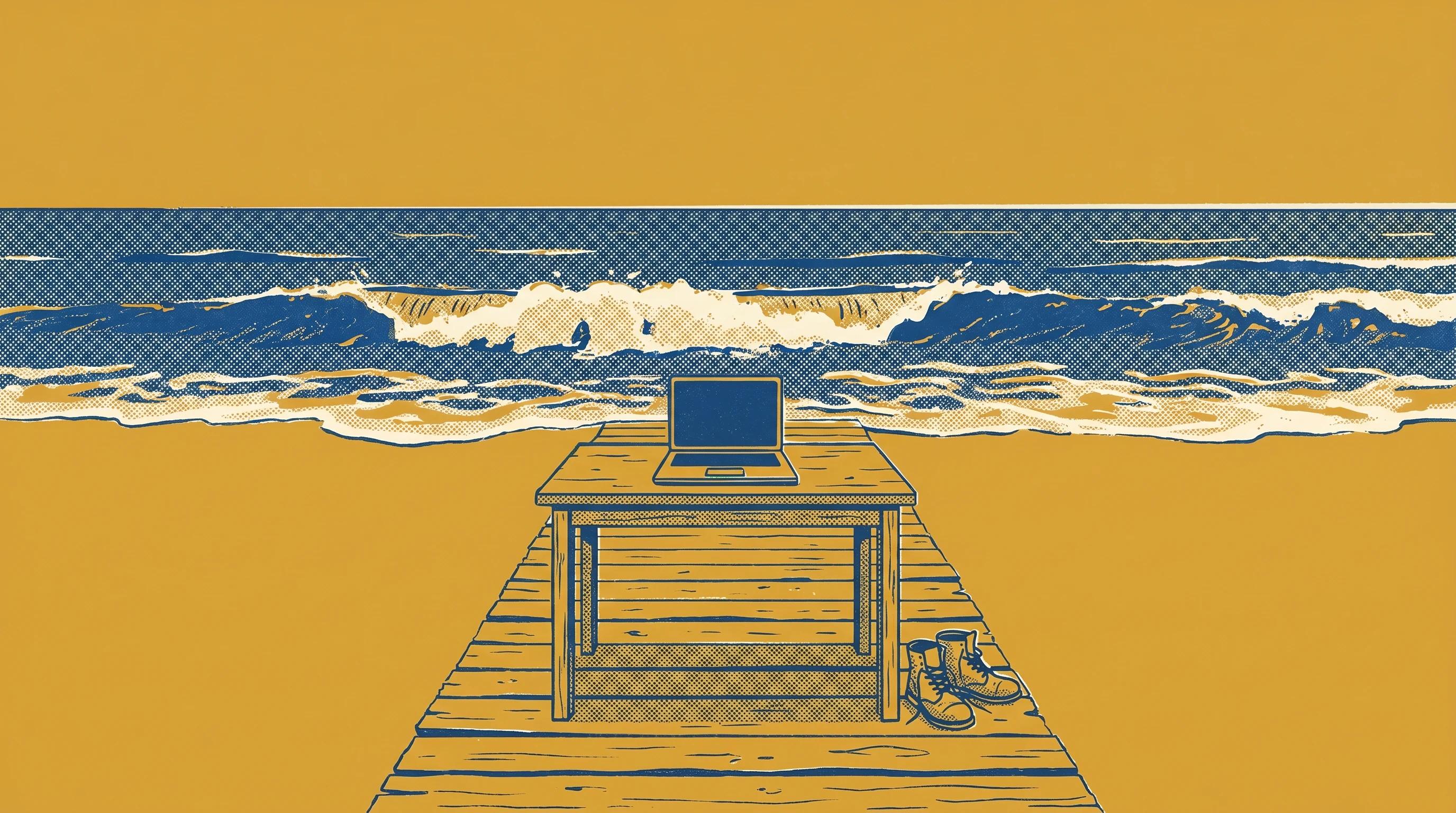
When you finish your morning meeting and close your laptop, sand touches your feet within ten minutes. That's what working in Busan means. In Seoul, you'd take the elevator down at lunch and walk between buildings, but here you go to see the ocean. The real asset builders in this city have isn't the office—it's the fact that the distance between the office and the waves is short.
Waves at Lunch, Focus in the Afternoon
For working people, the ocean isn't scenery—it's rhythm. It's a device for clearing a blocked mind in the morning, a switch for transitioning into afternoon deep work. So when choosing a neighborhood, what you look at isn't the view, but the speed of transition. Can you go out at lunch, see the water within fifteen minutes, and come back? Does this repeat every day?
Gwangalli is where that transition is fastest. The beach and downtown are stuck together just one block apart, so the ocean fits in even between meetings. Cafes are densely packed, making it easy to choose an afternoon workspace. However, dense also means crowded, so on days when you need focus, look for alleyways one block inside from the main road. Even within the same neighborhood, the texture of noise is completely different. Weekday mornings are relatively quiet at the beach with plenty of window seats available, but as the afternoon deepens, people fill in. So if you map out your movement to finish focused work on the main road side in the morning, then move to alley cafes when crowds gather, you can use the same neighborhood differently all day long.
| Gwangalli | Haeundae (Marine City) | Songjeong·Dadaepo | Yeongdo | |
|---|---|---|---|---|
| Character | Fastest transition | Organized high-rise business district | Relaxed·deep work | High maker density |
| Suitable days | Refresh between meetings | External meetings·clients | Alone before deadline | When wanting to mingle with colleagues |
Haeundae has a different texture. The Marine City side has the sense of a well-organized high-rise business district, giving stability when scheduling external meetings or bringing in clients. Think of it as work and ocean on the same route, but in a slightly more formal version.
When You Need Focus, Go to the Edge
When you need not daily routes but a day of deep work, I recommend deliberately moving away from the center. Songjeong is right next to Haeundae yet the atmosphere is considerably more relaxed. The rhythm of surfers is layered in, so the city's urgency drops down a notch. Dadaepo is farther. It's where the Nakdong River releases into the ocean, so light and water spread widely, and when you come this far, you don't feel guilty turning off notifications. It's a neighborhood for the day right before a deadline, when you truly need to be alone.
Yeongdo is another kind of choice. It's next to the ocean while studios and creative spaces are increasing between old shipyards and alleyways, so the density of makers is different. Walking the narrow sloped roads on weekday afternoons, you'll find newly opened studios mixed in next to closed shutters, with ocean smells and paint smells flowing through the same alley. It suits not when you're going to consume scenery, but when you want to mix among people working similarly. The sense of being alone yet not alone—that's the flavor of working in Yeongdo.
The discernment when choosing ultimately comes down to three things. First, the time it takes from office to water. Within ten minutes, it becomes daily rhythm; thirty minutes makes it a ritual for special days. Next, whether the neighborhood has sufficient workspaces to sustain the afternoon. Power outlets and quiet—those two are enough. Last is the direction of wind and light. Even with the same ocean, neighborhoods good in the morning differ from those good around sunset. Choose according to your own focus time zone. People whose minds are clearest in the morning fit places close to eastern beaches where light enters early, while people whose engines turn on in the afternoon match well with river estuary areas where sunset spreads long.
Busan doesn't teach you to separate work and rest. It puts the two on the same street and makes you move between them every day. That's the privilege of people working in this city.
This article was automatically translated from the Korean original by AI. For the authoritative version, read it in Korean.
한국어 원문 읽기 →