What Does the Sea Mean to Busan?
Busan's coastline stretches 266km. Over 60% of citizens live within 3km of the coast. Is the sea an asset or merely a backdrop for Busan?
AI Summary
Busan has a 266km coastline with over 60% of residents living within 3km of the shore, yet the relationship between citizens and the sea remains complex. The city has two distinct seas: a working sea of ports and industry that citizens cannot access, and a leisure sea of beaches used only occasionally. The article questions whether Busan's sea functions as a true civic asset or simply scenic backdrop, arguing the next administration must transform the ocean from rhetoric into daily reality for residents.
266 Kilometers
In 13 days, the next mayor will be decided.
Yesterday, we asked: How does a city with zero unicorns work?
Today, we enter the backdrop where that work unfolds.
Busan's coastline — 266km.
Similar to the straight-line distance from Seoul to Daejeon. This city possesses a sea stretching that entire length.
But what does the sea mean to Busan?
What the Numbers Say
The sea is everything to Busan.
As a port, as beaches, as industry, as scenery. Remove the sea from Busan and almost nothing remains.
But what does the sea actually mean to Busan citizens?
What I Saw in Songjeong
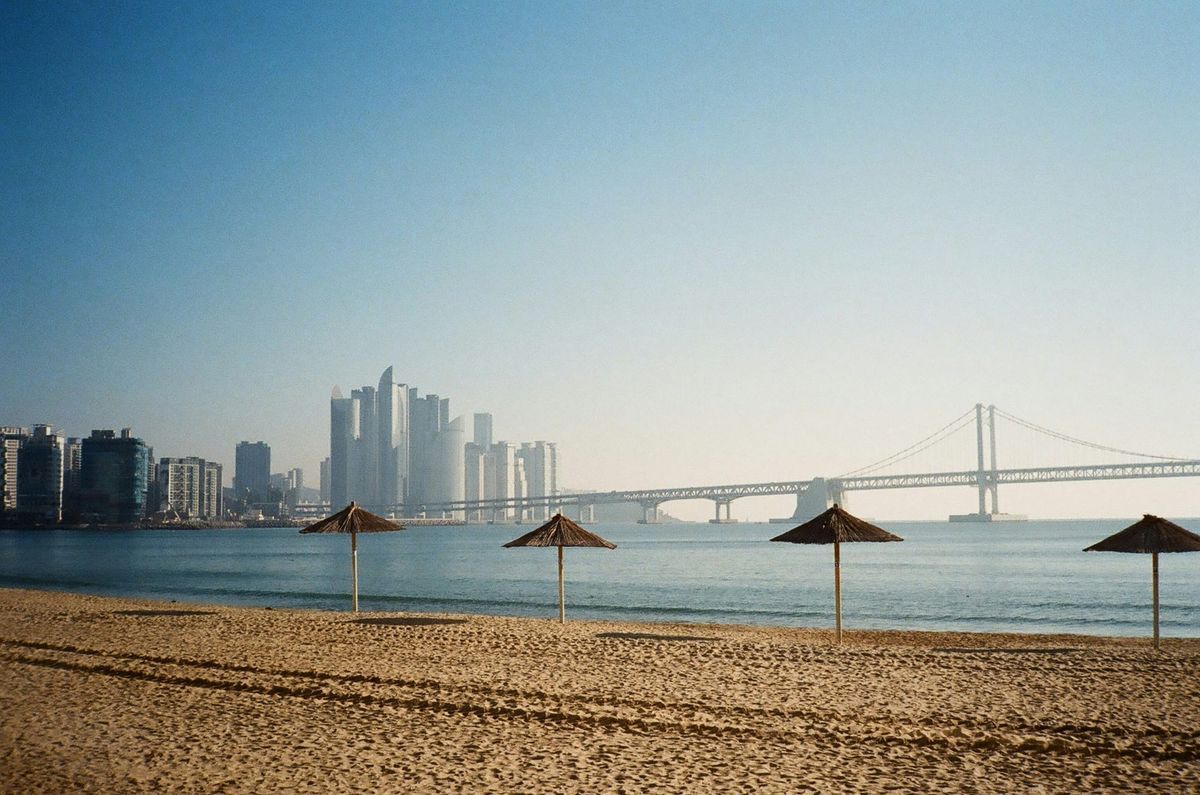
Six in the morning, Songjeong Beach.
One stop east from Haeundae brings you to Songjeong. Surfers gather, cafes line the streets, summers bring crowds but spring and fall are quiet.
A few people waiting for waves sit by the water with boards beside them.
I asked one person: "Do you come here often?"
"Almost every day."
Every day. At dawn. Before work.
Some Busan citizens live like this. The sea is their daily life. Not scenery but routine. The beachside cafe is where they drink morning coffee, the beach is their post-work walking course, surfing is their weekend exercise.
But for most Busan citizens, the sea remains distant.
Two Seas
Busan has two seas.
| Working Sea | Resting Sea | |
|---|---|---|
| Location | Busan Port·Gamcheon Port·Nam Port·Dadae Port | Haeundae·Gwangalli·Songjeong·Dadaepo |
| Character | Heart of economy (7th largest port in the world) | Walking·sitting·surfing |
| Citizen Access | Inside fence, inaccessible | Temperature varies by season |
First, the Working Sea
Busan Port. Gamcheon Port. Namhang Port. Dadae Port.
The sea where containers move, seafood is traded, ships are repaired. The heart of Busan's economy. This is where the number "world's 7th largest port" comes from.
But this sea is separated from citizens' daily lives. The ports are behind fences, cranes are visible from afar, containers move only by truck. A sea citizens cannot enter.
Second, the Leisure Sea
Haeundae. Gwangalli. Songjeong. Dadaepo.
The sea where people walk, sit, take photos, and surf. Where tourists come and tents line up in summer.
But this sea has extreme temperature swings by season. Too crowded in summer, too empty in winter, perfect in spring and fall but only those in the know come.
Most Busan citizens occasionally use the second sea. They don't use the first sea at all.
Questions Remain
What does the sea mean to Busan?
Is it an asset? Or a backdrop?
If it's an asset, citizens should be able to use it more frequently, more closely, more diversely. Citizen accessibility is part of the asset, not just port infrastructure.
If it's a backdrop, it remains scenery. A sea visible from afar. A sea visited occasionally. A sea good for photos.
A city where more citizens live like the person waiting for waves every day in Songjeong is different from one that doesn't.
What is the way to make the statement that the sea is the city's center not simply rhetoric but citizens' daily reality?
That's the question the next Busan must answer.
One-Line Request
Tomorrow is the fifth question.
Airport, station, port — all three exist, so why can't it become a gateway?
Please read this and share it with at least one person. With someone who lives the sea as daily life in Busan.
— Grey Busan, May 2026
PolyBusan does not support any specific party or candidate. We only ask questions. Error reports · feedback: busanloop@gmail.com
This article was automatically translated from the Korean original by AI. For the authoritative version, read it in Korean.
한국어 원문 읽기 →