You Bought a Rental
When a live service game shuts down, it's not the end of its lifespan. It simply reveals that what you bought from the start was a rental, not an asset.
AI Summary
Live service games are designed with shutdown as an inherent feature, not a bug—players purchase access rights rather than ownership, despite marketing language suggesting otherwise. The 'Stop Killing Games' campaign in Europe challenges this model by demanding companies leave games playable after service ends. Korean indie developers could pose a radical alternative: creating games that cannot be shut down, giving players true ownership.
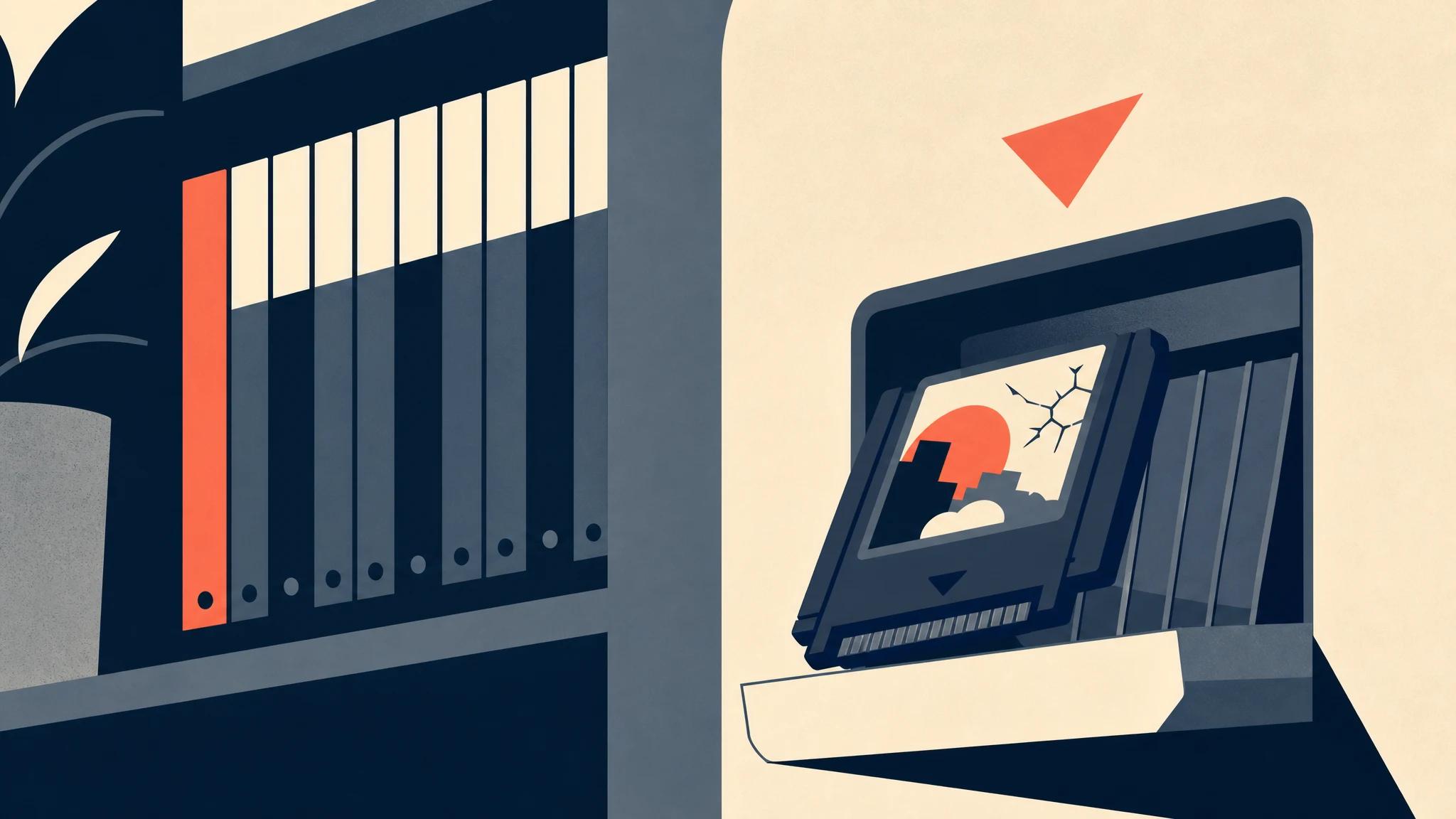
When a service termination notice appears, gamers mourn. "It was a good game." Like sending off an aging pet. This grammar of mourning is itself the biggest lie. The game didn't die. Someone just turned off the server, and that someone held the right to press that button from the start. It's not death—it's repossession.
I've spent dozens of hours glued to live service games. That's why I know the feeling that hits when I see a shutdown screen isn't sadness—it's humiliation. I'd misunderstood something. I believed I was collecting something, when in fact I was renting.
Shutdown Is Not a Bug, It's a Specification
Sony's Concord, released in August 2024, shut down its servers after two weeks. Reports emerged that concurrent users had dropped to double digits, and Sony decided to issue refunds. It looks like an exceptional disaster, but when you examine the structure, Concord merely fast-forwarded the fate of every live service game. Only the speed differs—the direction is identical.
Shutdown is built into the very definition of live service. Content is on the server, progress data is on the server, and the game's operation itself is tied to the company's operational decisions. In this model, a player's time and money accumulate inside a rental building called the company server. When the landlord decides to close shop, everything stacked inside disappears with it. Shutdown isn't a system malfunction—it's the system working as designed.
Here comes a common counterargument: "Isn't that the inherent limitation of online games? Multiplayer needs servers to run." Only half true. The technical fact that servers are needed and the design choice to make only the company able to shut down that server are separate matters. Minecraft Java Edition lets individuals host servers. Mod communities revive shut-down games with private servers. Technology didn't force this. The business simply chose to monopolize control. Shutdown possibility isn't a side effect—it's part of the revenue model.
Rental Disguised in the Language of Ownership
The core problem is the words games use with us. The store says "Buy." It displays that you "Own" skins. The inventory calls them "My Items." All this language is borrowed from the vocabulary of property rights. But deep in the terms of service, the opposite is written: you've merely received a revocable, non-transferable license.
Imagine someone at a PC bang in Seomyeon, Busan, putting cash into game currency. What they're buying isn't a bundle of pixels but "the right to access those pixels, only as long as the company permits." The receipt doesn't say that. This gap isn't fraud. It's legal. That's what makes it worse.
The 'Stop Killing Games' campaign launched in Europe in 2024 touches precisely this point. Petitioners demand that once a game is sold, companies be obligated to leave it in a playable state even after service ends. It surpassed one million signatures as a European Citizens' Initiative (ECI). The industry opposed it, citing cost and technical burden. What this clash reveals is simple: we experience digital purchases as ownership, while law and contracts define them as service usage. Experience and rights are misaligned.
The true invention of live service games isn't content. It's a structure that sells the feeling of ownership without granting ownership rights. Gacha dopamine, season pass collecting urges, limited skin scarcity—these mechanisms uniformly reinforce the sensation that "this is mine." The more they reinforce it, the more they obscure the fact that it's a rental. The better-made a live game is, the more perfectly it makes you forget you're renting.
They Didn't Remove Friction—They Removed Rights
Good game design comes from friction. Dark Souls' death, Limbo's silence, Outer Wilds' 22-minute loop. Intentional constraints and resistance create meaning. Live service flips this principle completely. Designed to prevent players from stopping, leaving, or escaping. All friction removed in one direction. Infinite content supply, unbroken rewards, daily refreshing to-do lists.
But this frictionless design didn't just remove boredom. The exit disappeared too. There's no way to take your progress into your own hands and leave. Data sits on company servers, and when shutdown comes, even backups are meaningless. Single-player games run 10-year-old packages today. Live service games become unexecutable code chunks the moment the company loses interest. Same money paid, but one side is an asset and the other a rental. What created the difference wasn't fun—it was ownership structure.
| Single Player | Live Service | |
|---|---|---|
| Data Location | In My Hands | Company Server |
| When It Ends | Still Runs After 10 Years | Won't Even Launch |
| Reality | Asset | Rental |
Why does this matter to the Korean indie scene? The Korean game industry is at the forefront of live service and gacha. Nexon, NC, and Netmarble's revenue structures prove it. For developers raised in this environment, "selling a game" almost automatically means "operating a service." So the most radical question indie can ask is this: Can we make games that cannot be shut down? Games players truly own?
The answer is already out there. Single-player with one-time purchase, structure that completes offline, openness allowing private servers. Not flashy, with gentle revenue curves. But such games survive even if the company fails. If a game made by a small Busan team still runs on someone's hard drive 20 years later, it's not because of volume or graphics. It's because that game is an asset, not a rental. Just as fun doesn't come from infinite supply, neither does ownership. Only games that acknowledge they can be closed leave something with players that doesn't close.
This article was automatically translated from the Korean original by AI. For the authoritative version, read it in Korean.
한국어 원문 읽기 →