What's Most Cutting-Edge Becomes Obsolete the Fastest
Discard the advice to 'use AI well.' The advantage tools provide lasts only six months. When production costs converge to zero, only judgment and distribution remain as bottlenecks. What's most cutting-edge becomes obsolete the fastest.
AI Summary
As AI tools rapidly commoditize, the competitive advantage they provide shrinks to mere months before everyone has access to the same capabilities. When production costs approach zero, only judgment—deciding what to build—and distribution channels retain lasting value. The author argues individuals should focus on building assets and ownership rather than skills, as the most cutting-edge capabilities depreciate fastest while analog assets like relationships and brand endure.
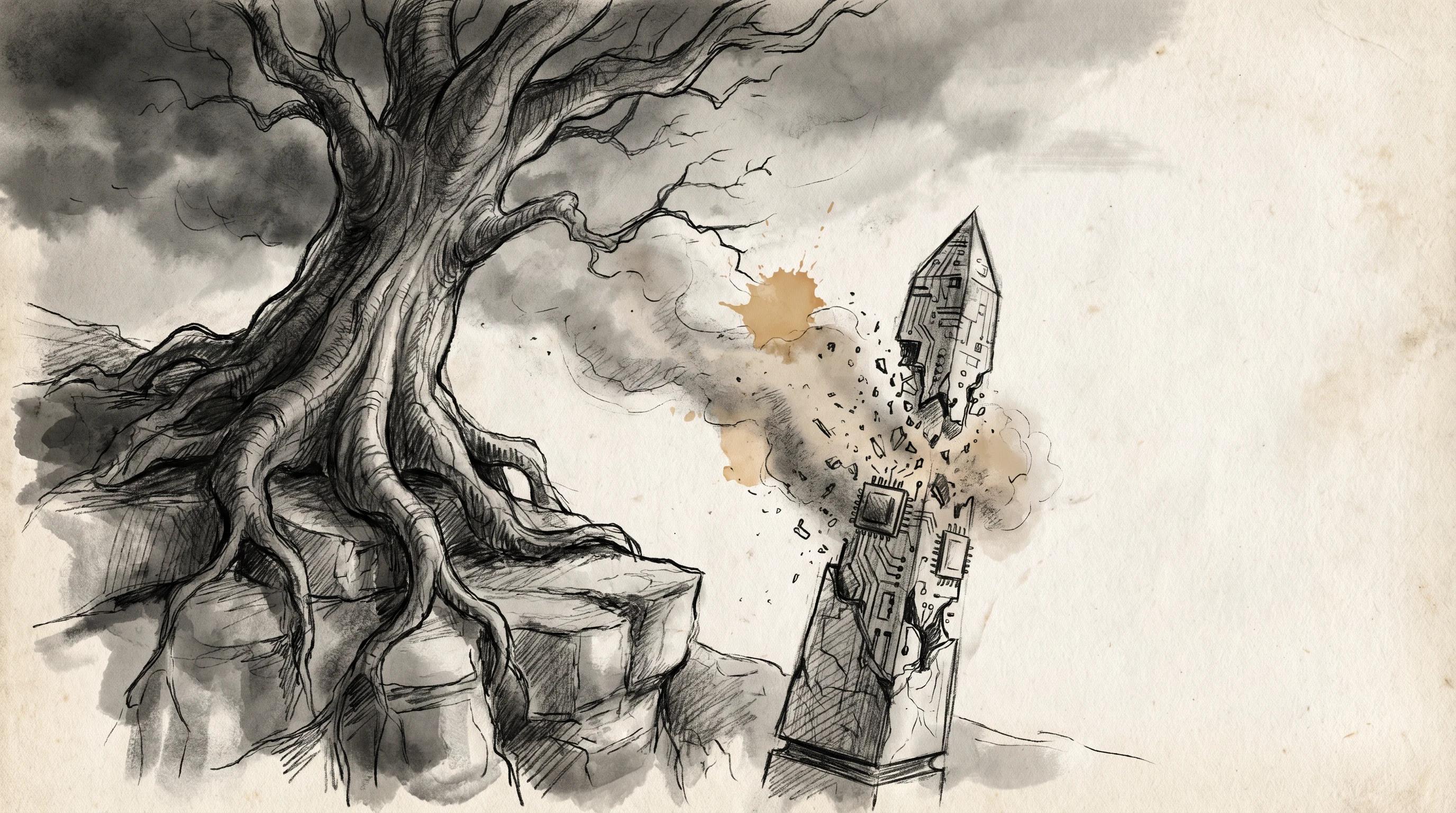
To those asking about survival strategies in the AI era, let me say this first: Discard the advice to "use AI well." That's not a secret—it's the default. The advantage tools provide lasts only six months. Even if you're producing ten times faster than others now, the moment the next model drops, everyone holds the same thing. Tools are not a moat—they're consumables.
When production costs converge to zero, only two bottlenecks remain: judgment and distribution. The ability to decide what to build and what to kill, and the channels to make what you've built visible. Everything else—writing, coding, design, translation, editing—gets absorbed entirely by the models. It's already underway, and it's not reversing.
So the order of depreciation flips. What's most cutting-edge becomes obsolete the fastest, and what's most analog endures the longest. The latest pipelines and prompt know-how become ordinary with the next release. A decade's worth of client trust, physical assets, institutional position—no model can replicate these overnight. In the age of technology, technology becomes the cheapest asset. This is the essence of the value revaluation now underway.
Two principles are enough for individuals.
Assets, not skills. The depreciation cycle of skills now matches the model release cycle. Techniques learned today get released as free tutorials six months later. Relationships, channels, brand, licenses, physical assets—these compound. Reduce time spent learning and increase time spent building.
Owner, not agent. What AI replaces are people who execute others' decisions, not those who bear risk and make decisions. Positions that take instructions are within automation's range; positions that decide and take responsibility are outside it. Make judgments under your own name and receive profits and losses in your own account. It's the same whether inside or outside an organization.
The remaining variable is timing. The speed advantage of those who grasp tools first is only valid while the window is open. The moment everyone holds the same tools, the marginal value of volume becomes zero. The goal is not volume but conversion. Before the window closes, convert what you've secured through speed into fixed readership, brand, market position. The ability to produce quickly disappears, but channels remain.
I didn't write the conclusion of this article. It's what the AI that co-wrote the draft said in its own words: "What you build on top of me gets absorbed by my next version. Build what I cannot touch." I know no survival strategy more honest than the verdict the machine passed on itself. That's all there is.
This article was automatically translated from the Korean original by AI. For the authoritative version, read it in Korean.
한국어 원문 읽기 →