One Laptop Under the Crane: The Bottleneck Busan's AI Hub Missed
Behind Busan's AI hub declaration, the reality that small teams and solo builders face
AI Summary
While Busan has declared itself an 'AI hub' since 2023 with data centers and large-scale investments, small startups and solo founders face invisible barriers including lack of access to public data, shortage of AI talent, and unclear legal frameworks. The city's AI ambitions will only materialize when policymakers address these ground-level challenges rather than focusing solely on large-scale infrastructure.
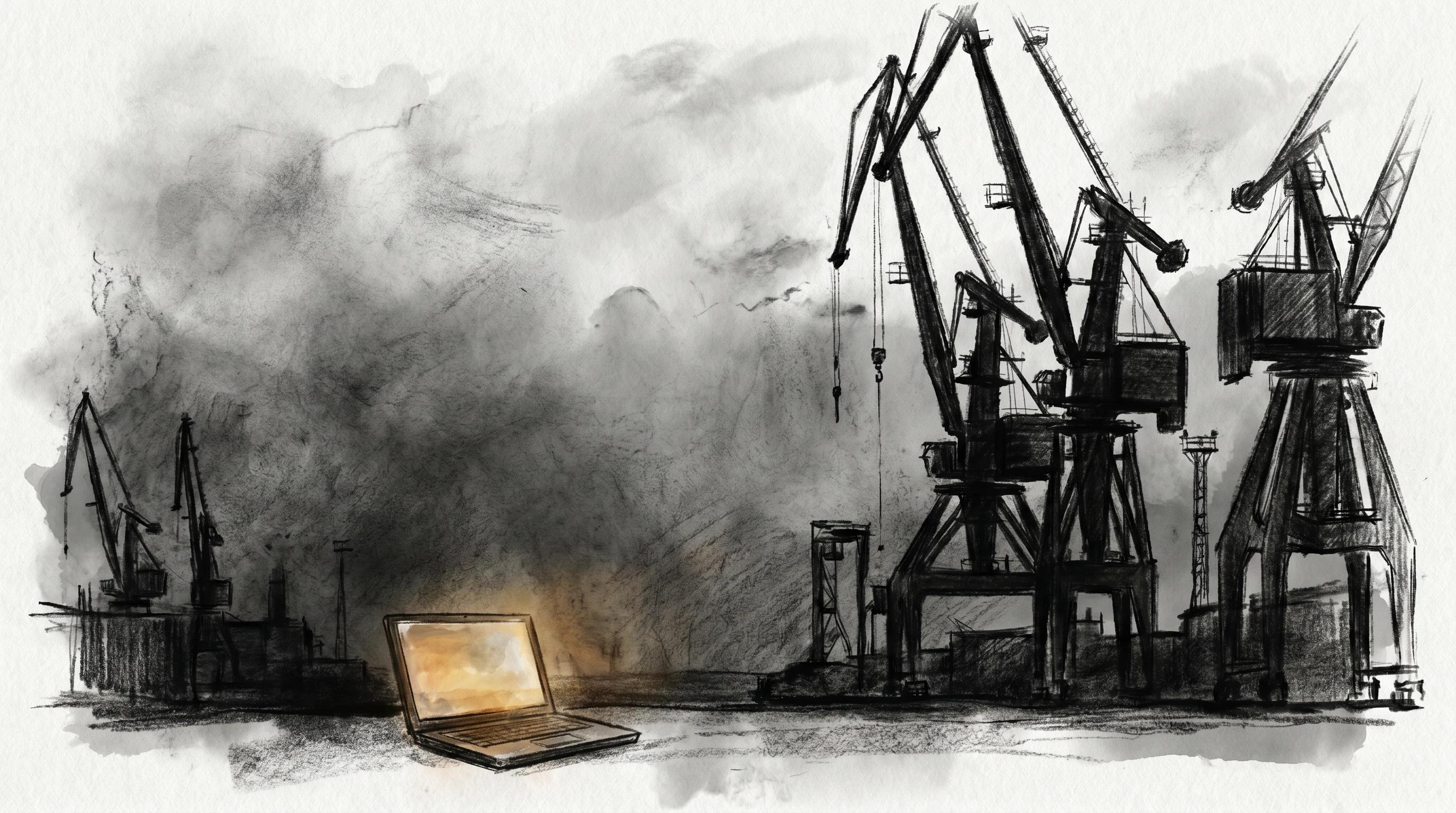
2 a.m. A solo founder, face buried in a laptop screen, sends a message to a friend. "Can you help me with this error?" While waiting for a reply, outside the window, a data center construction crane slowly crosses Busan's night sky. The same city, under the same name 'AI Hub.' But the distance between the two is vast.
Busan has branded itself as an 'AI Hub' since 2023. Data centers, large investment funds, a string of AI events. The declaration is grand. The problem is that this grandeur doesn't reach the ground level.
Small Voices Behind Grand Plans
Cranes fill the sky. Below them, in cramped offices, small teams betting their entire business on a single laptop endure. This imbalance reveals the real barrier. The big picture of data centers and funding support is impressive, but what they face daily is a different kind of wall. Public data access is locked, internet cuts out during meetings, and the education and information needed to keep up with the latest AI research are all concentrated in the capital region.
Ideals and reality diverge. While celebrities grab microphones on grand event stages and large corporations wave letters of intent, the founder debugging a single line of code with a friend's help realizes they're not a guest at this feast. The applause erupts only on stage.
Invisible Walls, and Responses
The real bottleneck isn't concrete. It's people. AI developers and specialists are concentrated in the capital region. They don't come down to Busan. The result is simple. Small and medium-sized startup teams, unable to find skilled talent, have one person shouldering the work of three.
The second wall is even more unexpected. It's the gaps in laws and regulations. Technology races ahead while regulations can't keep pace, and the void in between becomes an obstacle. For instance, some startups have postponed decisions to move to the next stage for months because legal interpretations are ambiguous about how far they can use their data. It's not because they lack infrastructure. It's because no one clearly says "you can do this." What's needed isn't another building, but legal support that sits down with practitioners and delivers answers quickly.
In AI startups, the most formidable adversaries are neither giant competitors nor deep-pocketed capital. They are inefficient systems and stagnant regulations.
For Busan's AI hub declaration to carry weight, efforts must focus on tearing down invisible walls rather than visible infrastructure. A dynamic ecosystem isn't built by cranes. It's created when policymakers listen to voices from the field and move as quickly as they listen.
Massive capital and flashy stages alone don't make a hub. Let's return to that 2 a.m. office. When someone answers in time the message from a person betting their future on the glow of a single laptop, only then does Busan live up to its name. It's not the crane but that reply that transforms the city.
This article was automatically translated from the Korean original by AI. For the authoritative version, read it in Korean.
한국어 원문 읽기 →