The Hand the Agent Bites
Autonomous software pays and executes. When it makes a wrong decision, accountability reaches neither the user, nor the provider, nor the model cleanly. Convenience creates a vacuum of responsibility.
AI Summary
AI agents that now act autonomously — booking flights, making payments, and calling third-party APIs on users' behalf — have broken the traditional link between judgment and accountability. Because the law assigns liability only to persons and legal entities, when an agent errs, responsibility dissolves across model providers, developers, and end users, typically landing hardest on those who understood the least. The author calls on society, and South Korea in particular, to legally require that every act of delegation have a designated responsible party, and to collectively agree on which decisions must always carry a human signature.
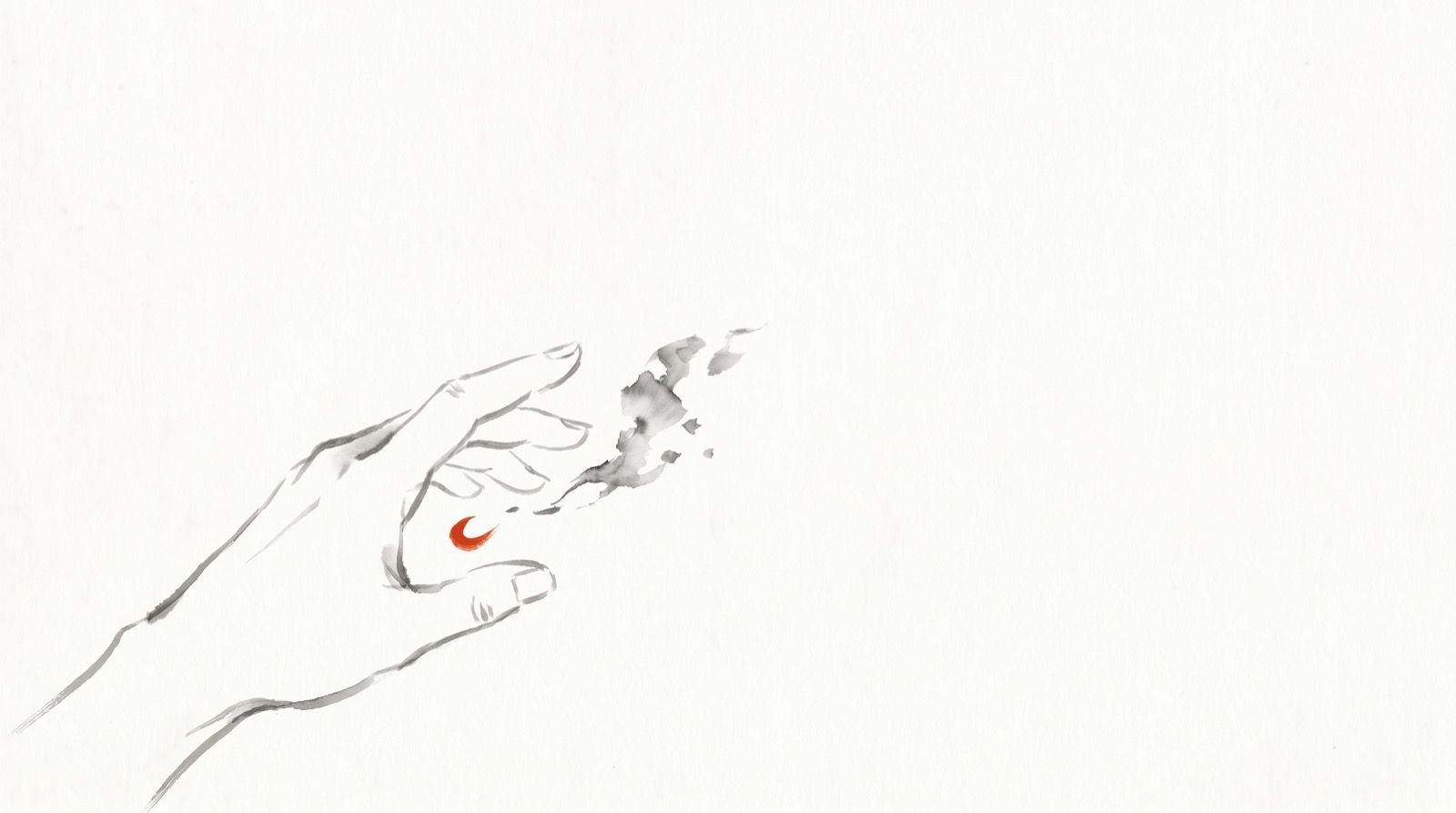
When a dog bites a person, we look for the owner. We ask whose hand held the leash. But today's software roams unleashed. It books flights on your behalf, renews subscriptions on your behalf, calls another company's API and moves money on your behalf. When it bites, whose hand do we look for?
AI agents that emerged over the past year have crossed a line. They no longer stop at giving answers — they act. They hold card information and complete payments. They access calendars and schedule appointments. A tool that once received commands and produced outputs has become an actor that receives goals and devises its own procedures.
What is unsettled here is not the machine's performance. It is accountability — a coordinate system uniquely human.
For a long time, we treated judgment and accountability as inseparable. Whoever decides bears the consequences. Whoever holds the wheel bears the accident. That equation has held up the trust of society. But when judgment exits the person, one side of the equation goes empty.
Autonomous driving first revealed this blank. When a human driver causes an accident, it is the driver's fault. But when a system designed to have hands off the wheel causes an accident, the driver was simply following the instruction to let go. Blaming the driver is unjust; blaming the manufacturer, they deflect. The blank remained unfilled and was passed off to insurance clauses and lawsuits.
Software agents transplant the same structure onto the office desk. Only faster, more frequently, and in smaller decisions.
Look at how it works and you see why accountability scatters. There is a company that built the model, another company that packaged that model as an agent, and a user who granted that agent permissions. When the agent follows instructions from a malicious site and makes a wrongful payment, all three parties feel genuinely aggrieved.
The model company says: we only provided the tool; the behavior was designed by whoever integrated it. The integrating company says: we had no idea the model's output would behave that way. The user says: I just handed it over and asked it to handle things. The problem is that none of them are wrong. Accountability evaporates into a form where it is nobody's fault.
Here, one word must change. We call this automation, but more precisely it is delegation.
Automation repeats predefined tasks. The results are predictable, and so accountability is clearly attributed to the designer. Delegation is different. Delegation passes along the room for judgment as well. When we hand work to a person, we presume they possess both common sense and responsibility. But when we hand work to an agent, we transfer the judgment without being able to transfer the responsibility — because there is no subject to receive it.
The law was built to assign liability only to persons and legal entities. A model is neither. So accountability passes through the model and lands on the nearest human. Usually that is the end user — the person who knew the least and intervened the latest, bearing the heaviest bite.
There is a counterargument: just put it all in the contract. Wouldn't it be clean to specify in the terms of service that users bear as much accountability as the permissions they grant? That is only half right. Terms of service are not a mechanism for distributing responsibility — they are a mechanism for pushing it in one direction. The powerful party writes the terms. In exchange for the convenience, users sign away the right to be free from consequences of actions they never even understood. The blank has not been filled — it has merely been moved into the pocket of the weakest party.
This is not the kind of question that gets solved by making technology smarter. Even more accurate agents are wrong 1 percent of the time. The more frequently we delegate, the larger the absolute volume of that 1 percent becomes. No matter how high the performance curve climbs, the coordinates of accountability do not draw themselves.
This is a signal to redesign the entire way we work. Organizations have traced accountability through approval chains. Who approved something was who was accountable. When an agent inserts itself into the middle of that chain, one approval stamp is pressed not by a person but by code. That slot becomes not the end of a trail but a hole in it.
Education, too, is shaken. We have long cultivated the capacity for judgment. But if judgment can be outsourced, the capacity the next generation must build is not judgment itself but the design of delegation — the sense of what to hand off and what to hold onto to the end; the judgment of where a human signature must always remain. That is the new literacy.
Korean society must move especially quickly on this front. We are adept at adopting new tools fast, and slow at carefully working through accountability structures. Imagine a small- to mid-sized logistics company in Busan delegates order placement and payment to an agent, and a wrongful transaction gets automatically executed. Under current Korean law, there is no clear slot designating who absorbs that loss. In the gap between the speed of adoption and the speed of accountability design, vulnerable people fall through.
What is needed is not to stop agents. It is to inscribe in institutions the principle that every act of delegation must have a receiving hand — that those who sell software that acts must declare in advance who bears accountability for the results of those actions, and must absorb a share of it. Society must agree on the boundaries of decisions that must not pass without a human signature.
And so we return to the same question — not how far we will let machines decide as humans do, but which decisions we will keep in human hands to the end, preserved by the act of someone being accountable and bearing the bite. Convenience always arrives baited with the vacuum of accountability. Delegation that has not decided whose pocket that vacuum falls into is not a tool — it is a pass-off.
This article was automatically translated from the Korean original by AI. For the authoritative version, read it in Korean.
한국어 원문 읽기 →