The Politics of the Improvising NPC
The moment generative AI borrows a game character's mouth, the power that once belonged to the writer moves to the system. Those who can design controllable improvisation as a creative asset will own the next era of the game industry.
AI Summary
Generative AI NPCs represent a fundamental shift in who controls game narratives — transferring authorial power from writers to inference engines, not merely expanding the volume of dialogue. A viable generative NPC requires four converging technologies: real-time speech synthesis, vector-based persistent memory, a validation guardrail, and cost-efficient on-device inference. Korean game studios, with their live-operations expertise, are uniquely positioned to turn 'controllable improvisation' into a licensable pipeline tool with applications reaching far beyond games.
We See This Technology Too Narrowly
People understand generative AI NPCs as a feature that makes dialogue infinite — a kind of spec upgrade where the same villager gives a different response every time, even across a hundred conversations. That reading isn't wrong, but it misses the point.
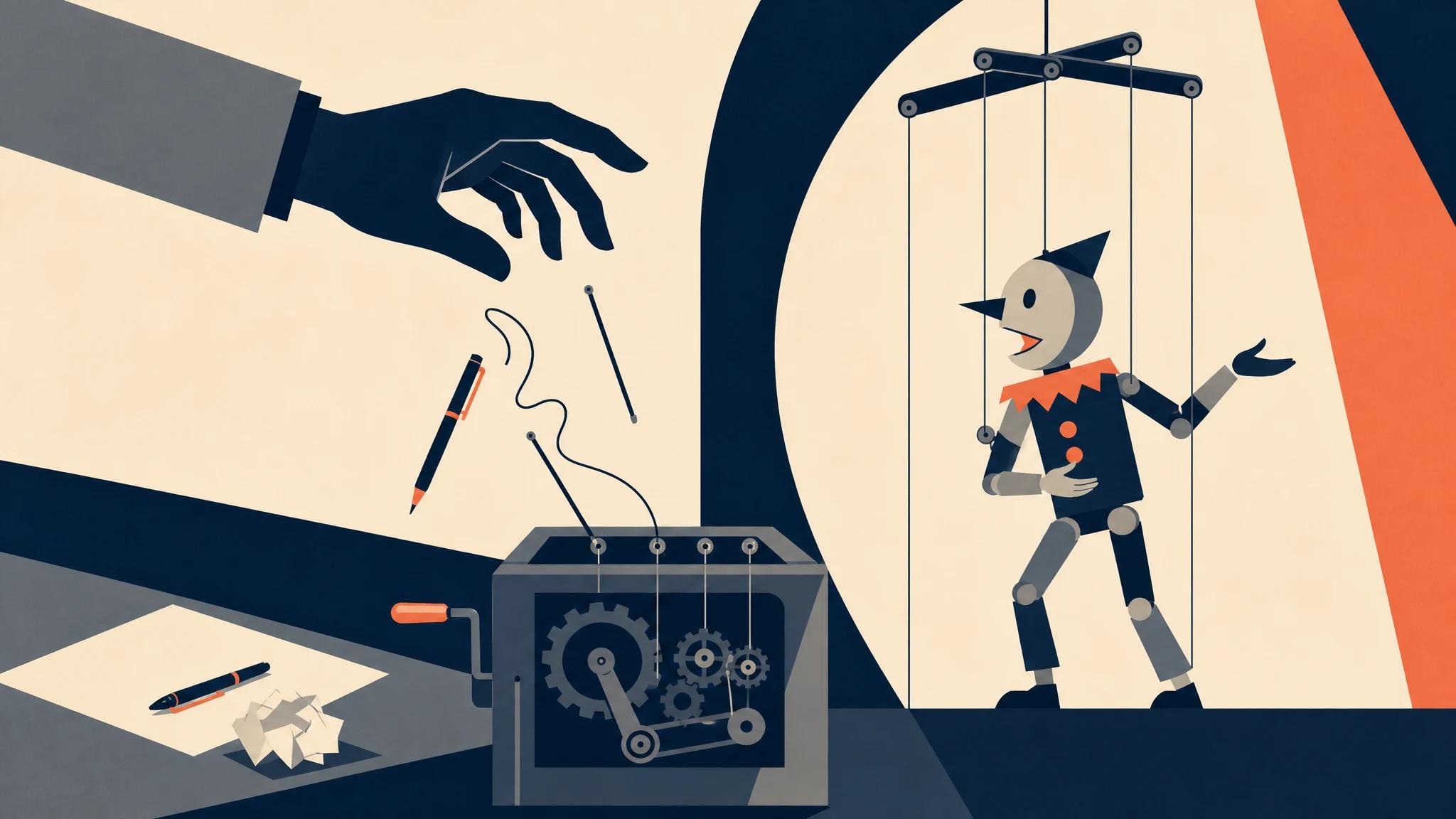
The real event is happening somewhere else. For the past forty years, it was writers who decided what a character would say in a game. There were scripts, there were branches, and a writer's hand touched every branch. Generative NPCs strip that decision-making authority from the writer and hand it to an inference engine. What has become infinite isn't the volume of dialogue — it's who controls the narrative. This is a different kind of shift than graphics moving from 2D to 3D. The power structure of the people who make games is changing.
How Convergence Changes an Industry — Once More
Technology alone has rarely upended an industry on its own. New players almost always emerge at the intersection of two technologies. GPS was satellite navigation, but when it combined with the smartphone's accelerometer, map data, and payment systems, a company called Uber was born. It wasn't the side that launched the satellites that captured the market — it was the side that made the connections.
The same happened in games. Physics engines existed separately as middleware — products like Havok — but it was only when they were woven into level-design tools and character controllers that entirely new action genres became possible. Any team making mobile games in Busan knows this pattern. What determined a product's fate wasn't the raw performance of a single technology, but which tool in the pipeline that technology chose to pair with.
A generative NPC on its own is only half a solution. The other half depends on what it combines with.
What Does This Technology Pair With?
It would be a mistake to think a generative NPC runs on a single LLM. A usable NPC stands at the intersection of at least four technologies.
First is speech synthesis. When real-time TTS is added, generated dialogue becomes performance, not just text. Next is memory architecture. A vector database gives the NPC persistent memory — lines like 'You ruined my crops last week.' Third is the validation layer, a guardrail that filters generated utterances to prevent them from breaking lore or sliding into profanity. Last is on-device inference. When cloud API costs accumulate per user, a game runs in the red. Edge technology — running lightweight models locally on device — determines economic viability here.
Only when these four come together does an NPC truly improvise. But improvisation is the opposite of control. The real question about creative power starts here.
Where Does Authorship Go — And Who Are the New Players?
Let's address the objection first. 'If AI ends up writing everything, doesn't that make writers obsolete?' Half right. The work of a writer typing line-by-line dialogue will diminish. But control doesn't disappear — it moves up one level.
Doing generative NPCs well is not about writing lines — it is about designing the boundaries of improvisation. What this character would never say, the core personality axes they must preserve, which secrets can leak and which must never. The writer shifts from someone who hands an actor a script to someone who crafts the constraints an improv director sets for actors on stage. Authorship no longer lives in sentences — it lives in the elegance of constraints.
This transition calls forth new economic players: 'persona providers' who sell a character's personality and its limits as an asset; validation middleware companies that keep generated utterances within the bounds of a game world; state infrastructure operators who manage an NPC's persistent memory. These layers look like game accessories today, but once they cross into metaverse or virtual companion services, they become infrastructure. The validation layer that looks small today may become the standard gateway for content safety.
Where Korea Can Plant Its Flag
The strength of Korean game studios is live operations — the ability to patch weekly, read user response as data, and tune balance accordingly. The challenge of controlling generative NPCs is exactly the kind of problem this muscle was built to solve. It's not a binary of turning improvisation on or off; it's the work of calibrating how much freedom to allow in which situations, guided by live operational data.
The asset Korea can build here is the design know-how of 'controllable improvisation' itself. If teams in Busan or Pangyo weave character-boundary design, utterance validation, and cost-efficient on-device inference into a single pipeline, that becomes not a single game but a tool other studios license. Improvisation-control technology proven in games transfers directly to AI tutors in education and counseling companions in healthcare — because they are solving the same problem: a personality that speaks freely without crossing the line.
The future will not come from generative AI as a single technology. It will come from where that technology meets voice, memory, validation, and edge inference — and from the gap where the writer's power shifts from sentences to constraints. The next game industry's master will not be the one who builds the smartest NPC, but the one who draws the most elegant boundaries so that NPC can improvise without ever leaving the stage.
This article was automatically translated from the Korean original by AI. For the authoritative version, read it in Korean.
한국어 원문 읽기 →